


Times of Bennett
ArticleFeatures

Covid shows how spitting is a hazard

Published:April 9, 2021 at 07:58 PM4 min read
Covid shows how spitting is a hazard
By Sharvi Sharma

BENGALURU: Rampant spitting makes all precautions against Covid-19 ineffective, as this habit of spitting, intrinsic to Indian culture, continues to transmit various infectious diseases.

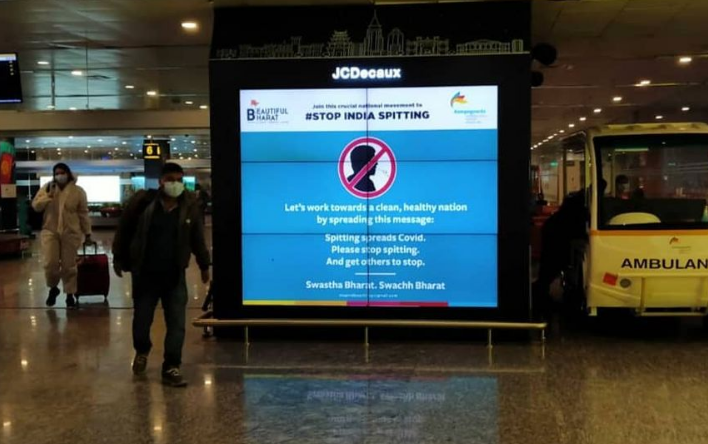
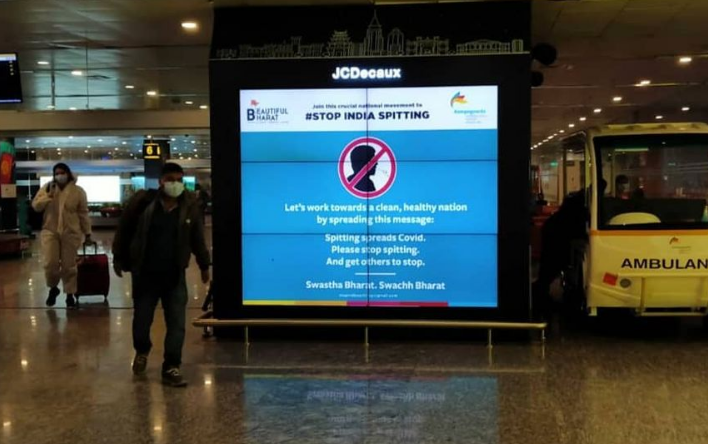
Beautiful Bengaluru, a voluntary citizens’ initiative, working for clean, green, safe cities (now known as Beautiful Bharat) is driving the #StopIndiaSpitting campaign. It started in March 2020 with a petition and open letter to Prime Minister Narendra Modi to ‘Restrict coronavirus and make spitting in public places punishable’. They raised a red flag that continued spitting was a ‘crucial missing link’ in Covid prevention.

Stop India spitting campaign board at the airport in Bengaluru.

Odette Katrak, a Bengaluru-based human resource professional, soft-skills trainer, writer and co-founder of ‘Beautiful Bengaluru’, has worked on behaviour change at an individual level. “In the last 10 years, I realised the importance of change at a societal level, and shifted my focus,” she says.

Katrak’s realisation came early in the lockdown while looking at the street beneath her window, noticing people spitting. “We were being told about masks, washing hands but nothing about spitting – a huge gap.”

The team’s petition, open letter, social media campaign and media coverage all resulted in bringing this issue into the national spotlight. Spitting in public was made punishable and paan/gutka banned throughout the country on April 15, 2020, under the Ministry of Home Affairs’ ‘National Directives for Covid-19 Management’ (page 9, points 5&6).

Beautiful Bharat’s aim was not just a law against spitting, but to kickstart a movement and eradicate this social ill in a now-or-never chance provided by Covid-19. The law was ‘a backdrop and deterrent’ and the first step of a long journey to get India to stop spitting. This mass movement hinges on every resident getting involved. Awareness about diseases spread through spitting is crucial – as wearing a mask, sanitising and hand hygiene are not enough.

Another step was an appeal to the PM to address the issue in his ‘Mann Ki Baat’ address. “This was to ensure the message reached every corner, which happened on April 26, 2020, with the PM’s specific mention making this a national priority, and the crucial message reached millions across the country.”

She added that it was Spanish Flu in 1918 that got Western countries to finally address spitting in public places through mass campaigns, and this is a chance India cannot miss. The specific use of ‘StopIndiaSpitting’ as the campaign name is a call-to-action that involves everyone, including non-spitters, rather than focusing only on those who spit.

“We are asking all who do not spit to patiently explain the link between saliva and Covid-19, through incident-based or preemptive conversation. Ignoring a spitter won’t help, shouting won’t either. Our aim is not to shame or spark angry exchanges, but to spread realisation. Spitting brings shame to our country – in the UK, spitting is high in Indian-dominated areas. In our country of 1.3 billion citizens, enforcement cannot work; mass awareness is needed as most spitters do not realise the habit is dangerous,” she added. “We ask them instead to use a toilet, carry a small container or just swallow – which they mistakenly believe is bad for health!”

“What started as a petition is now a national movement,” Katrak says proudly. Increased messaging through radio/TV shows and a creative collaboration of signs, animated videos, art, music and other resources is helping spread the message to villages, towns, cities.

“We are networking through partners across states through the newly formed Alliance to StopIndiaSpitting. Influencers like Puneeth Rajkumar, Kannada film artist, and Dr Devi Shetty, noted cardiologist, are giving crucial support for the campaign. Kempegowda International Airport, Bangalore, has prominent messaging with CEO Hari Marar confirming a reduction in spitting.

Katrak ends optimistically, “We hope across the country, more will join #StopIndiaSpitting, because everyone must play their part!”

(Access signs in 14 languages + other resources at beautifulbengaluru.org. or mail stopindiaspitting@gmail.com)

The story first appeared in The Times of Bennett, the lab newspaper produced by the first semester students of The Times School of Media.

Tags
#Spitting#Narendra Modi#Bengaluru#Alliance#voluntary citizens#national#covid-19#India#Katrak#ministry of home affairs

Related Articles

Unravelling The Language Of Consent In Qala's “Ghodey Pe Sawaar”
Article
Popculture

Unravelling The Language Of Consent In Qala's “Ghodey Pe Sawaar”

This article dissects Qala's lead single 'Ghode Pe Sawaar', through a feminist lens.
May 2, 20265 min
#ghodey pe sawaar#urmila#qalas+4 more
Beyond Headlines: The war of West Asia from youth's lens
Article
Features

Beyond Headlines: The war of West Asia from youth's lens

Has the popularity of social media hastened war news reporting or sensationalism? Does the youth of today find themselves torn between deciphering real news and misniformation? This article aims to look beyond the surface and uncover the answers to these questions and more.
Apr 24, 20266 min
#west asia#prabhjot kaur#point+3 more
Certified Out of Existence: Why India's 2026 Trans Amendment Bill faced severe backlash
Article
Features

Certified Out of Existence: Why India's 2026 Trans Amendment Bill faced severe backlash

On March 13, 2026, India's government introduced the Transgender Persons (Protection of Rights) Amendment Bill in the Lok Sabha, which swiftly passed both houses by March 25 and became law despite widespread protests from trans activists, lawyers, and opposition parties. The bill scraps self-identification for gender—upheld in the 2014 NALSA Supreme Court judgment—replacing it with mandatory medical certification by a board and District Magistrate approval, while limiting recognition to hijra, kinner, and intersex groups, effectively sidelining trans men, women, and non-binary individuals. It also imposes severe penalties, including life imprisonment, for "coercing" others into transgender identity, which critics fear could criminalize family and allies. Activists like Krishanu, Raghavi, Aryan Pasha, and Kanmani slammed it as unconstitutional (breaching Articles 14, 15, 19, 21), arbitrary, and reminiscent of colonial-era laws like the Criminal Tribes Act, with protests erupting in cities from Delhi to Hyderabad. Amid global anti-trans backsliding (e.g., TGEU's 2025 index, US and UK developments), figures like Aakar Patel of Amnesty International India decried it as state overreach on inherent identity. Affecting ~487,803 trans persons (only ~32,500 with ID cards), the law unravels hard-won rights, framing the fight as one for the state's recognition of self-naming over official control.

Apr 24, 20266 min
#bill#lok sabha#supreme court+2 more
11,000 litres of milk: Spiritual offering or extreme prolifigacy?
Article
Features

11,000 litres of milk: Spiritual offering or extreme prolifigacy?

Video Controversy SynopsisA video from April 9, 2026, showing 11,000 liters of milk (worth ₹5.5–7.7 lakh) poured into the Narmada River during a religious ritual sparked national outrage online, pitting devotion against accusations of waste, excess, and environmental harm.Public BacklashSocial media users condemned the act as irresponsible amid food insecurity and river pollution risks, arguing the milk should have fed the needy instead of treating the river like a "sink."Defenses and Expert WarningsSupporters defended it as sincere faith, but environmentalists like Subhash Pandey and Ajay Dube highlighted ecological damage: the organic load depletes oxygen, harms aquatic life, drinking water, and local communities.Broader ImplicationsThe Narmada's cultural significance amplified the debate, turning a local ritual into a flashpoint on balancing tradition with ethics, responsibility, and river health—raising timeless questions on when devotion crosses into waste.
Apr 24, 20264 min
#narmada#subhash pandey#ajay dube+2 more
BENNETT DIALOGUES launch with the War in West Asia
Article
Campus

BENNETT DIALOGUES launch with the War in West Asia

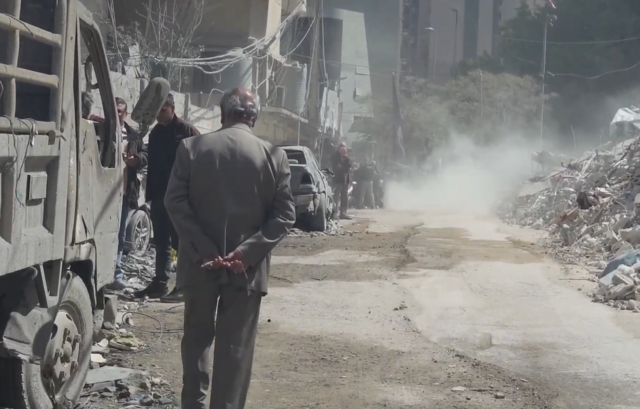
Bennett University has launched BENNETT DIALOGUES, a fortnightly talk series conceptualized by Chancellor Vineet Jain (Times Group MD) to help students grasp global geopolitical shifts. Led by Prof. Dhiraj Singh (Head, Centre for Media & Technology), it features informal fireside chats and Q&A with experts in geopolitics, business, and media. The series aims to connect world events to everyday impacts, like how the US-Israel-Iran war affects India's petrol and LPG prices. The inaugural edition on April 21 explores "The War in West Asia," with Times Now's Zakka Jacob and Dr. Waiel Awwad (Syrian-origin expert on West Asia conflicts, based in Delhi). Prof. Singh highlights its blend of Times Group media legacy and Bennett's academic excellence, benefiting media, liberal arts, business, and law students.
Apr 18, 20262 min
#dialogues#zakka jacob#dhiraj singh+3 more
War bugle disguised as a ceasefire: Examining Lebanon's situation post Israeli air strikes
Article
Features

War bugle disguised as a ceasefire: Examining Lebanon's situation post Israeli air strikes

On April 8, a fragile ceasefire briefly eased global tensions after 40 days of war between Israel, Iran, and allies, announced by Trump on Truth Social and confirmed by Iran and Pakistan's PM Shehbaz Sharif, who brokered it. Celebrations ensued worldwide as markets surged and oil prices fell, until Israeli jets struck Lebanon that morning, killing 357 civilians in what Beirut dubbed "Black Wednesday," while Israel excluded Lebanon from the deal. No formal agreement exists; conflicting statements emerged immediately, with Pakistan and Iran insisting it covered Lebanon, but Israel and the US rejecting that after a Trump-Netanyahu call. Lebanon, already devastated with over 2,000 deaths since March, was sidelined in a multi-front conflict involving Hezbollah, Iraqi militias, and Gulf interceptions. Post-ceasefire issues mounted: Iran kept the Strait of Hormuz choked, charging exorbitant fees and slashing traffic from 110 daily ships to four. Historic US-Iran talks in Islamabad on April 11 collapsed, prompting a US naval blockade that doubled down on the disruption, halting all oil route traffic (20% of global supply). The two-week truce window lasts until April 22 amid ongoing messages, but optimism fades after the deadliest civilian day coincided with its announcement.

Apr 17, 20264 min
#lebanon#trump#iran+5 more