Three Days, One AI Revolution: Global AI Summit 2026 Wraps Up at Bennett University
The Global AI Summit 2026 brought together global experts, researchers and student innovators at Bennett University to explore AI’s evolving role in society, industry, healthcare, education, security and responsible governance. Over 2,600 research papers, international keynotes and student innovations marked the three-day event.
Published:November 22, 2026 at 07:49 PM5 min read
Correspondent: Swapnil Agrawal
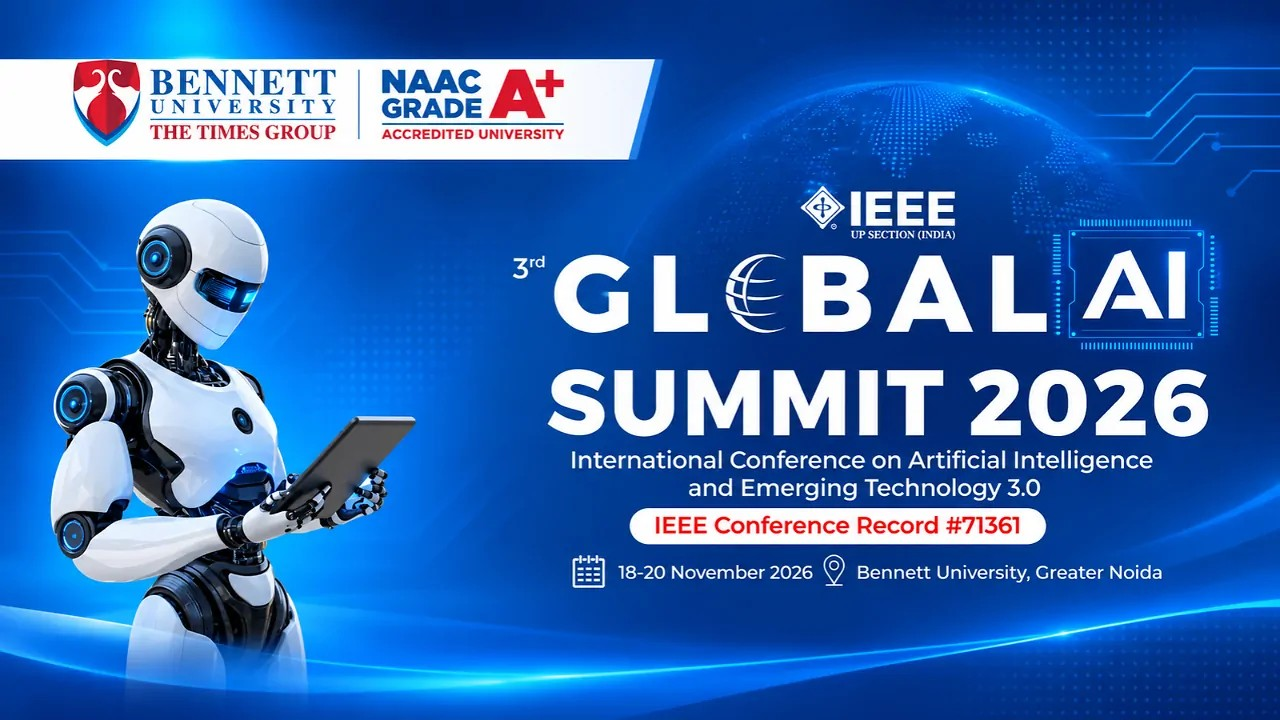
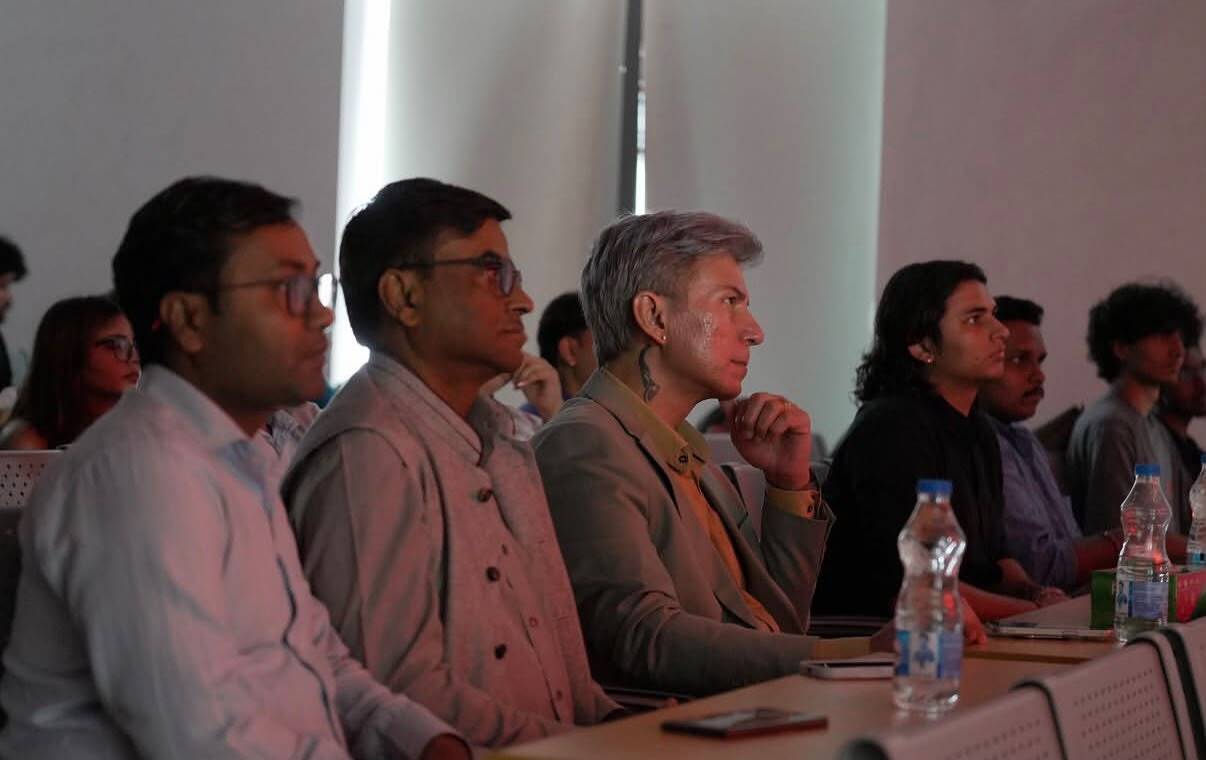
The Global AI Summit 2026, hosted by Bennett University from November 18 to 20, concluded after bringing together researchers, academicians, industry professionals and technology experts from across India and abroad to discuss the evolving applications, opportunities and challenges of artificial intelligence. The three-day event saw participation from more than 120 universities, with over 2,600 research papers submitted for review.
The summit featured international keynote addresses, academic discussions, research presentations, panel discussions and student project showcases, with a focus on emerging AI technologies and their applications across sectors. Supported by sponsors including IEEE UP East, Xebia, CodeTantra, Vidya AI, Coursera and College Mentor, it brought participants together to deliberate on AI’s growing influence on society, education, industry and the future workforce.
The opening day, November 18, featured keynotes by Dr. Anirudh Singhal, a researcher at TCS in Sweden, and Dr. Vijay Laxmi, Director of Information Security at Iron Mountain, USA.
Dr. Anirudh Singhal, speaking on ‘AI – The Worker of Tomorrow’, explored how artificial intelligence is shaping the future of employment and raised questions about the role of humans in an increasingly automated world. Drawing on philosophical and scientific ideas, including those of René Descartes, he emphasised the importance of imagination and judgement in human thinking. Referencing mathematician G. H. Hardy, Aristotle and Donald E. Knuth, Dr. Singhal highlighted the relationship between creativity, pattern recognition and logical reasoning. He argued that despite technological advancements, imagination and human judgement remain essential to innovation and intellectual development.
Dr. Vijay Laxmi’s session, ‘Breaking the Black Box: What Red Teaming Teaches AI About AI Security’, examined vulnerabilities in AI systems and the importance of testing them against potential threats. Through red-teaming exercises, she explained how adversarial testing can expose weaknesses and help strengthen AI security, stressing the need for robust testing mechanisms rather than relying on AI systems without scrutiny.
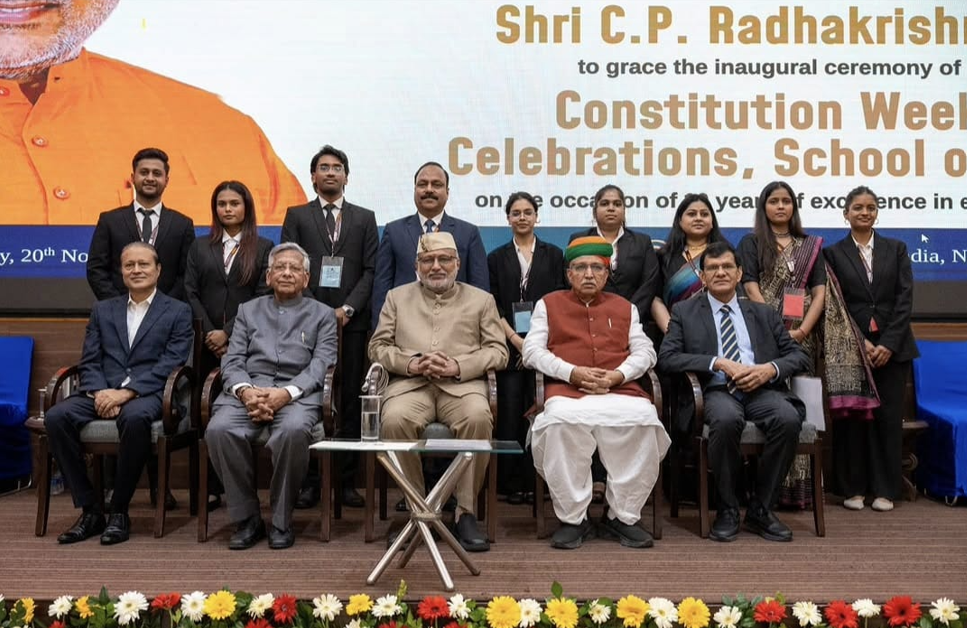
The inaugural ceremony began with the lighting of the ceremonial lamp and Saraswati Vandana. Prof. (Dr.) Abhay Bansal, Dean of the School of AI and Computer Science, delivered the welcome address and acknowledged distinguished guests, including Prof. (Dr.) Narayan C Debnath, Dr. Vijay Laxmi, Dr. Anirudh Singhal and Dr. Vishal from the University of Essex, which has a partnership with Bennett University.
Bennett University's Vice-Chancellor Dr. Raj Singh underlined the university’s ambition to establish the Global AI Summit on a larger scale. He stressed the importance of using AI to solve global problems and said it should assist human beings rather than replace them. The official proceedings of the summit’s third edition were also released. Prof Dr Shailesh Tiwari, Joint Dean of the School of Computer Science, Engineering and Technology, delivered the vote of thanks and formally declared the summit open.
The second day focused on responsible AI governance. Dr. Ravi Shankar Sharma of Zayed University, Abu Dhabi, UAE, delivered a virtual keynote, ‘Towards Responsible AI Governance for Health Systems’, examining AI’s growing role in healthcare and the need for transparency, accountability, fairness, ethics and safety. “AI is starting to become a necessity, and we can never go back to the pre-AI era,” Dr. Sharma remarked. He introduced the TAFES framework, outlining principles to guide AI development, deployment and monitoring in healthcare, and presented a GraphRAG-based healthcare proof of concept that combines knowledge graphs, semantic search and large language models to generate evidence-supported responses.
Student projects were showcased on campus after 2 PM on the second day of the conference. Xorian Industries presented indigenous drone technology, including flight controllers, telemetry and ground-control software for private and defence applications, and demonstrated how AI is being incorporated into programming and product development. Lurnix showcased an agentic AI platform that organises educational content from YouTube and other digital platforms, helping learners find relevant resources, such as Python programming, without having to navigate large volumes of online content. An industry panel also examined AI’s growth, future prospects, advantages and potential challenges.
The third day turned to the influence of financial content creators on social media and the challenges of accountability. Dr. Panagiotis Andriotis of the University of Birmingham, UK, delivered a keynote on UK-based financial influencers, popularly known as ‘finfluencers’, on TikTok, focusing on how they shape financial decisions, communicate investment risks and use disclaimers. Drawing on a study of 71 UK-based influencer accounts, the research analysed 13,215 videos and more than one lakh comments between April and September 2024. A follow-up observation between October 2025 and March 2026 recorded 8,565 videos, with only 59 of the original 71 accounts still active. Nearly half the content focused on entrepreneurship and side hustles, while 26% dealt with active trading, including forex and cryptocurrency. The study also highlighted disclosure gaps, noting that only two influencers had a bio-level disclaimer comparable to “not financial advice”. It further examined the role of mid-tier influencers with 10,000 to one lakh followers in connecting audiences across the network.
The summit concluded with a valedictory ceremony attended by chief guest Prof. (Dr.) S N Singh, Director of ABV-IIITM, Gwalior, Vice-Chancellor Dr. Raj Singh and Bennett University's COO, Mr. Senthil Kumar. Prof. (Dr.) Abhay Bansal, General Chair of the summit, delivered the closing address, reflecting on the discussions around emerging AI developments and responsible innovation. Other dignitaries included Prof. (Dr.) Mohammad Rihan, Director General of the National Institute of Solar Energy, and Dr. Upmith Singh, Principal Advisor, Capacity Building Commission. Certificates and awards were presented, and guests, dignitaries and organising committee members were felicitated for their contributions. Prof. (Dr.) Tapas Badal, Deputy Dean, School of Computer Science Engineering and Technology, delivered the vote of thanks. Bennett University expressed anticipation for the next edition of the Global AI Summit. (The author is a first-yeart year undergraduate student at Times School of Media, Bennett University)
Tags
#bennett#vijay laxmi#global ai summit#anirudh singhal#dr anirudh singhal#bennett university#IEEE UP East#Dr Abhay Bansal