Matrubhoomi: What if there existed a nation with no women?
Times of Bennett | Updated: Nov 15, 2025 14:01

Correspondent: Shreyashi Gupta
This was the plot of the movie I recently watched. At the start of the movie I asked myself what could possibly happen if women didn’t exist in this world? The cycle of life would be lost? There would be no such words as compassion and empathy to exist? No one to nurture future generations? No gender exists that binds societies together in terms of culture and rituals. The festivals that are still alive majorly because of women, who not only wake up early to prepare the various customs and rituals but also stay till the very end with utmost dedication to complete the festival or ceremony.
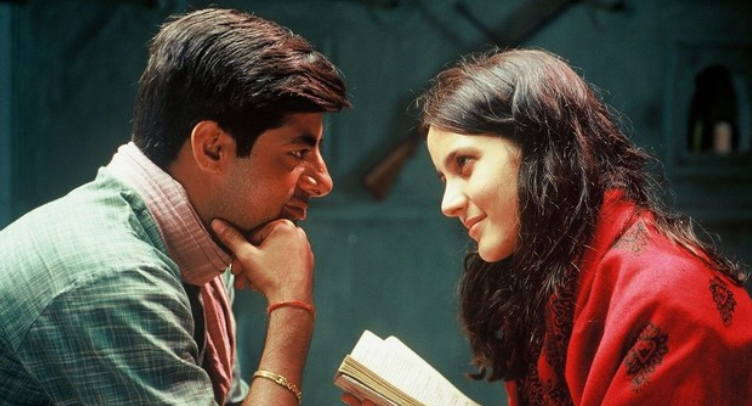
Matrubhoomi starts with the most notorious crimes of all, a man waiting impatiently while his wife is about to give birth to their first child, he joins the village men to make a sound by beating a spoon on a plate but as soon as the midwife comes outside to only bring a “depressing” news as they describe it that a baby girl is born the sounds of plate and spoon stop the only thing left is grief and sorrow and hope given to the husband by the village leaders that next time surely it’ll be a boy. So, they drown the baby girl in a bucket full of milk on the outskirts of the village.
Years later, the village is unaware of the dystopian future they are going to witness where the persistent practice of female infanticide leads to the complete eradication of women from society. “Matrubhoomi” serves not merely as fiction but as a prophetic warning about the dangers of systemic patriarchy and the devaluation of women in Indian culture.
The story revolves around Kalki (played byTulip Joshi ), the only young woman discovered by a wealthy man to marry his five sons. Her father received five lakh rupees plus five cows to marry her daughter to the five men. Her life becomes a story of exploitation and confinement where her existence is reduced to merely sleeping with the 6 men of the house on the various days they decide on the day of the marriage. The film’s setting is a rural village stripped of compassion and humanity. Manish Jha (Director) draws attention to the underlying social practices of female foeticide, dowry, and objectification, which continue to
plague Indian society.
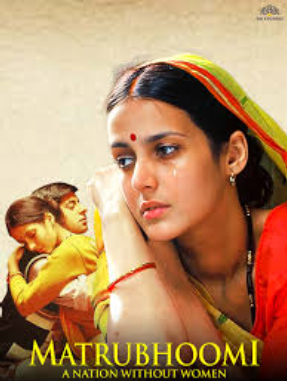
Cinematically, Matrubhoomi is marked by its minimalist storytelling. The absence of color and vibrancy mirrors the absence of femininity and life itself. The director has used visual imagery to convey a sense of void felt by the men of the village, before Kalki carries a child in a womb she is thrown out in a cowshed where she gets raped multiple times by two other village men. There is a turmoil situation in the whole village, the husbands and the two men who also get support of village men of the same caste as them wanting to gain pride in raping a higher caste woman, they are willing to kill each other because of two reasons to feel the happiness of becoming a father and wanting people to believe that they still have the masculine trait to woo a woman.
Thematically, the film addresses not only gender injustice but also the collapse of humanity that follows. In the absence of women, men are stripped of tenderness, morality, and emotional depth. Relationships deteriorate into acts of violence and control, and love becomes an alien concept. Through this, Jha underscores that the oppression of women ultimately dehumanizes society as a whole. The film’s portrayal of forced marriage, sexual exploitation, and psychological trauma highlights the cyclical nature of patriarchal dominance and its inescapable consequences. Especially in a nation which does not recognize marital rape this movie shows the reality faced by women.
Tulip Joshi’s character as Kalki represents not only the last woman on earth but also the last vestige of compassion in a world consumed by greed and lust.The film does not entertain, it educates and provokes.
In conclusion, Matrubhoomi: A Nation Without Women remains one of the most courageous and thought-provoking works in Indian cinema, it is a must watch film that forces society to see the darkness it often chooses to ignore.
(Shreyashi, is a second year mass communication student, you will find her discussing Indian politics over a cup of coffee.)
This was the plot of the movie I recently watched. At the start of the movie I asked myself what could possibly happen if women didn’t exist in this world? The cycle of life would be lost? There would be no such words as compassion and empathy to exist? No one to nurture future generations? No gender exists that binds societies together in terms of culture and rituals. The festivals that are still alive majorly because of women, who not only wake up early to prepare the various customs and rituals but also stay till the very end with utmost dedication to complete the festival or ceremony.
Years later, the village is unaware of the dystopian future they are going to witness where the persistent practice of female infanticide leads to the complete eradication of women from society. “Matrubhoomi” serves not merely as fiction but as a prophetic warning about the dangers of systemic patriarchy and the devaluation of women in Indian culture.
The story revolves around Kalki (played by
plague Indian society.
Cinematically, Matrubhoomi is marked by its minimalist storytelling. The absence of color and vibrancy mirrors the absence of femininity and life itself. The director has used visual imagery to convey a sense of void felt by the men of the village, before Kalki carries a child in a womb she is thrown out in a cowshed where she gets raped multiple times by two other village men. There is a turmoil situation in the whole village, the husbands and the two men who also get support of village men of the same caste as them wanting to gain pride in raping a higher caste woman, they are willing to kill each other because of two reasons to feel the happiness of becoming a father and wanting people to believe that they still have the masculine trait to woo a woman.
Thematically, the film addresses not only gender injustice but also the collapse of humanity that follows. In the absence of women, men are stripped of tenderness, morality, and emotional depth. Relationships deteriorate into acts of violence and control, and love becomes an alien concept. Through this, Jha underscores that the oppression of women ultimately dehumanizes society as a whole. The film’s portrayal of forced marriage, sexual exploitation, and psychological trauma highlights the cyclical nature of patriarchal dominance and its inescapable consequences. Especially in a nation which does not recognize marital rape this movie shows the reality faced by women.
Tulip Joshi’s character as Kalki represents not only the last woman on earth but also the last vestige of compassion in a world consumed by greed and lust.The film does not entertain, it educates and provokes.
In conclusion, Matrubhoomi: A Nation Without Women remains one of the most courageous and thought-provoking works in Indian cinema, it is a must watch film that forces society to see the darkness it often chooses to ignore.
(Shreyashi, is a second year mass communication student, you will find her discussing Indian politics over a cup of coffee.)