Bennettians Voice Their Budget 2026 Expectations
Times of Bennett | Updated: Feb 09, 2026 13:05
Correspondents: Aradhya Mohan and Shreya
Photojournalist : Shiv Chaturvedi
In an era when "future-ready" has become a recurring phrase in education and employment discussions, India's youth find themselves torn between the cycle of ambition and deep uncertainty. In circumstances like these, the significance of discussion among the future leaders is increasingly important; a diversity of opinions is what builds a robust framework for the future. With artificial intelligence and digital innovation becoming the everyday reality of expensive living and limited opportunities, young voices today are hopeful and actively working towards making that hope a reality.
Yet behind this hope lies a deeper truth: young people are ambitious, but they are also exhausted, anxious, and increasingly vocal about what they truly need from the system.
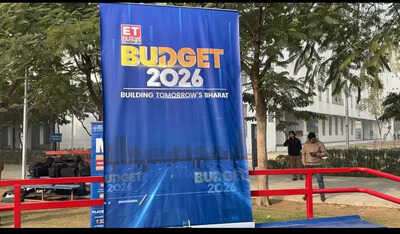
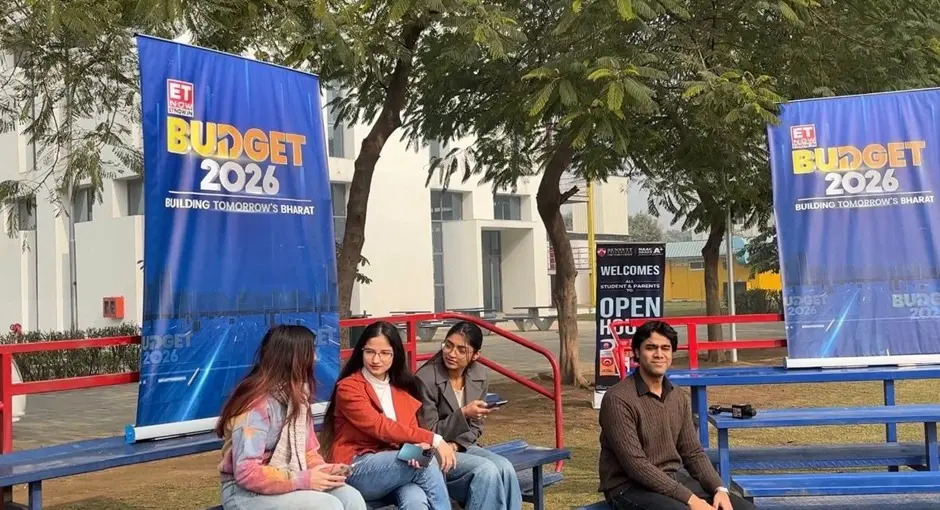
To facilitate a deeper dialogue on India's economic future,ET Now brought its special pre-Budget series, 'Bharat Budget Yatra,' to our campus for a featured show titled ‘Budget 2026: Building Tomorrow's Bharat,’ involving a high-impact discussion with our Bennettians, hosted by Deputy Editor at ET Now, Sumita Kareer , at Bennett University .
Students from across disciplines, including B.Tech,Law , BBA, and Mass Communication, actively participated in the discussion. The session also witnessed the presence of esteemed faculty members such as Prof. Dhiraj Singh , Deputy Dean , Times School of Media & Head, Centre for Media & Technology; Dr. Gauri D. Chakraborty, Professor, Times School of Media & Chairperson, Women Development Cell, Bennett University; and Ms. Pragya Saini , Associate Professor of Practice.
A major part of this growing youth narrative evidently revolves around career expectations. Job readiness has become a race, and in that race, education often feels less like learning and more like surviving. Young voices are calling for an education system that is easier to access, and smoother to navigate, not in the sense of reducing quality, but in terms of making it practical, affordable and more aligned with real opportunities.
This is exactly where the importance of skill-based learning becomes impossible to ignore. In a world where employers look beyond marksheets and focus on what a student can actually do, skill-based education acts as a missing link between what is taught in the classroom theoretically and what is applied in the workplace empirically. It helps students in building real competencies through on-ground learning and hands-on projects, which prepare them for the professional world.
At the same time, youth concerns today are not limited to career alone, they also extend to quality of life. Issues like rising AQI levels and worsening air pollution, are major challenges for the public, wherein stepping outside, often feels like breathing in danger. The conversation is shifying from only ‘building a future’, to also ‘surviving the present’, because health, productivity, and mental well-being, are deeply impacted when clean air becomes a privilege.
This pressure has intensified as India rapidly moves towards an AI-driven and digitally dependent economy.
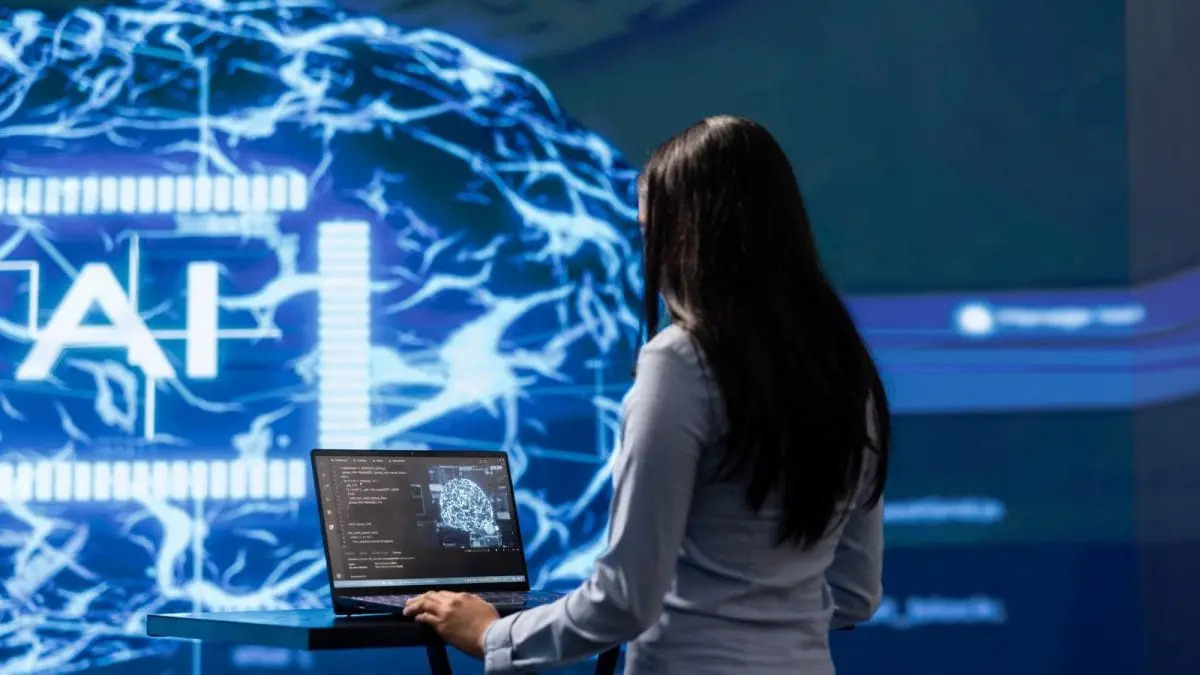
The youth of today are deeply curious about AI tools and that real world applications, and there is a visible shift in interest towards AI-focused learning and digital technology. Youth decisions include questions about responsible usage, fairness and how AI decisions impact people's lives. It is no longer enough for technology to be impressive; it is expected to be ethical and inclusive.
At the same time, conversations also turned towards the kind of government interventions being introduced to support young professionals entering the workforce. Initiatives like Pradhan Mantri Viksit Bharat Rozgar Yojana (PM-VBRY), a new initiative providing up to ₹15,000 as an incentive to first-time private sector employees (salaries up to ₹1 lakh) and ₹3,000/month to employers for hiring, launched by PM Modi in mid-2025 were brought up. Some students raised uncertainty about the scheme, questioning whether 15k is sufficient to survive in tier 1 and tier 2 cities.
Also, the eligibility criteria for the PM Internship Scheme, which requires applicants to be Indian citizens aged 21-24, came under criticism during the discussion. A law student pointed out that the age bracket doesn't align well with the structure of a five-year law degree, potentially excluding deserving candidates who may still be studying or graduating slightly later. This raised a broader concern about whether such schemes are designed with realities of different academic pathways in mind, and whether more flexibility is needed to ensure equal opportunities across disciplines.
Adding to this discussion, Professor Dhiraj Singh highlighted the importance of the 'Orange Economy', which plays a major role in showcasing India’s culture, tradition, and creativity.
Beyond career pressure and AI excitement, the everyday realities of the youth are becoming harder to ignore. Major problems like the middle-class struggle are emerging rapidly as a major theme, especially for students and families managing rising expenses. This further reinforces the fact that while the Indian economy is constantly growing, the cost of living is growing along with it.
The youth of today are not confused, careless, or unmotivated. They are informed, ambitious and deeply aware of how the world is changing; they want the future that is being promised to them, but they want it to be fair. They want digital growth, but they want ethical growth. They want careers, but they want training and support. They want innovation, but they want access and funding. Most of all, they want development that is visible, not just in national narratives, but in their everyday lives. The message is clear: young India is ready. Now, the system must prove that it is ready too.
(Aradhya Mohan and Shreya are storytellers who turn everyday moments into powerful narratives. Aradhya brings a sharp journalistic instinct, while Shreya transforms words into inspiration. Together, they create stories that hit, matter, and stay.)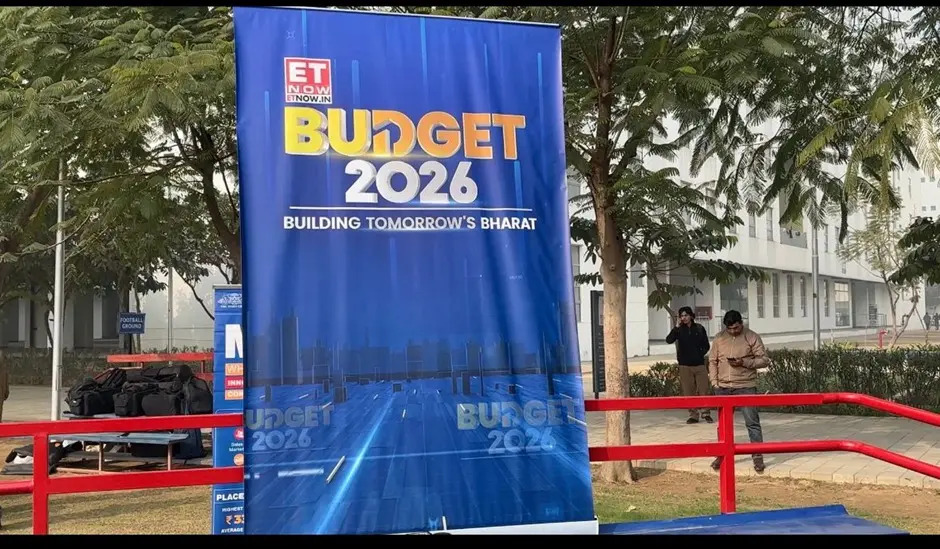
Photojournalist : Shiv Chaturvedi
In an era when "future-ready" has become a recurring phrase in education and employment discussions, India's youth find themselves torn between the cycle of ambition and deep uncertainty. In circumstances like these, the significance of discussion among the future leaders is increasingly important; a diversity of opinions is what builds a robust framework for the future. With artificial intelligence and digital innovation becoming the everyday reality of expensive living and limited opportunities, young voices today are hopeful and actively working towards making that hope a reality.
Yet behind this hope lies a deeper truth: young people are ambitious, but they are also exhausted, anxious, and increasingly vocal about what they truly need from the system.
To facilitate a deeper dialogue on India's economic future,
Students from across disciplines, including B.Tech,
A major part of this growing youth narrative evidently revolves around career expectations. Job readiness has become a race, and in that race, education often feels less like learning and more like surviving. Young voices are calling for an education system that is easier to access, and smoother to navigate, not in the sense of reducing quality, but in terms of making it practical, affordable and more aligned with real opportunities.
This is exactly where the importance of skill-based learning becomes impossible to ignore. In a world where employers look beyond marksheets and focus on what a student can actually do, skill-based education acts as a missing link between what is taught in the classroom theoretically and what is applied in the workplace empirically. It helps students in building real competencies through on-ground learning and hands-on projects, which prepare them for the professional world.
At the same time, youth concerns today are not limited to career alone, they also extend to quality of life. Issues like rising AQI levels and worsening air pollution, are major challenges for the public, wherein stepping outside, often feels like breathing in danger. The conversation is shifying from only ‘building a future’, to also ‘surviving the present’, because health, productivity, and mental well-being, are deeply impacted when clean air becomes a privilege.
This pressure has intensified as India rapidly moves towards an AI-driven and digitally dependent economy.
The youth of today are deeply curious about AI tools and that real world applications, and there is a visible shift in interest towards AI-focused learning and digital technology. Youth decisions include questions about responsible usage, fairness and how AI decisions impact people's lives. It is no longer enough for technology to be impressive; it is expected to be ethical and inclusive.
At the same time, conversations also turned towards the kind of government interventions being introduced to support young professionals entering the workforce. Initiatives like Pradhan Mantri Viksit Bharat Rozgar Yojana (PM-VBRY), a new initiative providing up to ₹15,000 as an incentive to first-time private sector employees (salaries up to ₹1 lakh) and ₹3,000/month to employers for hiring, launched by PM Modi in mid-2025 were brought up. Some students raised uncertainty about the scheme, questioning whether 15k is sufficient to survive in tier 1 and tier 2 cities.
Also, the eligibility criteria for the PM Internship Scheme, which requires applicants to be Indian citizens aged 21-24, came under criticism during the discussion. A law student pointed out that the age bracket doesn't align well with the structure of a five-year law degree, potentially excluding deserving candidates who may still be studying or graduating slightly later. This raised a broader concern about whether such schemes are designed with realities of different academic pathways in mind, and whether more flexibility is needed to ensure equal opportunities across disciplines.
Adding to this discussion, Professor Dhiraj Singh highlighted the importance of the 'Orange Economy', which plays a major role in showcasing India’s culture, tradition, and creativity.
Beyond career pressure and AI excitement, the everyday realities of the youth are becoming harder to ignore. Major problems like the middle-class struggle are emerging rapidly as a major theme, especially for students and families managing rising expenses. This further reinforces the fact that while the Indian economy is constantly growing, the cost of living is growing along with it.
The youth of today are not confused, careless, or unmotivated. They are informed, ambitious and deeply aware of how the world is changing; they want the future that is being promised to them, but they want it to be fair. They want digital growth, but they want ethical growth. They want careers, but they want training and support. They want innovation, but they want access and funding. Most of all, they want development that is visible, not just in national narratives, but in their everyday lives. The message is clear: young India is ready. Now, the system must prove that it is ready too.
(Aradhya Mohan and Shreya are storytellers who turn everyday moments into powerful narratives. Aradhya brings a sharp journalistic instinct, while Shreya transforms words into inspiration. Together, they create stories that hit, matter, and stay.)