Dialogues that define tomorrow: Inside the Times Now Summit 2026
Times of Bennett | Updated: Apr 07, 2026 22:43
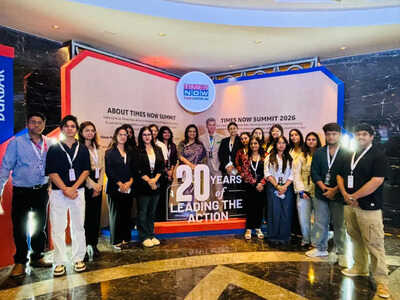
Correspondents: Shreya and Rajesh
For six years, theTimes Now Summit has shaped India's future beyond merely capturing its rise, marking 20 years of credible journalism. Focusing on the road ahead, from global innovation to digital influence. The first day at Talkatora Palace brought policymakers, industry leaders, and cultural voices together.
Times Group Managing Director Vineet Jain opened, hailing India's shift from "promise" to "central" in geopolitics and tech. He urged self-reliance in AI, education, defence, critical technology, and infrastructure, calling Atmanirbhar Bharat a "fundamental doctrine."
Keynotes and panels followed.Kiren Rijiju , on "Strengthening the world’s largest democracy," praised a successful all-party meeting on West Asia, positioning himself as both bridge-builder and confronter. He slammed Rahul Gandhi's "personal policy" jabs at Modi's foreign policy as agenda-driven, targeting development while ignoring SC/ST/minority aid. Rijiju endorsed EAM Jaishankar's "We’re not a dalal country" remark and clarified India's timely condolences for Khamenei's death.
Maneesha Ramesh outlined "Sustainable development," detailing community co-solutions like lemongrass distillation systems using steam, stainless steel stills, boilers, condensers, and separators.
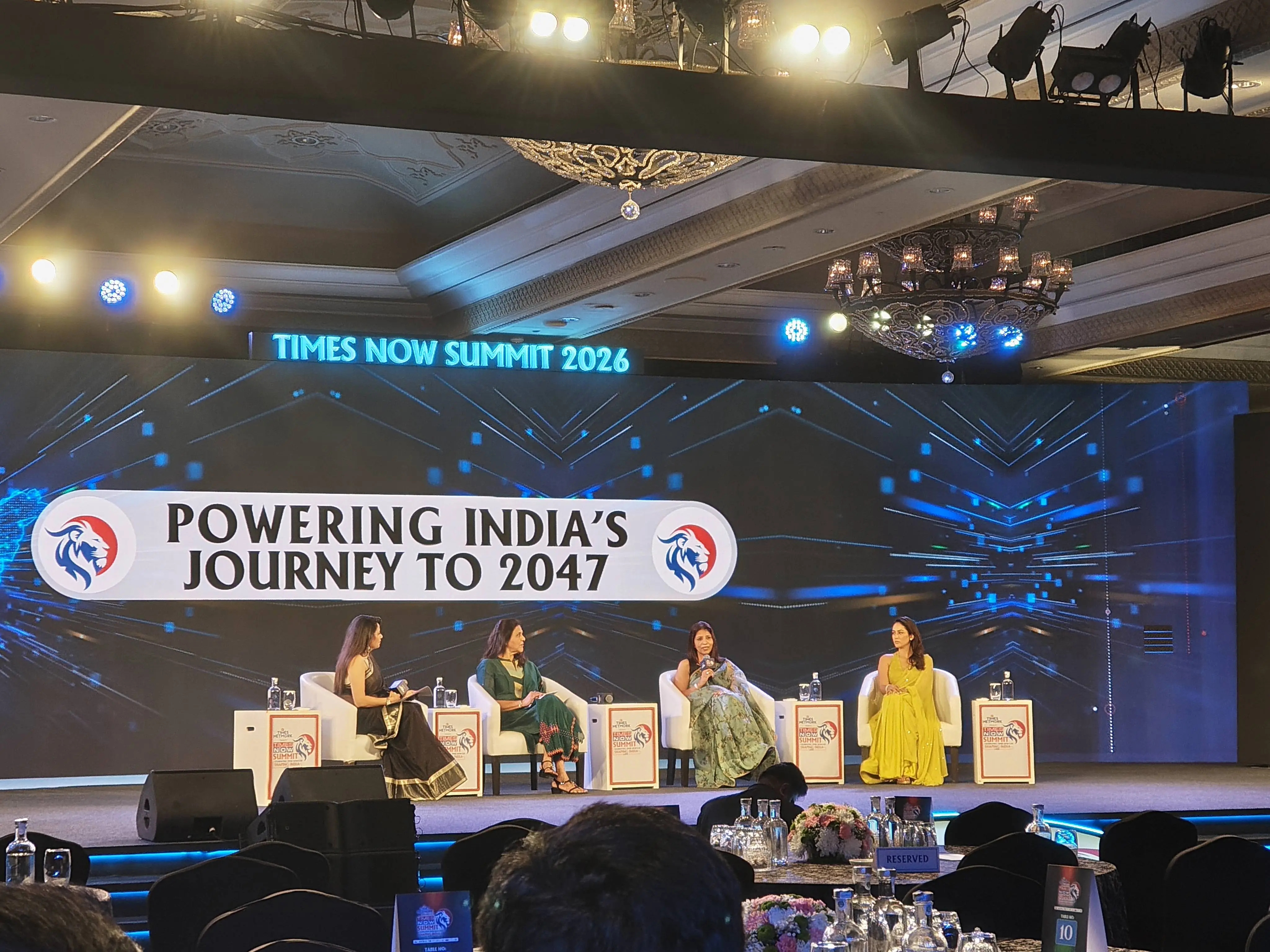
A healthcare and women empowerment panel featured DrSangeetha Reddy (Apollo Hospitals MD), Archana Vyas (Gates Foundation), and Mira Rajput (Dhun Wellness founder). They emphasised healthcare as a socio-economic driver, women's growth via participation, financial literacy, AI/digital tools, integrated workforce platforms, and startup support.
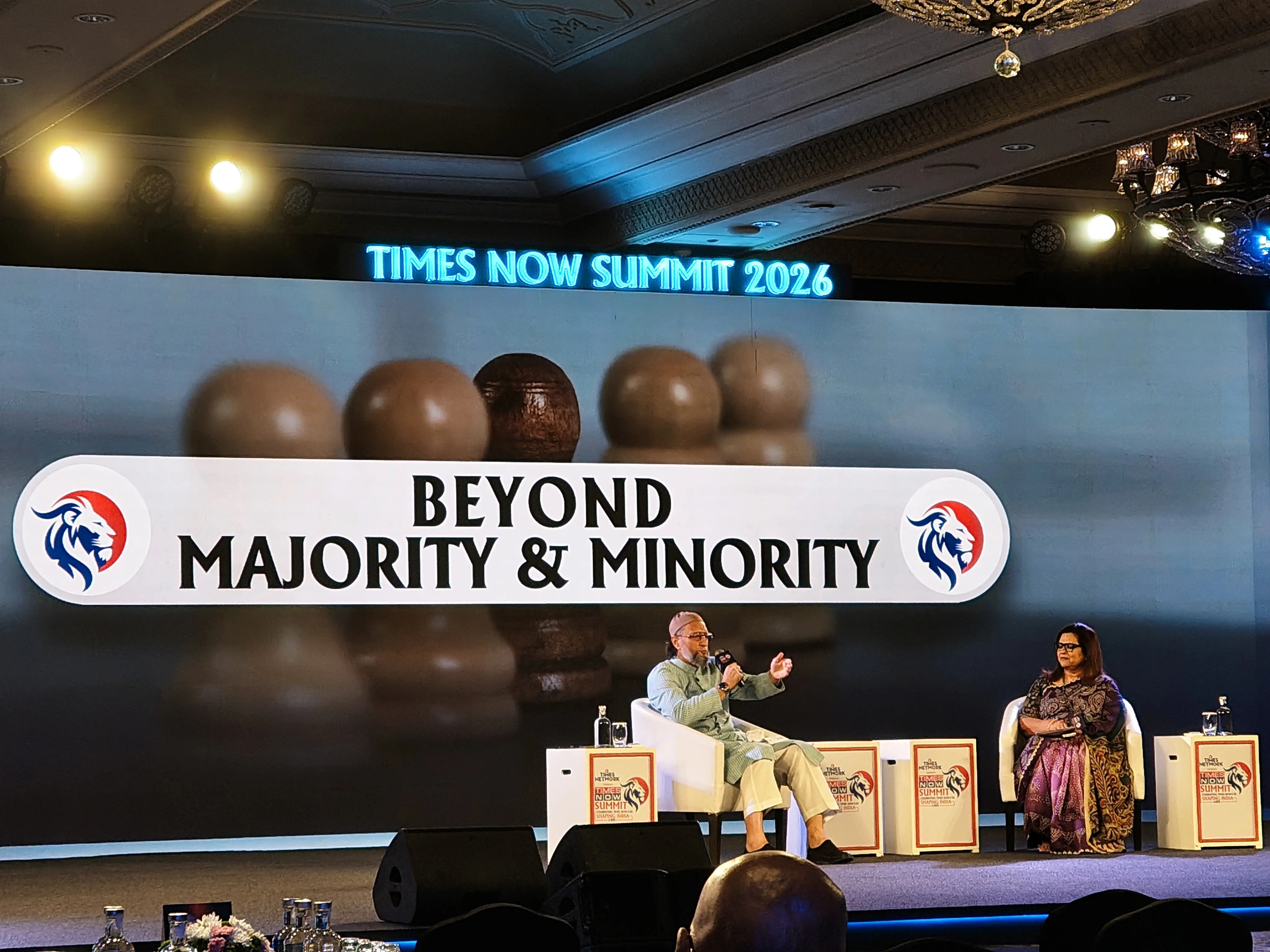
Navika Kumar grilled Asaduddin Owaisi on parliamentary democracy, noting his loud voice. He lamented scant West Asia debates in Parliament versus all-party meetings. In war crises, he prioritised national interest, referencing China discussions, and deflected on Iran's Gulf attacks. Responding to "dalal," he called Israel a "tawaif," US President "Mr Orange," and praised Iran's Kashmir stance while criticising India-Israel ties—prompting neutrality reminders. His diversions drew criticism for global image risks.
Iran's Deputy Supreme Leader Dr Mohammed Hussein Zeinani discussed war perspectives and unity, viewing Pakistan's role as a negotiator amid US pressure.
Delhi CM Rekha Gupta touted NCR roads, drains, and safety fixes, making drives enjoyable and curbing rain overflows. Cricket captain Harmanpreet Kaur highlighted resilience, locker-room camaraderie, and mental prep. On the whole, Day 1 sparked ideas across politics, business, culture, and sports, setting the stage for more.
After an exciting and composed Day 1, the Times Now Summit 2026 at taj move forward into a level of intense idea-swap at Day 2 (March 27), where different important ideas like politics, role of states and national policy are covered. The spotlight remained on political heavyweights, big names such as Amit Shah, Akhilesh Yadav, MP chief minister Mohan Yadav and other political big names were the centre of attention in the summit. Turning the summit into a platform of multiple shared and sharp ideological contrasts. Home Minister Amit Shah highlighted the narratives of the Indian government on India’s strong economy and rapid growth in the agriculture and infrastructure sectors. He also highlights the contribution of the Prime Minister in India’s stable policies.
Along with central discussions, Madha Pradesh Chief Minister Mohan Yadav talked about the role of the state in nation-building and unity. He has a detailed description of the role of states in developing India’s overall progress. In his speech, He also mentions many social and economic development programs such as the Ladli Laxmi Yojana, along with the industrialisation and agricultural growth within Madhya Pradesh. His comments placed Madhya Pradesh on the map as a developing state within the large framework of India’s development story.
On the other hand, moving forward in the discussion, opposition leader Akhilesh Yadav offered the viewpoints of one of the important leaders of the opposition by posing questions regarding governance policies, emphasising accountability and inclusiveness. This made the debates more engaging and interesting, making the discussion more dynamic and multi-dimensional.
Moving forward with heated sessions, the summit also saw a touch of Bollywood when Bollywood superstar Kriti Sanon attended the summit, where she talked about her life, her reputation and the changing nature of film with time.
Adding another element to the conversation, as one can see, summits like these extend past politics into other forms of culture. redibly quotable quote, saying, “I am not a sports person—that’s the funniest rumour I’ve ever heard,” which immediately became media material.
On the whole, day two was a definite highlight, combining hard political discussion with state-level politics as well as cultural elements.
(Shreya and Rajesh are aspiring media professionals pursuing their BAMC degrees. Together, they combine their skills in research and creative writing to bring a fresh perspective to every story they cover)
For six years, the
Keynotes and panels followed.
Maneesha Ramesh outlined "Sustainable development," detailing community co-solutions like lemongrass distillation systems using steam, stainless steel stills, boilers, condensers, and separators.
A healthcare and women empowerment panel featured Dr
Iran's Deputy Supreme Leader Dr Mohammed Hussein Zeinani discussed war perspectives and unity, viewing Pakistan's role as a negotiator amid US pressure.
Delhi CM Rekha Gupta touted NCR roads, drains, and safety fixes, making drives enjoyable and curbing rain overflows. Cricket captain Harmanpreet Kaur highlighted resilience, locker-room camaraderie, and mental prep. On the whole, Day 1 sparked ideas across politics, business, culture, and sports, setting the stage for more.
After an exciting and composed Day 1, the Times Now Summit 2026 at taj move forward into a level of intense idea-swap at Day 2 (March 27), where different important ideas like politics, role of states and national policy are covered. The spotlight remained on political heavyweights, big names such as Amit Shah, Akhilesh Yadav, MP chief minister Mohan Yadav and other political big names were the centre of attention in the summit. Turning the summit into a platform of multiple shared and sharp ideological contrasts. Home Minister Amit Shah highlighted the narratives of the Indian government on India’s strong economy and rapid growth in the agriculture and infrastructure sectors. He also highlights the contribution of the Prime Minister in India’s stable policies.
Along with central discussions, Madha Pradesh Chief Minister Mohan Yadav talked about the role of the state in nation-building and unity. He has a detailed description of the role of states in developing India’s overall progress. In his speech, He also mentions many social and economic development programs such as the Ladli Laxmi Yojana, along with the industrialisation and agricultural growth within Madhya Pradesh. His comments placed Madhya Pradesh on the map as a developing state within the large framework of India’s development story.
On the other hand, moving forward in the discussion, opposition leader Akhilesh Yadav offered the viewpoints of one of the important leaders of the opposition by posing questions regarding governance policies, emphasising accountability and inclusiveness. This made the debates more engaging and interesting, making the discussion more dynamic and multi-dimensional.
Moving forward with heated sessions, the summit also saw a touch of Bollywood when Bollywood superstar Kriti Sanon attended the summit, where she talked about her life, her reputation and the changing nature of film with time.
Adding another element to the conversation, as one can see, summits like these extend past politics into other forms of culture. redibly quotable quote, saying, “I am not a sports person—that’s the funniest rumour I’ve ever heard,” which immediately became media material.
On the whole, day two was a definite highlight, combining hard political discussion with state-level politics as well as cultural elements.
(Shreya and Rajesh are aspiring media professionals pursuing their BAMC degrees. Together, they combine their skills in research and creative writing to bring a fresh perspective to every story they cover)