From ‘Shared Well’ to Shared Glory: Saanjha Kuan Wins Big at Amity Youth Fest
Times of Bennett | Updated: Mar 08, 2026 13:21
Correspondent: Rajesh Pathivada
“Winning this award justifies the trust and belief we placed in this project by never giving up. It also fulfils our promise of sending a meaningful message to this modern urban world,” said director and scriptwriterSafin
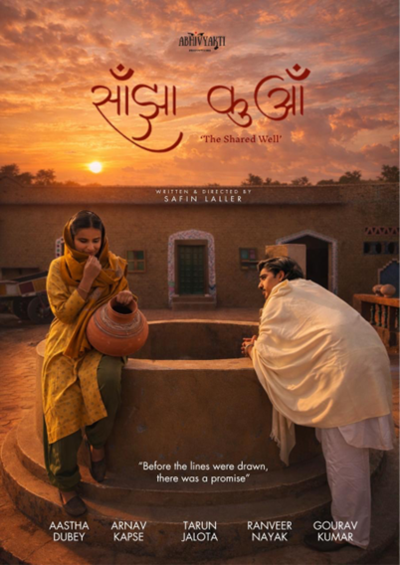
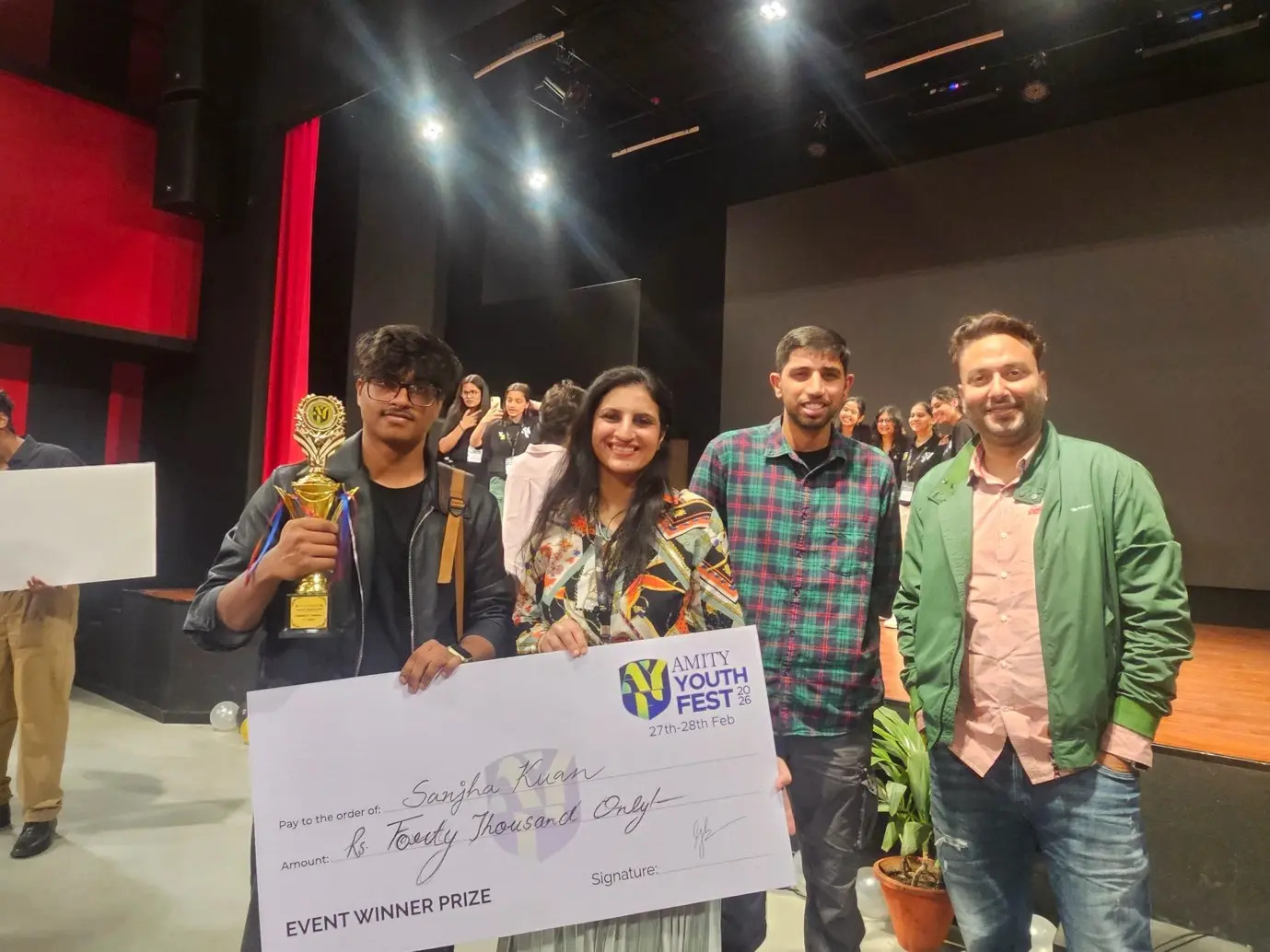
Laller after theTimes School of Media production “Saanjha Kuan – The Shared Well” clinched First Prize at the prestigious Amity Youth Fest 2026–27 in the Cinematic Campus (Short Film Category ), taking home the trophy along with a ₹40,000 cash prize.
In an era dominated by Gen-Z culture and fast-paced dating shaped by apps like Tinder, Bumble, and Hinge—where desirability is often decided in seconds with a single swipe—Safin and his team’sSaanjha Kuan
offers a refreshing escape. The film transports viewers to a time untouched by screens and shrinking attention spans, reviving the quiet patience, emotional depth, and sincerity that once defined love.
The Short Film Category at Amity Youth Fest 2026 witnessed participation from over twenty university filmmaking teams, turning the event into a highly competitive showcase of emerging storytellers. What began as a quiet brainstorming session in a dimly lit 100-square-foot hostel room soon evolved into an award-winning vision. Safin conceptualised the idea and developed the script alongside lead actor and producer Arnav Kapse, proving that powerful stories can emerge from the simplest of spaces.
“The idea which took birth in a 100 sq. ft. hostel room turned into a 20-minute ethereal journey. Receiving an award for this baby project of ours feels truly special,” said Arnav Kapse, who portrayed Bhuvan Chaudhary, a young music maestro from Lahore.
When discussing his inspirations, Safin cited Sanjay Leela Bhansali’s Devdas as a cinematic benchmark for Indian period dramas. During preparation, he encouraged the actors to watch Punjabi films such as Shayar
(2024), Kali Jotta (2023), and Angrez (2015) to familiarise themselves with the rural Punjabi dialect and atmosphere. Once scripting and prop planning were complete, the team travelled to Kurukshetra, historically
associated with the Mahabharata battlefield, to begin filming.
The crew worked tirelessly for two days, capturing every scene with creativity and practical ingenuity despite the cold winter conditions of Thanesar. On the first day alone, the team filmed for 12 straight hours, often skipping meals out of concern that makeup or costumes might get spoiled. Despite a modest ₹15,000 budget, the film successfully delivered a visually engaging narrative filled with romance, innocence, and betrayal.
“It was a bold moment for me because I was the only female character in the film. Initially, I had second thoughts, but my father encouraged me to take up the role,” said Aastha Dubey, who portrayed the shy
yet curious Lajjo. In the film, Lajjo is often seen softly humming the original song “Jhoot Na Bolo Sajni” during Bhuvan’s music practice sessions. Aastha revealed that learning about the patriarchal pressures faced by her
character motivated her to portray Lajjo with greater emotional depth.
Safin also recalled the challenges of filming on a shared set where multiple teams were shooting simultaneously. Laughing about the experience, he said, “Hume kabhi kabhi apni location change karni padti thi; side mein kisi ka pre-wedding shoot ka music hume bahut tang kar raha tha.”
To capture the climactic Sarpanch scene, the crew moved to a pastoral landscape surrounded by sprawling farms and grazing animals, allowing the raw essence of rural life to shape the film’s final visuals. Veteran theatre performer Gourav Kumar, who portrayed the stern village sarpanch, expressed admiration for the young Gen-Z crew’s ability to conceptualise and execute a sophisticated pre-colonial period drama centred on timeless love.
Following the completion of production, the film was refined under the guidance of Mr. Ruthwik Aphale, a filmography faculty member at the Times School of Media (TSOM), whose mentorship played a crucial role in shaping the final cut. Safin and Arnav later submitted the film to the Mumbai Film Festival,
an internationally recognised platform for feature films and documentaries. The jury praised Safin’s dual brilliance as both director and lyricist, awarding the film First Prize for “Best Music.”
The film’s success continued on campus when, under the patronage of Deputy Dean Dr. Dhiraj Singh and Dean Dr. Sumit Narula, the team organised a special screening on February 12. Nearly 90 attendees gathered to
watch a story of love set in an era before borders divided the land.
Mrs. Meera Shirodkar, Assistant Professor of Creative Writing, described it as the finest student film she had seen. Echoing the enthusiasm, Mr. Tilak Jha remarked simply, “Housefull show — that says it all.”
As the final judgement approached at Amity Youth Fest, Ranveer Nayak, a first-year Mass Communication student who portrayed the charismatic antagonist Faisal, observed the audience’s captivated reaction.
“This film talks about love, but not the kind of love our Gen-Z generation often gets trapped in today—where relationships keep getting new labels and meanings. It reflects the old-school love that existed before
mobile phones and texts changed the way people connected,” Ranveer said while introducing the film on stage.
The triumph of Saanjha Kuan demonstrates that sincere belief in a creative vision can overcome even the most daunting odds. It also reflects the conviction Safin expressed at the project’s inception: “Period drama koi nahi bana sakta hai yaar — sirf hum hi apni mazbooti par bana rahe hain.”
The film made its global debut on March 6 and is now available for audiences worldwide. Viewers can experience the award-winning journey by streaming Saanjha Kuan free on YouTube.
(This article is written by Rajesh Pathivada, a first-year Mass Communication student interested in geopolitics, literature, and exploring unconventional ideas, with a keen eye for art and paintings.)
“Winning this award justifies the trust and belief we placed in this project by never giving up. It also fulfils our promise of sending a meaningful message to this modern urban world,” said director and scriptwriter
Laller after the
In an era dominated by Gen-Z culture and fast-paced dating shaped by apps like Tinder, Bumble, and Hinge—where desirability is often decided in seconds with a single swipe—Safin and his team’s
offers a refreshing escape. The film transports viewers to a time untouched by screens and shrinking attention spans, reviving the quiet patience, emotional depth, and sincerity that once defined love.
The Short Film Category at Amity Youth Fest 2026 witnessed participation from over twenty university filmmaking teams, turning the event into a highly competitive showcase of emerging storytellers. What began as a quiet brainstorming session in a dimly lit 100-square-foot hostel room soon evolved into an award-winning vision. Safin conceptualised the idea and developed the script alongside lead actor and producer Arnav Kapse, proving that powerful stories can emerge from the simplest of spaces.
“The idea which took birth in a 100 sq. ft. hostel room turned into a 20-minute ethereal journey. Receiving an award for this baby project of ours feels truly special,” said Arnav Kapse, who portrayed Bhuvan Chaudhary, a young music maestro from Lahore.
When discussing his inspirations, Safin cited Sanjay Leela Bhansali’s Devdas as a cinematic benchmark for Indian period dramas. During preparation, he encouraged the actors to watch Punjabi films such as Shayar
(2024), Kali Jotta (2023), and Angrez (2015) to familiarise themselves with the rural Punjabi dialect and atmosphere. Once scripting and prop planning were complete, the team travelled to Kurukshetra, historically
associated with the Mahabharata battlefield, to begin filming.
The crew worked tirelessly for two days, capturing every scene with creativity and practical ingenuity despite the cold winter conditions of Thanesar. On the first day alone, the team filmed for 12 straight hours, often skipping meals out of concern that makeup or costumes might get spoiled. Despite a modest ₹15,000 budget, the film successfully delivered a visually engaging narrative filled with romance, innocence, and betrayal.
“It was a bold moment for me because I was the only female character in the film. Initially, I had second thoughts, but my father encouraged me to take up the role,” said Aastha Dubey, who portrayed the shy
yet curious Lajjo. In the film, Lajjo is often seen softly humming the original song “Jhoot Na Bolo Sajni” during Bhuvan’s music practice sessions. Aastha revealed that learning about the patriarchal pressures faced by her
character motivated her to portray Lajjo with greater emotional depth.
Safin also recalled the challenges of filming on a shared set where multiple teams were shooting simultaneously. Laughing about the experience, he said, “Hume kabhi kabhi apni location change karni padti thi; side mein kisi ka pre-wedding shoot ka music hume bahut tang kar raha tha.”
To capture the climactic Sarpanch scene, the crew moved to a pastoral landscape surrounded by sprawling farms and grazing animals, allowing the raw essence of rural life to shape the film’s final visuals. Veteran theatre performer Gourav Kumar, who portrayed the stern village sarpanch, expressed admiration for the young Gen-Z crew’s ability to conceptualise and execute a sophisticated pre-colonial period drama centred on timeless love.
Following the completion of production, the film was refined under the guidance of Mr. Ruthwik Aphale, a filmography faculty member at the Times School of Media (TSOM), whose mentorship played a crucial role in shaping the final cut. Safin and Arnav later submitted the film to the Mumbai Film Festival,
an internationally recognised platform for feature films and documentaries. The jury praised Safin’s dual brilliance as both director and lyricist, awarding the film First Prize for “Best Music.”
The film’s success continued on campus when, under the patronage of Deputy Dean Dr. Dhiraj Singh and Dean Dr. Sumit Narula, the team organised a special screening on February 12. Nearly 90 attendees gathered to
watch a story of love set in an era before borders divided the land.
Mrs. Meera Shirodkar, Assistant Professor of Creative Writing, described it as the finest student film she had seen. Echoing the enthusiasm, Mr. Tilak Jha remarked simply, “Housefull show — that says it all.”
As the final judgement approached at Amity Youth Fest, Ranveer Nayak, a first-year Mass Communication student who portrayed the charismatic antagonist Faisal, observed the audience’s captivated reaction.
“This film talks about love, but not the kind of love our Gen-Z generation often gets trapped in today—where relationships keep getting new labels and meanings. It reflects the old-school love that existed before
mobile phones and texts changed the way people connected,” Ranveer said while introducing the film on stage.
The triumph of Saanjha Kuan demonstrates that sincere belief in a creative vision can overcome even the most daunting odds. It also reflects the conviction Safin expressed at the project’s inception: “Period drama koi nahi bana sakta hai yaar — sirf hum hi apni mazbooti par bana rahe hain.”
The film made its global debut on March 6 and is now available for audiences worldwide. Viewers can experience the award-winning journey by streaming Saanjha Kuan free on YouTube.
(This article is written by Rajesh Pathivada, a first-year Mass Communication student interested in geopolitics, literature, and exploring unconventional ideas, with a keen eye for art and paintings.)