‘Saanjha Kuaan’: The Art of Love on a Screen
Times of Bennett | Updated: Feb 17, 2026 15:32
Correspondent: Shubhangi Sarkar
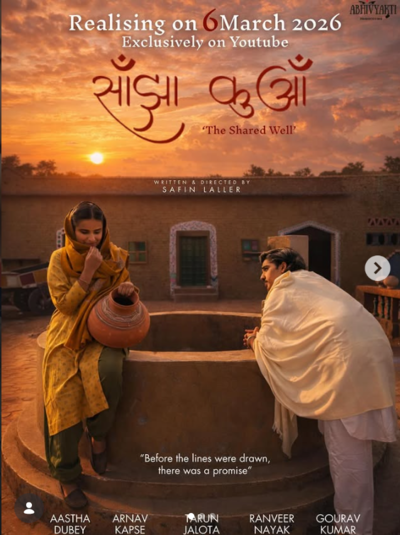
Love truly knows no bounds. And this is a human truth that was once again emphasised by the original, Times School of Media production- ‘Saanjha Kuaan ’- The Shared Well.
Directed by first yearBA Film , Television and Web Series’ student Safin Laller, this 20-minute-long, self-funded, and student-led short film, is a story that leaves a lingering, bittersweet feeling that remains unforgettable. Even if, for a brief amount of time.
When asked about the inspirations behind this creation, Safin referenced the legendary Indian director- Sanjay Leela Bhansali’s ‘Devdas’. Another unforgettable drama that set the standards for Indian period pieces. Alongside his own experiences of unrequited feelings towards a sweetheart in his 10th grade of high school that were expressed only on a piece of paper.
What makes this short film even more interesting is the fact that this short colonial drama, is from the very creative mind of someone who belongs to the Gen-Z era of low attention spans and fickle trends.
The film starts off with a hooking mystery, surrounding an indecipherable piece of paper that a young boy finds in his mother’s keepsake box. And the process of decoding those words is what acts as the transition into the main story, in form of a flashback that the mother experiences.
The female lead, Lajjo, who was portrayed by fellow TSOM studentAastha Dubey , does a brilliant job in enacting the role of a young Indian woman in the colonial era. Her shy and timid personality acts as a classic representation of the patriarchal pressure, that the women in those times had to endure.
And yet, in a colonial setting where women’s needs, wants and desires were never a topic of consideration, Lajjo’s character decides to pursue her own willingness of learning music. From the young man she meets at the well, which she uses to draw water from, every day.
This young man is introduced asBhuvan Chaudhary, a classical music maestro from Lahore, who happens to recognise Lajjo’s talent for singing. Thanks to her coincidentally humming along the song ‘Jhoot na bolo sajna’ during his practice sessions.
Portrayed by First Year Mass Communication student, Arnav Kapse; Bhuvan’s charismatic persona of being a knowledgeable and passionate young artist is depicted with a sort of perfection that pulls the audience deeper into the film.
Due to Lajjo’s father being the ‘Sarpanch’ or ‘Head’ of the village that she resides in, a lot of hesitance about this secret exchange of musical wisdom between both of them, is expressed by Lajjo’s character all throughout. As she tries her level best to let this secret remain a secret. Because the consequences of interacting with another man, and attempting to pursue her own dreams was no less than a crime in the heavily patriarchal, colonial era of Indian history.
Her hesitance however, is gradually shown to begin fading away and blooming into feelings of affection instead. With the skilful usage of cinematographic elements such as lighting, music and dialogue writing. And of course, the actors’ own remarkable abilities.
Lajjo’s fellow admirer,Faisal , is introduced into the film with a very simple and comedic tone. Especially through his light-hearted banter with his mother, voiced by second year Mass Communications student Viraji Singh. This comedic element acts as a pleasant refresher from the film’s overall emotion-heavy narrative. While in striking contrast, Faisal becomes the one, bringing the storm after the calm. For his actions end up placing a major barrier between Bhuvan and Lajjo’s frequent rendezvous.
The transition from moments of happiness, to those of betrayal, hopelessness and despair are presented to the audience using perfectly crafted background scoring and songs. Whose lyrics were also composed
by the young director himself.
And ultimately, the notions of pure love is what fuels Lajjo’s choice to blacken her tongue, and lie about Bhuvan harassing her under the pretext of teaching her music. Which ultimately prevents him from getting killed by the village’s sarpanch. For ever daring to love his daughter. This acts as a ‘full-circle’ moment, considering that the song that brought them together in the first place, was a request to his loved one to not lie.
The production’s focus on detailing is noticeable in many instances throughout the film. Such as Bhuvan’s usage of a fountain pen to write down his last lesson to Lajjo on the same piece of paper that she held onto, for years. A clear nod towards the film’s established colonial setting.
Additionally, at the very end, when the timeline flips back to the present, true love’s victory is depicted through the ironic plot twist of Lajjo’s young son, being called out by his friends as ‘Bhuvan’. Simply proving Safin’s brilliance as a writer, director and lyricist.
Logistically too, the film was an outcome of sheer hard-work and research. Considering that the entire film was shot in a single day, from dawn to dusk, in a hidden spot ofKurukshetra , Haryana .
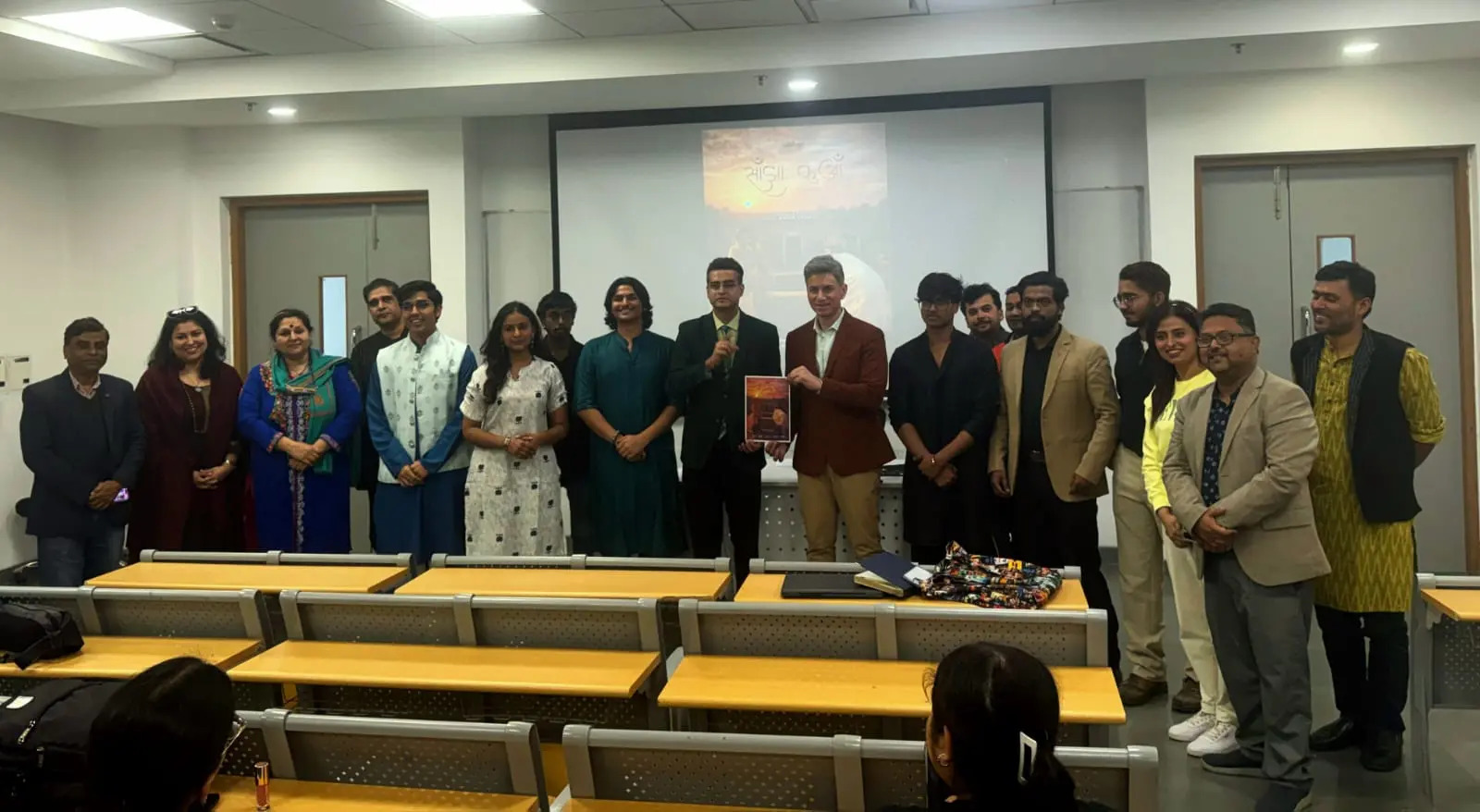
The spot, which consisted of both, a well, and old residential structures as the cast mentioned, was rather difficult to find. Because in the director’s own words, ‘Jin cheezo ko hum aam maan rahe hai, wo ab khaas ho chuke hai’.
Ultimately, ‘Saanjha Kuaan’ is a visually spectacular, dramatical, period piece. Which is a beautiful representation of a very commonly used statement by romanticists and lovers around the world. That is, “If you love someone enough, let them go’.
The author is a second year BA Mass Communication student. She is extremely passionate about international relations, linguistics, cultures and anime. And she likes to indulge in digital art in her free time.
Love truly knows no bounds. And this is a human truth that was once again emphasised by the original, Times School of Media production- ‘
Directed by first year
When asked about the inspirations behind this creation, Safin referenced the legendary Indian director- Sanjay Leela Bhansali’s ‘Devdas’. Another unforgettable drama that set the standards for Indian period pieces. Alongside his own experiences of unrequited feelings towards a sweetheart in his 10th grade of high school that were expressed only on a piece of paper.
What makes this short film even more interesting is the fact that this short colonial drama, is from the very creative mind of someone who belongs to the Gen-Z era of low attention spans and fickle trends.
The film starts off with a hooking mystery, surrounding an indecipherable piece of paper that a young boy finds in his mother’s keepsake box. And the process of decoding those words is what acts as the transition into the main story, in form of a flashback that the mother experiences.
The female lead, Lajjo, who was portrayed by fellow TSOM student
And yet, in a colonial setting where women’s needs, wants and desires were never a topic of consideration, Lajjo’s character decides to pursue her own willingness of learning music. From the young man she meets at the well, which she uses to draw water from, every day.
This young man is introduced as
Portrayed by First Year Mass Communication student, Arnav Kapse; Bhuvan’s charismatic persona of being a knowledgeable and passionate young artist is depicted with a sort of perfection that pulls the audience deeper into the film.
Due to Lajjo’s father being the ‘Sarpanch’ or ‘Head’ of the village that she resides in, a lot of hesitance about this secret exchange of musical wisdom between both of them, is expressed by Lajjo’s character all throughout. As she tries her level best to let this secret remain a secret. Because the consequences of interacting with another man, and attempting to pursue her own dreams was no less than a crime in the heavily patriarchal, colonial era of Indian history.
Her hesitance however, is gradually shown to begin fading away and blooming into feelings of affection instead. With the skilful usage of cinematographic elements such as lighting, music and dialogue writing. And of course, the actors’ own remarkable abilities.
Lajjo’s fellow admirer,
The transition from moments of happiness, to those of betrayal, hopelessness and despair are presented to the audience using perfectly crafted background scoring and songs. Whose lyrics were also composed
by the young director himself.
And ultimately, the notions of pure love is what fuels Lajjo’s choice to blacken her tongue, and lie about Bhuvan harassing her under the pretext of teaching her music. Which ultimately prevents him from getting killed by the village’s sarpanch. For ever daring to love his daughter. This acts as a ‘full-circle’ moment, considering that the song that brought them together in the first place, was a request to his loved one to not lie.
The production’s focus on detailing is noticeable in many instances throughout the film. Such as Bhuvan’s usage of a fountain pen to write down his last lesson to Lajjo on the same piece of paper that she held onto, for years. A clear nod towards the film’s established colonial setting.
Additionally, at the very end, when the timeline flips back to the present, true love’s victory is depicted through the ironic plot twist of Lajjo’s young son, being called out by his friends as ‘Bhuvan’. Simply proving Safin’s brilliance as a writer, director and lyricist.
Logistically too, the film was an outcome of sheer hard-work and research. Considering that the entire film was shot in a single day, from dawn to dusk, in a hidden spot of
The spot, which consisted of both, a well, and old residential structures as the cast mentioned, was rather difficult to find. Because in the director’s own words, ‘Jin cheezo ko hum aam maan rahe hai, wo ab khaas ho chuke hai’.
Ultimately, ‘Saanjha Kuaan’ is a visually spectacular, dramatical, period piece. Which is a beautiful representation of a very commonly used statement by romanticists and lovers around the world. That is, “If you love someone enough, let them go’.
The author is a second year BA Mass Communication student. She is extremely passionate about international relations, linguistics, cultures and anime. And she likes to indulge in digital art in her free time.