Times of Bennett
ArticlePopculture

Coachella at 25: Still Defining Culture or Just Following It?

From underground music experiment to the internet’s favorite desert backdrop, Coachella has evolved into more than a festival. At 25, is it still shaping culture, or just curating it for the feed?
Published:April 24, 2026 at 12:35 PM5 min read
Coachella at 25: Still Defining Culture or Just Following It?
Correspondent: Kanishka Shukla
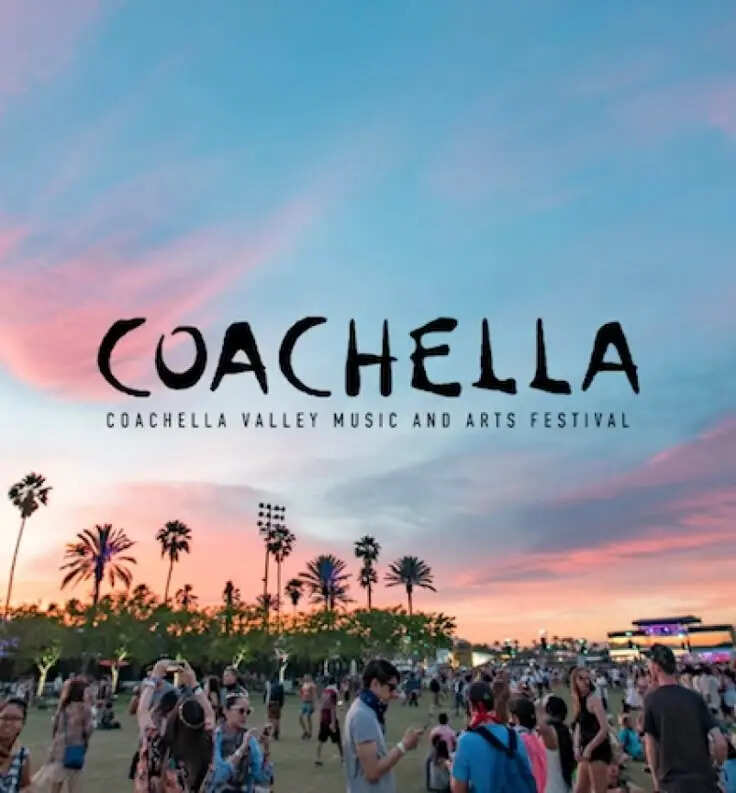
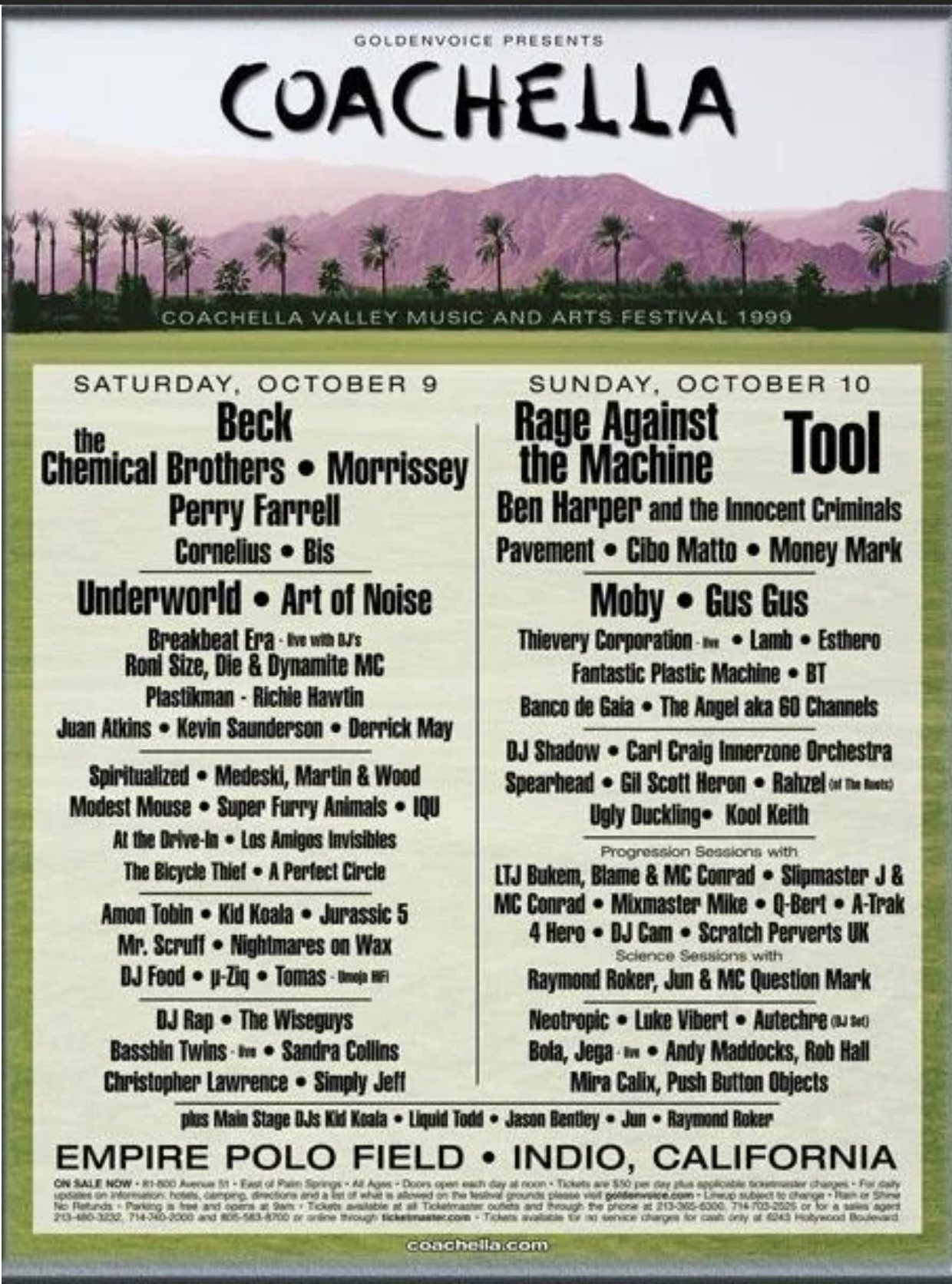
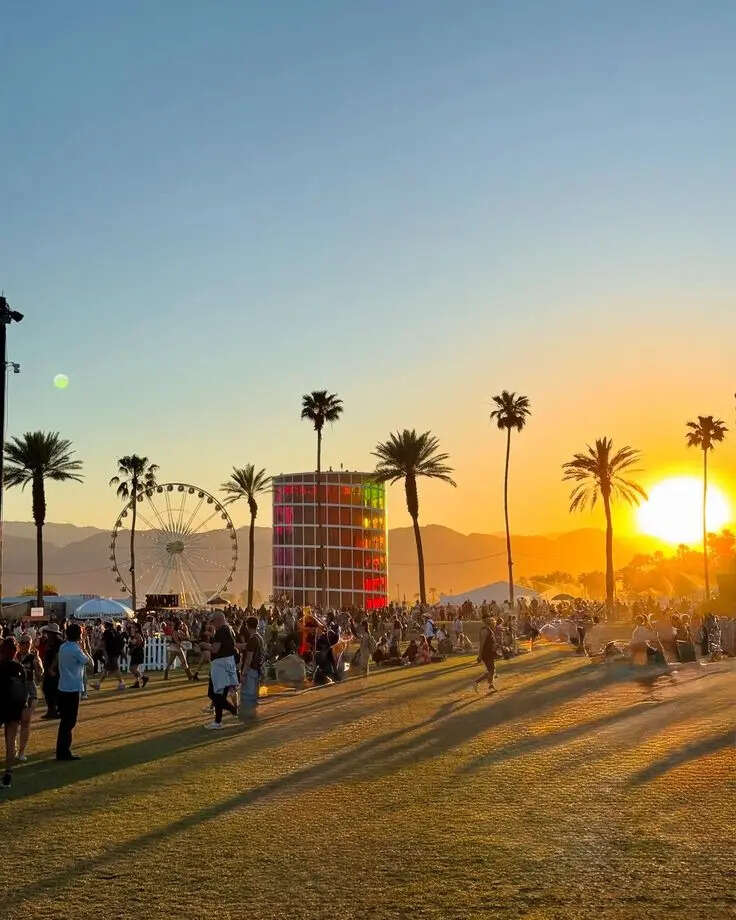
Coachella didn’t begin as the glitter-drenched, influencer-packed desert carnival we know today. Back in 1999, the Coachella Valley Music and Arts Festival was more indie gamble than global phenomenon. Staged in the California desert after the fiery disaster that was Woodstock '99, it promised something different: cleaner vibes, sharper curation, and a lineup that leaned more alternative than anarchic. About 25,000 people showed up. The profits, however, did not.
Cue a brief identity crisis. Coachella took a year off, came back smaller in 2001, and then slowly, almost stubbornly, grew into itself. No overnight virality, no instant cultural domination, just a steady climb. By the mid-2000s, it had stretched into a multi-day affair, and eventually, a two-weekend marathon where music, art, fashion, and heatstroke all coexisted in chaotic harmony.


But let’s be honest, Coachella stopped being just about music a long time ago.
Somewhere along the way, it became a mood. A look. A personality trait. The flower crowns of the 2010s weren’t just accessories; they were practically a uniform. Crochet tops, ankle boots, oversized sunglasses, Coachella didn’t just host trends, it exported them. Instagram didn’t invent the festival aesthetic, but Coachella certainly gave it a filter and a global audience.
And then came the influencers.
If early Coachella was about discovering bands, modern Coachella is just as much about discovering angles. The festival has been lovingly (and not-so-lovingly) dubbed the Influencer Olympics, where outfit changes rival set changes and a well-timed post can matter more than a perfectly timed guitar solo. Brand activations pop up like mirages in the desert, except these mirages come with free drinks and strategic lighting.
So, the question practically asks itself: is Coachella still setting the cultural agenda, or is it just really good at dressing up whatever’s already trending?
To be fair, it still has its moments. The lineup each year manages to pull off a careful balancing act, with legacy acts, global stars, and underground discoveries. It’s one of the few places where genres collide without apology. One minute you’re swaying to indie rock, the next you’re in the middle of a K-pop crowd that knows every word. When Coachella gets it right, it reminds you why it became important in the first place.

It’s also still a stage for spectacle. Big reunions, surprise guests, performances that instantly become cultural timestamps, these things still happen here. And when they do, they ripple far beyond the desert. In those moments, Coachella isn’t following culture; it’s nudging it forward, if only slightly.
But then there’s the other side of the coin-the one that costs a small fortune.
Tickets are expensive. The VIP sections are more exclusive than ever. There are luxury yurts (yes, yurts), private parties, and experiences that feel less like a music festival and more like a curated lifestyle package. The scrappy, slightly chaotic spirit of the early years has been replaced by something sleeker, shinier, and undeniably more commercial.
And yet, calling that a downfall feels…a bit unfair.
Because culture itself has changed. Festivals aren’t just events anymore; they’re content ecosystems. Coachella doesn’t exist only for the people who attend; it exists for the millions watching from their phones. Every outfit, every performance, every sunset is instantly uploaded, shared, dissected, and repackaged. The festival isn’t just happening in the desert; it’s happening everywhere, all at once.
In that sense, Coachella is both the main character and the mirror. It reflects what’s already popular, fashion trends, music shifts, and internet culture, but it also amplifies them to a point where they become unavoidable. It doesn’t always start the conversation, but it’s very good at making sure everyone hears it.
And maybe that’s the real evolution.

At 25, Coachella isn’t trying to be the underground tastemaker it once was. It’s something else entirely: part music festival, part fashion week, part marketing machine, part social experiment. It’s where authenticity and performance blur so seamlessly that you’re not quite sure which one you’re looking at anymore.
Is that a loss? Or just growth in a different direction?
The truth is, Coachella has always been a reflection of its time. In 1999, it reflected a desire for a more curated, controlled festival experience. In the 2010s, it reflected the rise of social media and aesthetic culture. Today, it reflects a world where everything-music, identity, even fun- is a little bit performative.
So, is Coachella still defining culture?

Yes. But not in the way it used to.

It no longer dictates from the fringes; it operates at the center, where culture is louder, faster, and infinitely more visible. Sometimes it leads. Sometimes it follows. Most of the time, it does both at once.
And maybe that’s why, 25 years in, we’re still talking about it.
Because love it or roll your eyes at it, Coachella hasn’t become irrelevant; it’s just become exactly what culture looks like right now.

The writer is a second-year BA Mass Communication student, passionate about storytelling, media trends, and
pop culture analysis. She spends her free time discovering new books, binge-watching movies and series, experimenting with creative projects, and hunting for the next viral internet moment.


Tags
#coachella#woodstock#coachella valley music and arts festival#coachella 2026#music#culture

Related Articles

BTS Rewrites the Comeback Playbook With ‘Arirang’
Article
Popculture

BTS Rewrites the Comeback Playbook With ‘Arirang’

BTS Arirang comeback redefines music promotion by bypassing traditional media and focusing on digital platforms, selective appearances, and direct fan engagement. Despite minimal press, the group achieved record-breaking sales & chart success, highlighting a shift in comeback Playbook
Apr 9, 20264 min
#bts#arirang#zane lowe+3 more
From Desert Echoes to Beyond Borders: The Barmer Boys’ Musical Journey
Article
Popculture

From Desert Echoes to Beyond Borders: The Barmer Boys’ Musical Journey

In a Gen Z era of high-energy music, the Barmer Boys brought Rajasthani folk to global audiences with quiet authenticity. Rooted in the Manganiyar tradition, their music was inherited through generations, shaped by devotion and everyday life. From village gatherings to international stages, they blended bhajans, Sufi kalaams, and modern elements seamlessly. Even after Mangey Khan’s passing in 2024, their music lives on—proving folk isn’t fading, it evolves and continues to connect across cultures.
Mar 27, 20264 min
#barmer#rajasthan#mangey khan+4 more
5 Highlights of Golden Globe Awards 2026
Article
Popculture

5 Highlights of Golden Globe Awards 2026

The 2026 Golden Globe Awards delivered a night full of surprises, historic wins, and viral moments that dominated social media conversations. From breakthrough performances to global cultural milestones, the ceremony reflected the evolving landscape of cinema and entertainment. Here are five standout highlights that captured the world’s attention.
Mar 20, 20263 min
#golden globe#demon hunters#michael b. jordans+2 more
BAFTA Awards 2026: Big Wins, Historic Moments and a Night of Conversation
Article
Popculture

BAFTA Awards 2026: Big Wins, Historic Moments and a Night of Conversation

The 79th British Academy Film Awards lit up London’s Royal Festival Hall on February 22, 2026, bringing together glamour, historic victories and a few moments that ensured this year’s ceremony would be remembered for more than just the trophies.

Feb 27, 20263 min
#bafta#tourette#timothee chalamet+2 more
February’s Biggest Pop Culture Moments: Nostalgia, Reinvention and Cultural Buzz
Article
Popculture

February’s Biggest Pop Culture Moments: Nostalgia, Reinvention and Cultural Buzz

Correspondent: Mehak Juneja

Feb 28, 20263 min
#taylor#margot robbie#jfk+2 more
Bismil-Ki-Dastaan: From winning awards to winning hearts
Article
Popculture

Bismil-Ki-Dastaan: From winning awards to winning hearts

'Bismil-ki-Mehfil' stole the show at Uphoria 2026 with Sufi depth amid hip-hop dominance. Bismil, from a musical family, trained under gurus from age five, debuted professionally at 18 during Hindu College days, forming his band and meeting manager Vibhor Hasija—coining the name in 2013, inspired by his mother's pick from 'Gulabi Aaakhen.' Hits like 'Tere Bina' (2019), 'Ki-Kita,' Nusrat cover 'Kali Kali Zulphon Ke Phande' (2022), Etihad Arena performances, Times Square feature, awards, and 2025 'Main Hoon Sufi' tour followed. Overcoming four jobless years, his passion shines: "Music ek samundar hai." Uphoria witnessed pure artistry.

Feb 20, 20264 min
#bismil#bismil-ki-mehfil#Sufi music+2 more