From Desert Echoes to Beyond Borders: The Barmer Boys’ Musical Journey
Times of Bennett | Updated: Apr 07, 2026 22:54
Correspondent: Tanisha Virmani
In the era of Genz where people lean towards high-energy songs with great base and buzz, a trio from the sands ofRajasthan quietly brought folk music into the light. The Barmer brothers didn't just perform the music, but they reimagined it, carrying the vintage spark of the desert traditions from village gatherings as a small community event to the world’s biggest stages.
Before the big stages and international tours, there were simple moments as well as the casual ones like singing at weddings, playing at birthdays, sitting beside elders and learning songs not through books, but by listening, repeating, and feeling through constant riyaz. The trio was formed in 2011 at the Amarrass Desert Music Festival. They come from the Manganiyar Sufi Muslim community, where music isn’t taught in classrooms but passed down through generations within families. For them, it was never about choosing music as a profession, but it was already a part of who they were; it was in the air they breathed. They had been performing long before ,there was also an audience beyond their villages.
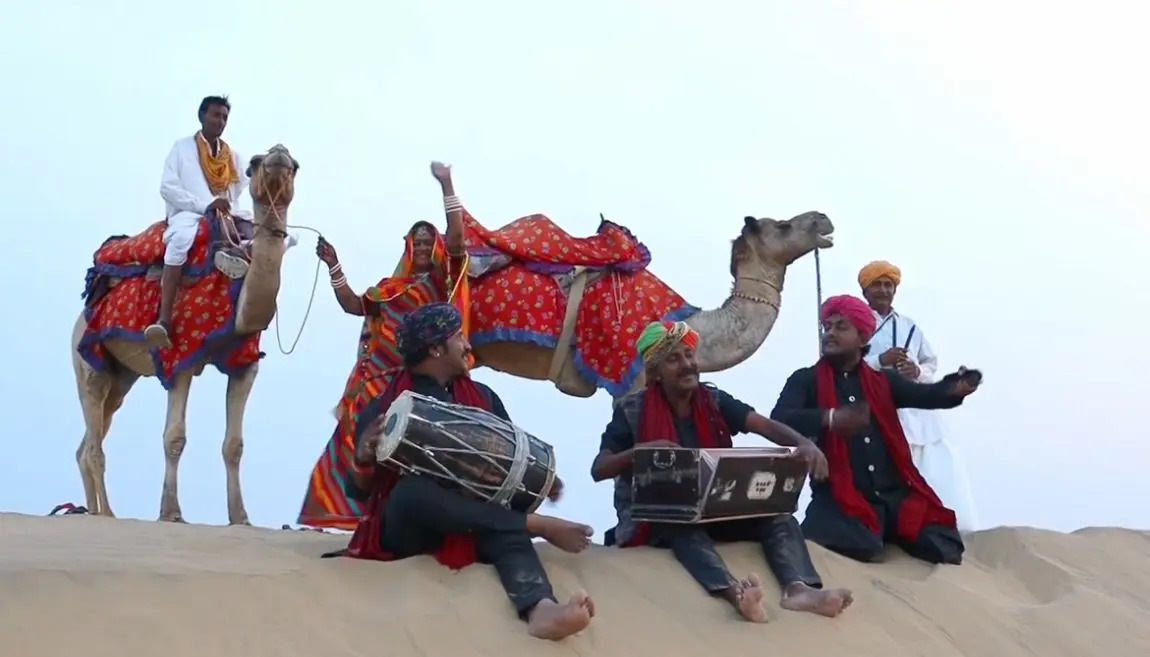
Mangey Khan , or Manga, was fondly called as he carried a voice that felt deeply personal, one that could hold both devotion and longing in a single note. Sawai Khan added life to their sound with instruments like the morchang, khartaal, and bhapang, often surprising listeners by blending them with beatboxing. Magada Khan , with his dholak, kept everything grounded and steady, familiar, like a rhythm you can rely on.
Together, their music didn’t feel rehearsed; it felt lived. They sang bhajans of Kabir and Meera, Sufi kalaams, and songs meant for everyday moments. There was no pressure to innovate, yet innovation found its way into their music. Slowly, they began experimenting by adding electronic elements, working with DJs, and stepping into spaces far removed from their desert roots. Somehow, it all felt natural.
Their journey beyond Rajasthan happened gradually. One performance led to another, and before they knew it, they were performing on international stages from festivals in Denmark to audiences across Europe and North America. What stood out wasn’t just where they performed, but how they carried their world with them wherever they went.
 Their albums reflect their honesty. At Home (2012) feels exactly like its name, raw and unfiltered, recorded in their own surroundings. Kesariya Balm (2017) shows growth, but without losing the original warmth. Even as their reach expanded through platforms like MTV Coke Studio, BBC, and NPR, their essence remained unchanged.
Collaborations became a part of their journey—not as a strategy, but as an extension of curiosity. Working with artists like Clinton Cerejo or sharing stages with musicians from around the world, they explored new sounds without losing their own identity, learning and adapting along the way.
What truly stayed constant was the feeling in their music. It wasn’t just about sound; it was about the connection that was built. Rooted in the Bhakti-Sufi tradition, their songs never saw religion as a boundary. They expressed devotion, love, and togetherness in a way that felt simple yet powerful.
When Mangey Khan passed away in 2024, it felt like a quiet pause in the story that had touched many hearts. But the music didn’t stop; it lingers in recordings, in memories, and in the way people feel when they listen to it.
The Barmer Boys didn’t set out to prove anything. Yet, in their own unassuming way, they showed that folk music isn’t just an old or outdated verse; it’s still alive. And when it comes from a real place, from the heart of people, it doesn’t just stay in the desert; it travels like the wind, connects people, and stays with you.
(This article is written by Tanisha Virmani, a master's student in mass communication who is passionate about reading and writing poetry)
In the era of Genz where people lean towards high-energy songs with great base and buzz, a trio from the sands of
Before the big stages and international tours, there were simple moments as well as the casual ones like singing at weddings, playing at birthdays, sitting beside elders and learning songs not through books, but by listening, repeating, and feeling through constant riyaz. The trio was formed in 2011 at the Amarrass Desert Music Festival. They come from the Manganiyar Sufi Muslim community, where music isn’t taught in classrooms but passed down through generations within families. For them, it was never about choosing music as a profession, but it was already a part of who they were; it was in the air they breathed. They had been performing long before ,there was also an audience beyond their villages.
Together, their music didn’t feel rehearsed; it felt lived. They sang bhajans of Kabir and Meera, Sufi kalaams, and songs meant for everyday moments. There was no pressure to innovate, yet innovation found its way into their music. Slowly, they began experimenting by adding electronic elements, working with DJs, and stepping into spaces far removed from their desert roots. Somehow, it all felt natural.
Their journey beyond Rajasthan happened gradually. One performance led to another, and before they knew it, they were performing on international stages from festivals in Denmark to audiences across Europe and North America. What stood out wasn’t just where they performed, but how they carried their world with them wherever they went.
Collaborations became a part of their journey—not as a strategy, but as an extension of curiosity. Working with artists like Clinton Cerejo or sharing stages with musicians from around the world, they explored new sounds without losing their own identity, learning and adapting along the way.
What truly stayed constant was the feeling in their music. It wasn’t just about sound; it was about the connection that was built. Rooted in the Bhakti-Sufi tradition, their songs never saw religion as a boundary. They expressed devotion, love, and togetherness in a way that felt simple yet powerful.
When Mangey Khan passed away in 2024, it felt like a quiet pause in the story that had touched many hearts. But the music didn’t stop; it lingers in recordings, in memories, and in the way people feel when they listen to it.
The Barmer Boys didn’t set out to prove anything. Yet, in their own unassuming way, they showed that folk music isn’t just an old or outdated verse; it’s still alive. And when it comes from a real place, from the heart of people, it doesn’t just stay in the desert; it travels like the wind, connects people, and stays with you.
(This article is written by Tanisha Virmani, a master's student in mass communication who is passionate about reading and writing poetry)