Greek echoes in Hozier’s Talk
Times of Bennett | Updated: Jan 23, 2026 00:47
Correspondent: Ananya Barath
Hozier , the Irish singer is credited with raspy, seductive numbers and his track off of the 2019 album Wasteland Baby is no different. With soft acoustics and saccharine lines, his character spins romantic myths with a sense of faux sincerity.
During the album release party, Hozier described the protagonist as an “unreliable narrator” who has “not the best intentions in mind,” as well as being “quite pretentious”.
“I’d be the voice that urgedOrpheus / When her body was found.”
The song opens with the protagonist likening his feelings to that of Orpheus. A travelling Greek musician with godlike prowess when it came to the lyre, Orpheus was so talented that even animals and trees swayed upon hearing his compositions.
Shortly after his marriage however, his wife was bitten by a viper and met a tragic demise.
“I’d be the choiceless hope in grief / That drove him underground.”
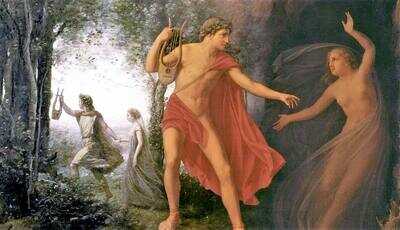
Consumed by grief and armed with nothing but his trusty lyre, Orpheus vowed to defy the very laws of theunderworld to reclaim his beloved. His sheer conviction moved Hades, the god of the Underworld, who agreed to return Eurydice under only one condition – that
Orpheus could not turn back to look at her as they went back to the world of the living.
If he did, she would be sucked into the underworld once more never to return again.
“And I’d be the immediate forgiveness in Eurydice / Imagine being loved by me.”
On the journey out of the underworld, doubt crept into Orpheus’s mind. Unable to resist the urge to check whether she was still with him, he turned. In that moment, Eurydice, still bound by the laws of the underworld, vanished into the shadows.
It is believed that Eurydice died her second death without any complaints. Knowing that the reason behind her death was her husband’s overflowing love.
The very love that drove Orpheus to go beyond any mortal ever had been was the one that stopped him from carrying out the simplest of tasks.
Hozier’s protagonist uses the mythical reference as a way to charm his lover with promises. Within these bars, he implies that he would walk into Hell, disobey God, and forgive leaving him in Hell, all for his lover.
“I won’t deny I’ve got in my mind now / All the things I would do.”
“So I try to talk refined for fear that you find out / How I’m imaginin’ you.”
The carefully curated image of the tortured lover boy in the opening verse is immediately shattered by the chorus which alludes to the protagonist’s true intentions.
By breaking the fourth wall he reveals to the listener that the inclusion of the tale was all a mere façade to hide his intentions of pure physical release.
Through Talk, Hozier draws a compelling parallel to the myth of tragic unconditional love.
As irrational as it is , despite knowing that his words are merely a ruse, you as the listener cannot help but be drawn to his lofty tales.
Much like Orpheus being unable to resist himself from turning back, knowing it’d lead to nothing good.
Ananya Barath is a second year BA Mass Communication student who is fueled by an obsession with stories that blend the ancient with the modern (yes, she's thetype to speculate whether Iron Man would beat Theseus in battle).
During the album release party, Hozier described the protagonist as an “unreliable narrator” who has “not the best intentions in mind,” as well as being “quite pretentious”.
“I’d be the voice that urged
The song opens with the protagonist likening his feelings to that of Orpheus. A travelling Greek musician with godlike prowess when it came to the lyre, Orpheus was so talented that even animals and trees swayed upon hearing his compositions.
Shortly after his marriage however, his wife was bitten by a viper and met a tragic demise.
“I’d be the choiceless hope in grief / That drove him underground.”
Consumed by grief and armed with nothing but his trusty lyre, Orpheus vowed to defy the very laws of the
Orpheus could not turn back to look at her as they went back to the world of the living.
If he did, she would be sucked into the underworld once more never to return again.
“And I’d be the immediate forgiveness in Eurydice / Imagine being loved by me.”
On the journey out of the underworld, doubt crept into Orpheus’s mind. Unable to resist the urge to check whether she was still with him, he turned. In that moment, Eurydice, still bound by the laws of the underworld, vanished into the shadows.
It is believed that Eurydice died her second death without any complaints. Knowing that the reason behind her death was her husband’s overflowing love.
The very love that drove Orpheus to go beyond any mortal ever had been was the one that stopped him from carrying out the simplest of tasks.
Hozier’s protagonist uses the mythical reference as a way to charm his lover with promises. Within these bars, he implies that he would walk into Hell, disobey God, and forgive leaving him in Hell, all for his lover.
“I won’t deny I’ve got in my mind now / All the things I would do.”
“So I try to talk refined for fear that you find out / How I’m imaginin’ you.”
The carefully curated image of the tortured lover boy in the opening verse is immediately shattered by the chorus which alludes to the protagonist’s true intentions.
By breaking the fourth wall he reveals to the listener that the inclusion of the tale was all a mere façade to hide his intentions of pure physical release.
Through Talk, Hozier draws a compelling parallel to the myth of tragic unconditional love.
As irrational as it is , despite knowing that his words are merely a ruse, you as the listener cannot help but be drawn to his lofty tales.
Much like Orpheus being unable to resist himself from turning back, knowing it’d lead to nothing good.
Ananya Barath is a second year BA Mass Communication student who is fueled by an obsession with stories that blend the ancient with the modern (yes, she's thetype to speculate whether Iron Man would beat Theseus in battle).