Times of Bennett
ArticleFeatures

Dhurandhar: Propaganda or not?

This article attempts to find an answer to whether Dhurandhar a propaganda film or not? For a film so highly acclaimed and criticized, Dhurandhar has managed to become a topic of debate in almost every Indian household.
Published:April 16, 2026 at 08:05 PM6 min read
Dhurandhar: Propaganda or not?
Correspondent: Shubhangi Sarkar

A pounding heart, an adrenaline rush, and a strong adhesion to the seat’s edge, were a few symptoms that a significant majority of the Indian audience experienced while watching the latest Bollywood blockbuster directed by Aditya Dhar—Dhurandhar.

Divided into two parts, Dhurandhar is a raw, gory, gripping and thoroughly entertaining film in the Indian espionage genre, that has gotten the entire country talking about its brilliance and possibly propagandic nature, both. Whether it be in terms of appreciating its cinematographic feat, or in terms of digging into any political framing hidden behind the film’s presentation.

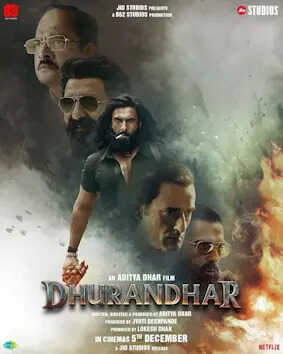
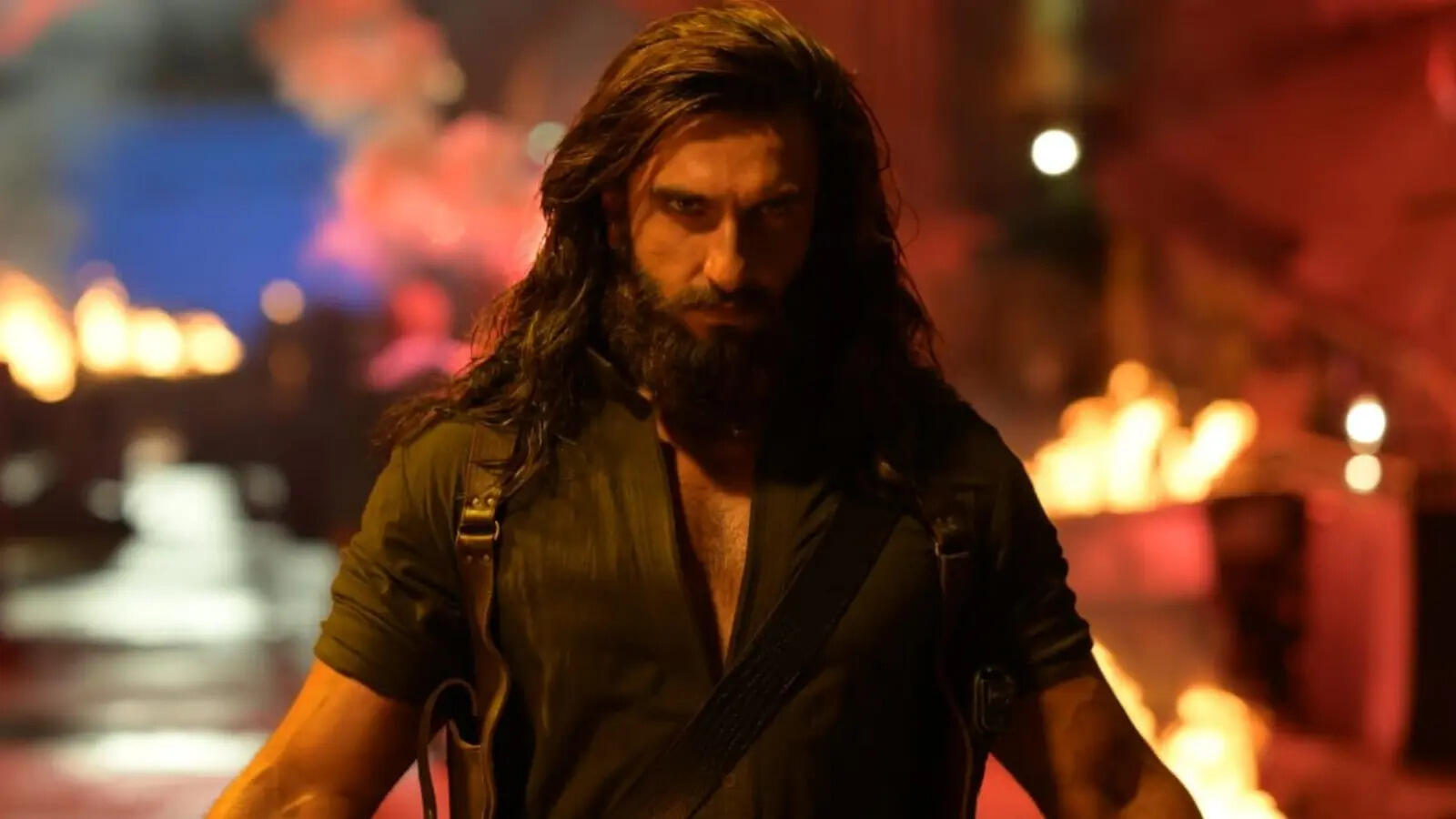
Dhurandhar tells the tale of Hamza Ali Mazari (later on introduced as Jaskirat Singh Rangi), an Indian intelligence asset who is deployed into Pakistan with the single goal of infiltrating Pakistani terrorist networks from their very root levels.


And what follows beyond the infiltration is a series of events that essentially serve the role of a visual, and chronological hypothesis of India’s counterterrorism efforts from within Pakistan.

Even after becoming the highest grossing film domestically, and its sequel part ‘Dhurandhar: The Revenge’ crossing ₹1,671 crore by April 2026, worldwide—the film faces both negative and positive reviews and opinions.

But a LOT of opinions nonetheless.

Opinions on this blockbuster film remain severely polarised. As one side of the audience considers the film to be a visually hooking, all-rounder package of entertainment blending with facts; while the other side of the audience calls the film a propagandic, and overly violent slop of politics and islamophobia.

Critics who consider the film to be a propagandic, or a politically inclined piece of fiction have raised multiple points to justify their beliefs. Such as how chants of the sacred Islamic words ‘Allah-hu-Akbar’ while ISI orchestrates the 26/11 Mumbai attack is an extremely Islamophobic choice of direction, and how this focus on violence leads to anti-muslim majoritarianism and bigotry.

While enjoyers describe it to be ‘unapologetic’ in terms of its exploration of Pakistan-backed terrorism and Indian intelligence capabilities, they also appear to shed a considerable amount of light upon the technical, cinematographic and artistic nuances of Dhurandhar as a piece of visual media that has earned considerable praise from the Muslim majority within India too.

“Aditya Dhar has provided to Indians a solution with Dhurandhar.” shared first year Mass Communication
student, Arnav Kapse, a fellow enjoyer of Dhurandhar. “He has touched upon the soft spots of every Indian's heart where they might have gotten hurt with regards to terrorist attacks, and has thus provided a solution to those Indians. And when solutions are combined with brilliant cinematography, crisp music, conclusions and plot twists that stay with you till the end- it naturally builds repeat value that leaves you wanting to go back to it again and again.” The freshman added.


Dhurandhar’s emotional appeal thus indeed becomes a strong plus point for its reputation. However, one can also not ignore the blatant representation of a particular political ideology that the director himself seems to hold, leading to the usage of the Hon’ble Prime Minister Narendra Modi’s speech footage from the 2016 demonetization saga. And while Dhurandhar as a film has already challenged multiple cinematographic
norms—using recorded footage of the head of state to build a certain narrative, certainly is the first of its kind in the Bollywood film industry, which the informed audience has not taken too kindly towards.

Dr. Rekha Pachauri, Assistant Professor at the Times School of Media commented on this segment of the film.
“Since Dhurandhar showed clips of our PM, and some event timelines do not match with their real-life occurrence, this narrative combined with both the film and political party's popularity- if not directly as a propaganda, it does place Dhurandhar under the category of a politically inclined film franchise”.

The question that hence arises in this debate of ethics, politics, limits and propaganda is- who is actually correct on their stance?

Whereas in reality, the search for a correct stance essentially refers to a single objective conclusion of these events that everyone can be satisfied with. Which means, condensing the entire 7-8 hours’ worth of content from Dhurandhar, and Dhurandhar: The Revenge, into a singular and straightforward answer that can satisfy the masses. Something that the franchise does not aim to do at all.

But as Dr. Gauri Chakraborty, a Professor at Times School of Media states, “Art is, and always has been political. And
Dhurandhar has brought conversation back into Indian households, while also giving the people, and youth especially, a chance to look up from their screens and discern between patriotism and nationalism”.

Diving deeper into her opinion, Dr. Chakraborty also added that “One cannot simply reduce an entire film’s demanding audience down and reduce focus on its layering, performance and socio-cultural representation of another
country—because the film has cinematographically managed to touch the audiences at such a mass scale at a certain point.”


So, while multiple fans are starting to rather blindly defend real policy using the logic that the film has presented, and as some critics are choosing to jump onto the hatred bandwagon for the love of the game, that is even beginning to blur out actual, constructive criticism—one thing becomes obvious.

Dhurandhar is a film that leaves you thinking deeper about the state of Indian governance.

“The movie expects you to pay attention and sit with their characters and think about it'. It’s a sincere and ambitious
film. You can see the effort behind it and that is what counts for cinema.”
said second year Mass Communication student, Vanshika Chauhan.

Ultimately, Dhurandhar is a film whose nationalistic appearance remains masked with a cloak of patriotism. And it is the paradox- that whether people can focus beyond that cloak and appearance, and look at its true core as a piece of fiction heavily inspired by true events, which has led to Dhurandhar becoming one of Bollywood’s highest grossing films. Whether it bethrough good publicity, or bad alike.

To conclude, one cannot simply categorise Dhurandhar as a propaganda, or non-propaganda film. Because it is this entire discourse related to one single movie—that has contributed to Dhurandhar’s severe popularity. Hence, proving that we now live in a period where 'truth' is defined by what people consider, or feel to be correct, based on their existing beliefs.

The author is a second year BA Mass Communication student. She is extremely passionate about international relations, linguistics, cultures and anime. And she likes to indulge in digital art in her free time.
Tags
#dhurandhar#rekha pachauri#jaskirat singh rangi#aditya dhar#hamza ali mazari

Related Articles

War bugle disguised as a ceasefire: Examining Lebanon's situation post Israeli air strikes
Article
Features

War bugle disguised as a ceasefire: Examining Lebanon's situation post Israeli air strikes

On April 8, a fragile ceasefire briefly eased global tensions after 40 days of war between Israel, Iran, and allies, announced by Trump on Truth Social and confirmed by Iran and Pakistan's PM Shehbaz Sharif, who brokered it. Celebrations ensued worldwide as markets surged and oil prices fell, until Israeli jets struck Lebanon that morning, killing 357 civilians in what Beirut dubbed "Black Wednesday," while Israel excluded Lebanon from the deal. No formal agreement exists; conflicting statements emerged immediately, with Pakistan and Iran insisting it covered Lebanon, but Israel and the US rejecting that after a Trump-Netanyahu call. Lebanon, already devastated with over 2,000 deaths since March, was sidelined in a multi-front conflict involving Hezbollah, Iraqi militias, and Gulf interceptions. Post-ceasefire issues mounted: Iran kept the Strait of Hormuz choked, charging exorbitant fees and slashing traffic from 110 daily ships to four. Historic US-Iran talks in Islamabad on April 11 collapsed, prompting a US naval blockade that doubled down on the disruption, halting all oil route traffic (20% of global supply). The two-week truce window lasts until April 22 amid ongoing messages, but optimism fades after the deadliest civilian day coincided with its announcement.

Apr 17, 20264 min
#lebanon#trump#iran+5 more
Exploring Why The Voice of Hind Rajab Sparked a Quiet Censorship Storm in India
Article
Features

Exploring Why The Voice of Hind Rajab Sparked a Quiet Censorship Storm in India

The film "The Voice of Hind Rajab", directed by Tunisian filmmaker Kaouther Ben Hania, reconstructs the tragic final moments of six-year-old Palestinian girl Hind Rajab, killed in Gaza amid the Israel-Palestine conflict. It serves as a powerful commentary on civilian suffering, war's human cost, humanitarian crises, and global indifference, transforming a personal loss into a broader critique of geopolitical silence. The documentary has sparked controversy in India, where distributor Manoj Nandwana reports an oral block by the Central Board of Film Certification (CBFC) due to fears it could strain India's strengthening ties with Israel in defence, tech, and trade. No formal written order exists, raising concerns about transparency, artistic freedom, and censorship influenced by diplomacy rather than by cinematic guidelines. Director Ben Hania voiced heartbreak on Facebook, lamenting the decision amid her lifelong love for India and Bollywood, while questioning if the "honeymoon" between the "world’s largest democracy" and the "only democracy in the Middle East" is so fragile. The case highlights broader trends of political sensitivities curbing films on contentious issues, unequal treatment of global narratives, and tensions between art, authority, and empathy in India's media landscape.

Apr 7, 20266 min
#hind rajab#kaouther ben hania#voice of hind rajab+2 more
Opera and Ballet: Why Timothée Chalamet’s comments couldn’t even make a ‘dent’ on the art forms
Article
Features

Opera and Ballet: Why Timothée Chalamet’s comments couldn’t even make a ‘dent’ on the art forms

Timothée Chalamet's offhand dismissal of ballet and opera as irrelevant sparked outrage from the arts community, including the Met Opera, Royal Ballet, and stars like Misty Copeland. Yet, post-pandemic declines in audiences and funding reveal harsh truths: these forms struggle against streaming, gaming, and inaccessibility due to high costs and elitism. The piece urges evolution over defense—through bold collaborations (e.g., Lady Gaga), innovative productions like Anna Nicole, and pop culture crossovers, akin to theatre's Tarantino buzz or Chalamet's own savvy marketing. Dismissal as "uncultured" misses the point: his words are vital feedback for survival in today's attention economy.

Mar 20, 20264 min
#opera#ballet#timothe chalamet+2 more
On Her Own Terms: The Alysa Liu Comeback Story
Article
Features

On Her Own Terms: The Alysa Liu Comeback Story

This article looks at the impressive story of Alysia Liu, Olympic Gold Winner in the 2026 Milano Cortina Games. It examines the underlying power and courage it takes to not only leave something you love but to come back stronger than ever before,
Feb 27, 20266 min
#liu#tonya harding#nancy kerrigan+4 more
Delhi Police vs YRF – Analysing the aftermath of a classic social media trial
Article
Features

Delhi Police vs YRF – Analysing the aftermath of a classic social media trial

Social media erupted a week ago over a perceived surge in Delhi's missing persons cases, particularly young women, mirroring the plot of YRF's Mardaani 3. Netizens split into echo chambers, accusing either street gangs or YRF's marketing of panic-mongering. Delhi Police debunked the hype as a paid promotion.
Feb 17, 20264 min
#yrf#mardaani#yash raj films+2 more
‘Saanjha Kuaan’: The Art of Love on a Screen
Article
Features

‘Saanjha Kuaan’: The Art of Love on a Screen

This piece is a review of the original, Times School of Media produced short film 'Sanjha Kuaan'. Directed by BAFTW student Safin Laller. It tells a historic tale of love, selflessness and despair. While being exemplary of what the combination of true dedication and passion can look like.

Feb 17, 20265 min
#saanjha kuaan#lajjos#bhuvan+7 more