Times of Bennett
ArticleFeatures

War bugle disguised as a ceasefire: Examining Lebanon's situation post Israeli air strikes

On April 8, a fragile ceasefire briefly eased global tensions after 40 days of war between Israel, Iran, and allies, announced by Trump on Truth Social and confirmed by Iran and Pakistan's PM Shehbaz Sharif, who brokered it. Celebrations ensued worldwide as markets surged and oil prices fell, until Israeli jets struck Lebanon that morning, killing 357 civilians in what Beirut dubbed "Black Wednesday," while Israel excluded Lebanon from the deal. No formal agreement exists; conflicting statements emerged immediately, with Pakistan and Iran insisting it covered Lebanon, but Israel and the US rejecting that after a Trump-Netanyahu call. Lebanon, already devastated with over 2,000 deaths since March, was sidelined in a multi-front conflict involving Hezbollah, Iraqi militias, and Gulf interceptions. Post-ceasefire issues mounted: Iran kept the Strait of Hormuz choked, charging exorbitant fees and slashing traffic from 110 daily ships to four. Historic US-Iran talks in Islamabad on April 11 collapsed, prompting a US naval blockade that doubled down on the disruption, halting all oil route traffic (20% of global supply). The two-week truce window lasts until April 22 amid ongoing messages, but optimism fades after the deadliest civilian day coincided with its announcement.
Published:April 17, 2026 at 02:44 PM4 min read
War bugle disguised as a ceasefire: Examining Lebanon's situation post Israeli air strikes
Correspondent: Aradhya Mohan

The morning of April 8 felt, for a brief moment, like the world had pulled back from the edge. In Tehran, people streamed into the streets before sunrise, hugging, crying, waving flags. A war that had consumed 40 days, thousands of lives, and the world's collective anxiety had apparently ended. US President Donald Trump announced the ceasefire on Truth Social. Iran confirmed it. Pakistan's Prime Minister Shehbaz Sharif, the unlikely architect of the deal, called it a moment of "remarkable wisdom." Stock markets surged. Oil prices dropped. Everyone, everywhere, seemed to sigh with relief at once. In Beirut, they were still counting the dead.

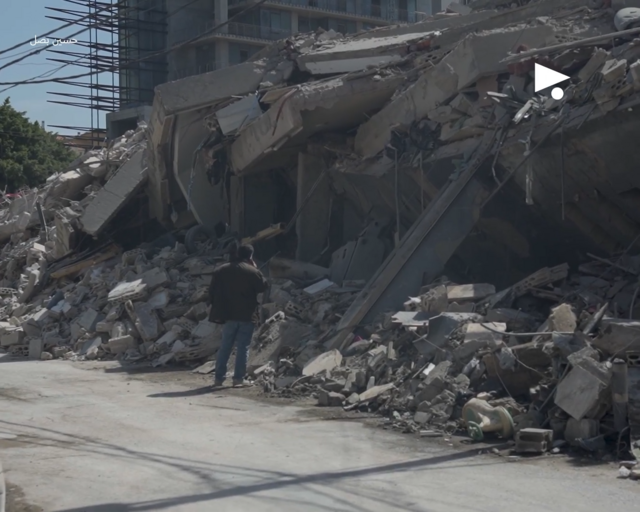
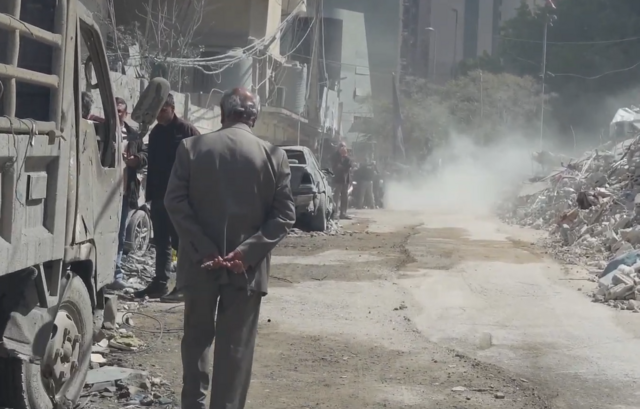
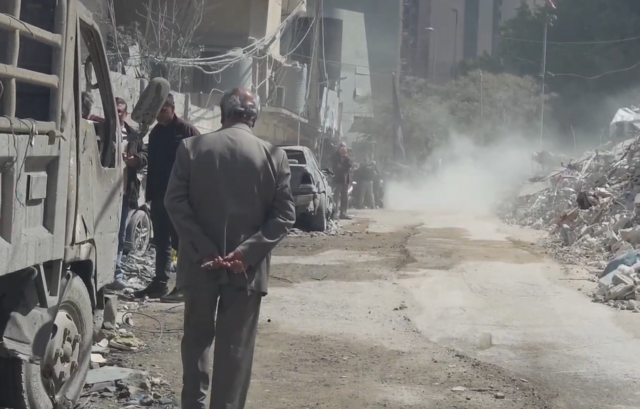
Here is what actually happened on the day of the ceasefire: fifty Israeli fighter jets dropped 160 munitions across Lebanon, hitting residential neighbourhoods, a cemetery during a funeral, and packed commercial streets during morning rush hour, without any prior warning. The American University of Beirut Medical Centre put out an emergency appeal for blood donations. Hospitals were overwhelmed. An Al Jazeera correspondent on the ground described children crying in the streets, people abandoning their cars in traffic, the injured running toward hospitals that were already full. By the end of the day, at least 357 people were dead. Lebanon called it Black Wednesday. Israel called it a ceasefire. The contradiction is not accidental. It is, in fact, the entire story.


Unlike most ceasefire agreements, there is no publicly available document that spells out what this deal actually covers. What the world knows about it comes almost entirely from social media posts, Trump's Truth Social announcement, Pakistan's PM posting on X, Iran's foreign minister confirming via a statement. Pakistan's Sharif was clear in his post: the ceasefire covered "everywhere including Lebanon." Iran agreed. But Israel's military spokesperson fired back almost immediately: "The battle in Lebanon continues and the ceasefire does not include Lebanon." The US backed Israel. And just like that, Lebanon, a country where more than 2,000 people have been killed since March 2, was edited out of the agreement it thought it was part of. CBS News later reported that Trump had initially included Lebanon in the ceasefire; and that even Israel had agreed to these terms. The US changed its position after a phone call between
Trump and Netanyahu. One phone call. No announcement. No explanation. That's not diplomacy. That's a footnote that costs lives. To be fair, this was never going to be a clean war to end. Since February 28, Iran fired over 5,000 drones and 2,100 ballistic missiles. Israel was simultaneously fighting Hezbollah in Lebanon, Iranian-backed militias were striking US targets in Iraq, and Gulf states from Kuwait to
Bahrain were intercepting Iranian drones almost daily. A ceasefire that only covers two of the parties in a six-party conflict was always going to leave someone out in the cold; and in this case, that someone was Lebanon. Iran, predictably, lost its patience fast. The Strait of Hormuz; which Iran had agreed to reopen as a core condition of the ceasefire; remained effectively shut. Iran began charging ships over a
million dollars per crossing. Only four vessels made it through on the first. Before the war, around 110 ships passed through daily. The ceasefire had not even fixed the thing it was specifically designed to fix.

And yet, and this is the part that makes this story genuinely complicated, something did shift. On April 11, US and Iranian delegations sat face to face in Islamabad for the first direct high-level talks between the two countries since 1979. That's 47 years of not talking, broken in a conference room in Pakistan. JD Vance flew in to lead the American side. Iran came with a delegation of 71 people. Pakistan's PM addressed his country on national television the night before, saying simply: "This is a make-or-break moment." It broke. What followed was almost darkly predictable. Trump announced that the US Navy would impose a naval blockade on the Strait of Hormuz from April 13, blocking all ships entering or leaving Iranian ports. So now there are effectively two blockades on the same waterway: Iran's, and
America's. On the first day of the US blockade, the Pentagon confirmed no ships made it through, six merchant vessels turned around after being ordered to do so. A route that once carried 20% of the world's oil now sees barely any traffic at all. The two-week ceasefire window technically remains open until April 22. Both sides are still, reportedly, exchanging messages. Diplomats are calling the direction of travel positive. Maybe it is. But it's hard to feel optimistic about a peace process that produced its deadliest day of civilian casualties on the very morning it was announced.

(Aradhya Mohan is a media student and emerging journalist focused on sharp, socially relevant storytelling)
Tags
#lebanon#trump#iran#shehbaz sharif#netanyahu#hezbollah#pentagon#strait of hormuz

Related Articles

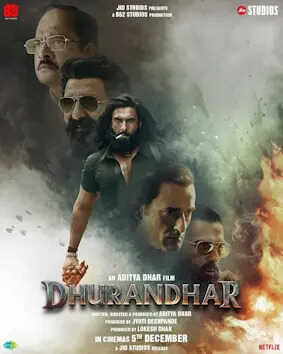
Dhurandhar: Propaganda or not?
Article
Features

Dhurandhar: Propaganda or not?

This article attempts to find an answer to whether Dhurandhar a propaganda film or not? For a film so highly acclaimed and criticized, Dhurandhar has managed to become a topic of debate in almost every Indian household.
Apr 16, 20266 min
#dhurandhar#rekha pachauri#jaskirat singh rangi+2 more
Exploring Why The Voice of Hind Rajab Sparked a Quiet Censorship Storm in India
Article
Features

Exploring Why The Voice of Hind Rajab Sparked a Quiet Censorship Storm in India

The film "The Voice of Hind Rajab", directed by Tunisian filmmaker Kaouther Ben Hania, reconstructs the tragic final moments of six-year-old Palestinian girl Hind Rajab, killed in Gaza amid the Israel-Palestine conflict. It serves as a powerful commentary on civilian suffering, war's human cost, humanitarian crises, and global indifference, transforming a personal loss into a broader critique of geopolitical silence. The documentary has sparked controversy in India, where distributor Manoj Nandwana reports an oral block by the Central Board of Film Certification (CBFC) due to fears it could strain India's strengthening ties with Israel in defence, tech, and trade. No formal written order exists, raising concerns about transparency, artistic freedom, and censorship influenced by diplomacy rather than by cinematic guidelines. Director Ben Hania voiced heartbreak on Facebook, lamenting the decision amid her lifelong love for India and Bollywood, while questioning if the "honeymoon" between the "world’s largest democracy" and the "only democracy in the Middle East" is so fragile. The case highlights broader trends of political sensitivities curbing films on contentious issues, unequal treatment of global narratives, and tensions between art, authority, and empathy in India's media landscape.

Apr 7, 20266 min
#hind rajab#kaouther ben hania#voice of hind rajab+2 more
Opera and Ballet: Why Timothée Chalamet’s comments couldn’t even make a ‘dent’ on the art forms
Article
Features

Opera and Ballet: Why Timothée Chalamet’s comments couldn’t even make a ‘dent’ on the art forms

Timothée Chalamet's offhand dismissal of ballet and opera as irrelevant sparked outrage from the arts community, including the Met Opera, Royal Ballet, and stars like Misty Copeland. Yet, post-pandemic declines in audiences and funding reveal harsh truths: these forms struggle against streaming, gaming, and inaccessibility due to high costs and elitism. The piece urges evolution over defense—through bold collaborations (e.g., Lady Gaga), innovative productions like Anna Nicole, and pop culture crossovers, akin to theatre's Tarantino buzz or Chalamet's own savvy marketing. Dismissal as "uncultured" misses the point: his words are vital feedback for survival in today's attention economy.

Mar 20, 20264 min
#opera#ballet#timothe chalamet+2 more
On Her Own Terms: The Alysa Liu Comeback Story
Article
Features

On Her Own Terms: The Alysa Liu Comeback Story

This article looks at the impressive story of Alysia Liu, Olympic Gold Winner in the 2026 Milano Cortina Games. It examines the underlying power and courage it takes to not only leave something you love but to come back stronger than ever before,

Feb 27, 20266 min
#liu#tonya harding#nancy kerrigan+4 more
Delhi Police vs YRF – Analysing the aftermath of a classic social media trial
Article
Features

Delhi Police vs YRF – Analysing the aftermath of a classic social media trial

Social media erupted a week ago over a perceived surge in Delhi's missing persons cases, particularly young women, mirroring the plot of YRF's Mardaani 3. Netizens split into echo chambers, accusing either street gangs or YRF's marketing of panic-mongering. Delhi Police debunked the hype as a paid promotion.
Feb 17, 20264 min
#yrf#mardaani#yash raj films+2 more
‘Saanjha Kuaan’: The Art of Love on a Screen
Article
Features

‘Saanjha Kuaan’: The Art of Love on a Screen

This piece is a review of the original, Times School of Media produced short film 'Sanjha Kuaan'. Directed by BAFTW student Safin Laller. It tells a historic tale of love, selflessness and despair. While being exemplary of what the combination of true dedication and passion can look like.

Feb 17, 20265 min
#saanjha kuaan#lajjos#bhuvan+7 more