Times of Bennett
ArticleFeatures

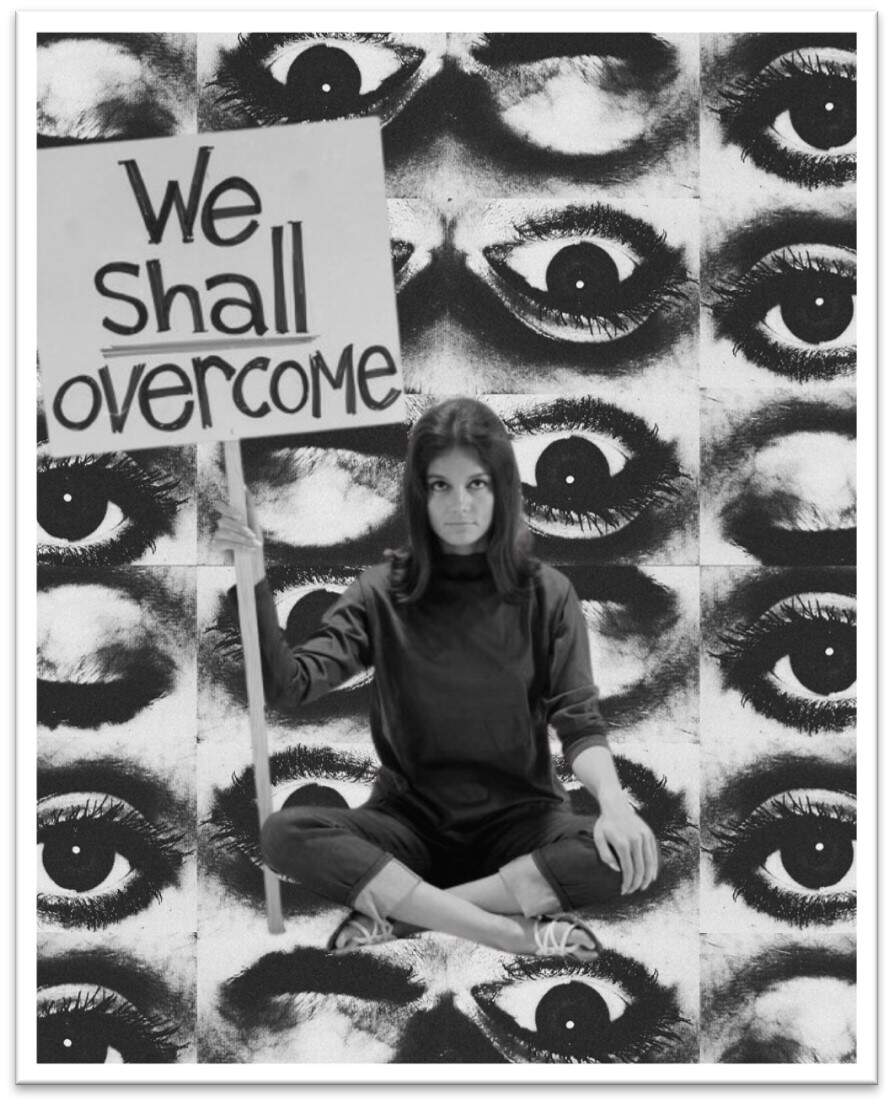
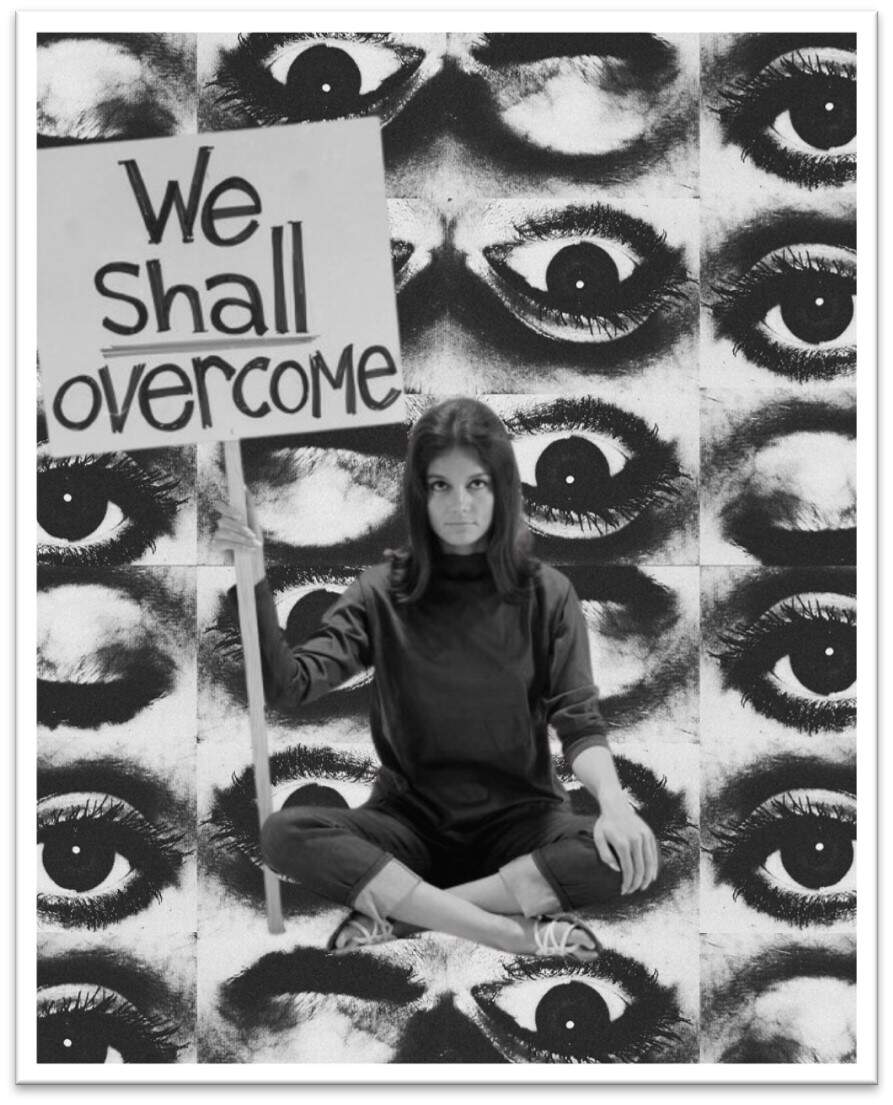
Gloria Steinem: A Mortal Heroine

The article examines Gloria Steinem’s complex feminist legacy, acknowledging both her contributions to the movement and criticisms of her approach to intersectionality. It argues against idealizing or demonizing public figures, urging readers to recognize their complexities and the collective nature of social movements.
Published:October 19, 2026 at 07:09 PM4 min read
Gloria Steinem: A Mortal Heroine
By Pearl Sarin

In a peri-Internet, post-nuance society, one of two fates awaits all public figures who’ve left this world. Either be stamped flat into an infallible martyr, or have one sweeping judgement rake your entire life’s work into an ever-growing pile of problematic.
Neither’s quite an accurate reflection of reality.


A New Wave of Feminism

Born in the 1930s in Midwestern America, Steinem was a writer, journalist, activist, socio-political organizer, and, most famously, a feminist. “A feminist is anyone who recognizes the equality and full humanity of women and men”, she famously proclaimed, becoming part of the vanguard of the second feminist wave in the United States, with many considering her the face of the movement- a label she rejected, stating in her final interview before her death, “I hope I wasn’t…because it’s not right. It’s a diverse movement”.

Yet, for all her accomplishments and contributions, Steinem has also been at the receiving end of many valid, good-faith critiques.

White Feminism and Intersectionality

Perhaps the most frequently-cited issue with her work is that of ‘White Feminism’- a non-intersectional approach to feminism that centres cisgendered, heterosexual, middle-class, Western white women, while neglecting other groups. Indeed, in the late 80s, Alice Walker, an African-American writer and activist, resigned as one of the contributors to ‘Ms.’ magazine- the groundbreaking feminist publication Steinem cofounded- citing a lack of diverse perspectives. Similarly, the famous Black feminist philosopher bell hooks described Ms. magazine as being intended for white women, and believed Steinem had a “narrowminded, and racist” view of comprehending Black women’s lived realities.

Interestingly, however, Steinem would go on to resolve her differences with both women, with the latter even remarking that Steinem “lived the practice of anti-racism”.

Nor was Steinem shy about Black and brown women’s influence on feminist thought. The very first issue of Ms. (1972) featured an illustration of a pregnant, crying Kali, with each of her eight arms holding a different object- a frying pan, a typewriter, a hand mirror, a clock and so on- meant to represent the disproportionate burden of housework placed on working women compared to working men. The imagery may have been inspired by the two years Steinem spent in India in the 50s.

She also repeatedly acknowledged- and criticised- the prioritization of white voices within the Western feminist movement, stating in 2015, “I've learned feminism disproportionately from Black women”, but that with “things being what they are, the white, middle-class part of the movement got reported more”. In 2017, she commented, “There is no such thing as white feminism. Because if it’s white, it’s not feminism. It’s either talking about all women, or it’s not”.
A Mortal Heroine

Is Gloria Steinem a feminist trailblazer, or is her work a relic of its era? Is she the woman who proudly worked for an organization with credible allegations of targeting and torturing immigrants like the CIA? Or is she the woman who was the sole respondent to offer her home, when a 2018 mass email asked for volunteer housing for immigrant women and their children? Is she the woman who referred to trans healthcare as “mutilation” in a 1977 essay? Or is she the woman who called the fights for the rights of trans folk and women “the same struggle” in 2016, who repeatedly expressed solidarity with the community in light of recent attacks on them?
Is she a part of the status quo, a product of it, or the one fighting against it?
Perhaps the simpler question to answer is the one we started with- what happens when an icon falls off the pedestal we placed her atop? How does one disentangle who a public figure is, from the feelings they inspire in us, and the ones we project on them?

Ideally, we start by no longer placing them on a pedestal in the first place. Gloria Steinem was an intricate, human woman- a mortal heroine- whose legacy deserves better than for people to succumb to the tendency to boil down complicated women to their worst or best moments.

More importantly, as much as she became a larger-than-life symbol over time, she was but one of the countless women, men and people working tirelessly around the globe to advance the feminist movement. As such, it’s perhaps best to sidestep both individual deification and demonization alike, but rather to remember her for the movement she dedicated her life to; an idea she’d perhaps agree with, having once famously said: “People are always asking me, ‘Who will you pass the torch to?’ The question makes me angry. There is no one torch- there are many torches- and I’m using my torch to light other torches”.

NOTE: The name ‘bell hooks’ has been intentionally left unpunctuated in accordance with the writer’s wishes, and as per popular styling and formatting guidelines, such as MLA and CMOS.
Tags
#steinem#gloria steinem#white feminism#alice walker#feminism

Related Articles

Unravelling The Language Of Consent In Qala's “Ghodey Pe Sawaar”
Article
Popculture

Unravelling The Language Of Consent In Qala's “Ghodey Pe Sawaar”

This article dissects Qala's lead single 'Ghode Pe Sawaar', through a feminist lens.
May 2, 20265 min
#ghodey pe sawaar#urmila#qalas+4 more
Beyond Headlines: The war of West Asia from youth's lens
Article
Features

Beyond Headlines: The war of West Asia from youth's lens

Has the popularity of social media hastened war news reporting or sensationalism? Does the youth of today find themselves torn between deciphering real news and misniformation? This article aims to look beyond the surface and uncover the answers to these questions and more.
Apr 24, 20266 min
#west asia#prabhjot kaur#point+3 more
Certified Out of Existence: Why India's 2026 Trans Amendment Bill faced severe backlash
Article
Features

Certified Out of Existence: Why India's 2026 Trans Amendment Bill faced severe backlash

On March 13, 2026, India's government introduced the Transgender Persons (Protection of Rights) Amendment Bill in the Lok Sabha, which swiftly passed both houses by March 25 and became law despite widespread protests from trans activists, lawyers, and opposition parties. The bill scraps self-identification for gender—upheld in the 2014 NALSA Supreme Court judgment—replacing it with mandatory medical certification by a board and District Magistrate approval, while limiting recognition to hijra, kinner, and intersex groups, effectively sidelining trans men, women, and non-binary individuals. It also imposes severe penalties, including life imprisonment, for "coercing" others into transgender identity, which critics fear could criminalize family and allies. Activists like Krishanu, Raghavi, Aryan Pasha, and Kanmani slammed it as unconstitutional (breaching Articles 14, 15, 19, 21), arbitrary, and reminiscent of colonial-era laws like the Criminal Tribes Act, with protests erupting in cities from Delhi to Hyderabad. Amid global anti-trans backsliding (e.g., TGEU's 2025 index, US and UK developments), figures like Aakar Patel of Amnesty International India decried it as state overreach on inherent identity. Affecting ~487,803 trans persons (only ~32,500 with ID cards), the law unravels hard-won rights, framing the fight as one for the state's recognition of self-naming over official control.

Apr 24, 20266 min
#bill#lok sabha#supreme court+2 more
11,000 litres of milk: Spiritual offering or extreme prolifigacy?
Article
Features

11,000 litres of milk: Spiritual offering or extreme prolifigacy?

Video Controversy SynopsisA video from April 9, 2026, showing 11,000 liters of milk (worth ₹5.5–7.7 lakh) poured into the Narmada River during a religious ritual sparked national outrage online, pitting devotion against accusations of waste, excess, and environmental harm.Public BacklashSocial media users condemned the act as irresponsible amid food insecurity and river pollution risks, arguing the milk should have fed the needy instead of treating the river like a "sink."Defenses and Expert WarningsSupporters defended it as sincere faith, but environmentalists like Subhash Pandey and Ajay Dube highlighted ecological damage: the organic load depletes oxygen, harms aquatic life, drinking water, and local communities.Broader ImplicationsThe Narmada's cultural significance amplified the debate, turning a local ritual into a flashpoint on balancing tradition with ethics, responsibility, and river health—raising timeless questions on when devotion crosses into waste.
Apr 24, 20264 min
#narmada#subhash pandey#ajay dube+2 more
BENNETT DIALOGUES launch with the War in West Asia
Article
Campus

BENNETT DIALOGUES launch with the War in West Asia

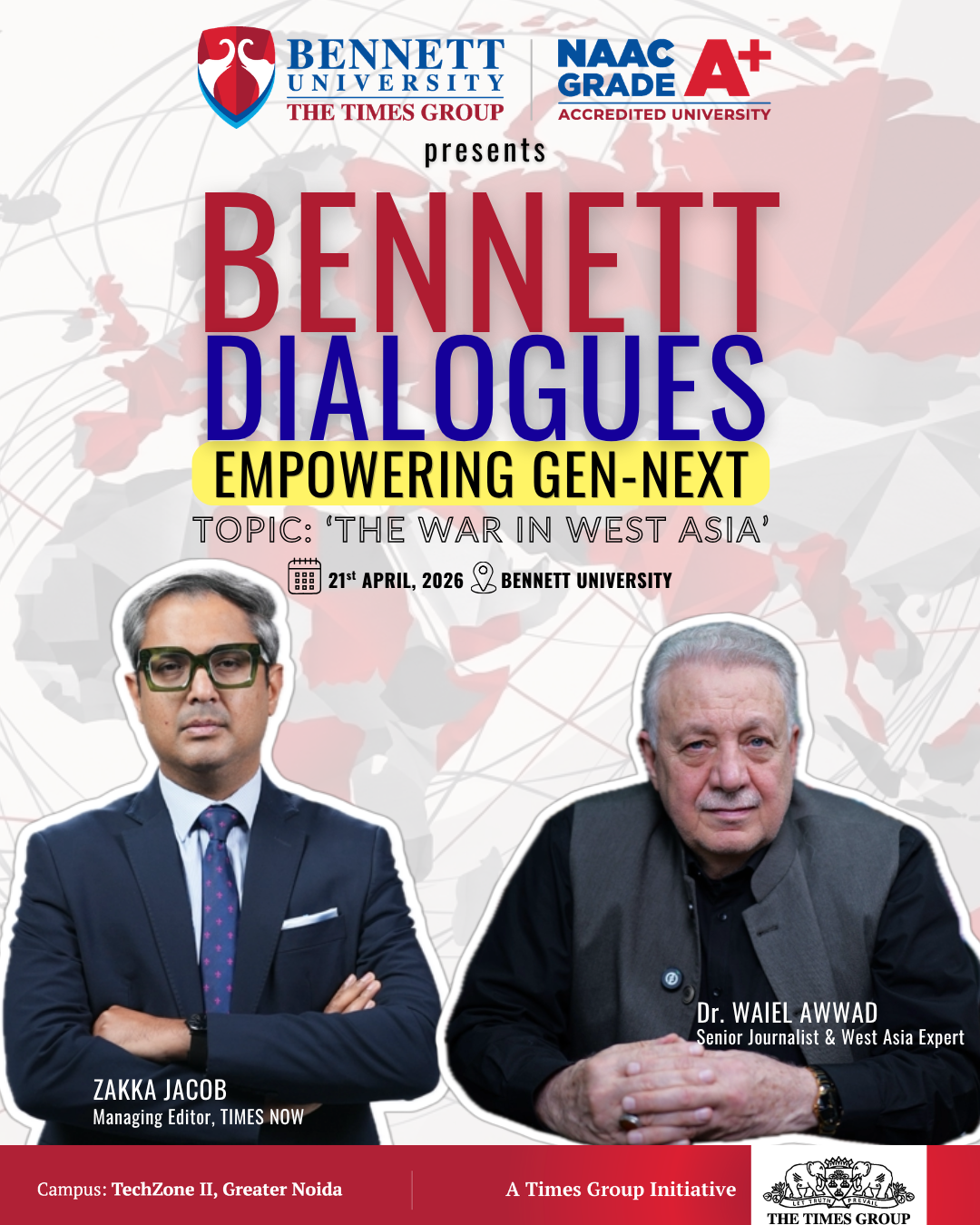
Bennett University has launched BENNETT DIALOGUES, a fortnightly talk series conceptualized by Chancellor Vineet Jain (Times Group MD) to help students grasp global geopolitical shifts. Led by Prof. Dhiraj Singh (Head, Centre for Media & Technology), it features informal fireside chats and Q&A with experts in geopolitics, business, and media. The series aims to connect world events to everyday impacts, like how the US-Israel-Iran war affects India's petrol and LPG prices. The inaugural edition on April 21 explores "The War in West Asia," with Times Now's Zakka Jacob and Dr. Waiel Awwad (Syrian-origin expert on West Asia conflicts, based in Delhi). Prof. Singh highlights its blend of Times Group media legacy and Bennett's academic excellence, benefiting media, liberal arts, business, and law students.

Apr 18, 20262 min
#dialogues#zakka jacob#dhiraj singh+3 more
War bugle disguised as a ceasefire: Examining Lebanon's situation post Israeli air strikes
Article
Features

War bugle disguised as a ceasefire: Examining Lebanon's situation post Israeli air strikes

On April 8, a fragile ceasefire briefly eased global tensions after 40 days of war between Israel, Iran, and allies, announced by Trump on Truth Social and confirmed by Iran and Pakistan's PM Shehbaz Sharif, who brokered it. Celebrations ensued worldwide as markets surged and oil prices fell, until Israeli jets struck Lebanon that morning, killing 357 civilians in what Beirut dubbed "Black Wednesday," while Israel excluded Lebanon from the deal. No formal agreement exists; conflicting statements emerged immediately, with Pakistan and Iran insisting it covered Lebanon, but Israel and the US rejecting that after a Trump-Netanyahu call. Lebanon, already devastated with over 2,000 deaths since March, was sidelined in a multi-front conflict involving Hezbollah, Iraqi militias, and Gulf interceptions. Post-ceasefire issues mounted: Iran kept the Strait of Hormuz choked, charging exorbitant fees and slashing traffic from 110 daily ships to four. Historic US-Iran talks in Islamabad on April 11 collapsed, prompting a US naval blockade that doubled down on the disruption, halting all oil route traffic (20% of global supply). The two-week truce window lasts until April 22 amid ongoing messages, but optimism fades after the deadliest civilian day coincided with its announcement.

Apr 17, 20264 min
#lebanon#trump#iran+5 more