Times of Bennett
ArticleFeatures

Certified Out of Existence: Why India's 2026 Trans Amendment Bill faced severe backlash

On March 13, 2026, India's government introduced the Transgender Persons (Protection of Rights) Amendment Bill in the Lok Sabha, which swiftly passed both houses by March 25 and became law despite widespread protests from trans activists, lawyers, and opposition parties. The bill scraps self-identification for gender—upheld in the 2014 NALSA Supreme Court judgment—replacing it with mandatory medical certification by a board and District Magistrate approval, while limiting recognition to hijra, kinner, and intersex groups, effectively sidelining trans men, women, and non-binary individuals. It also imposes severe penalties, including life imprisonment, for "coercing" others into transgender identity, which critics fear could criminalize family and allies. Activists like Krishanu, Raghavi, Aryan Pasha, and Kanmani slammed it as unconstitutional (breaching Articles 14, 15, 19, 21), arbitrary, and reminiscent of colonial-era laws like the Criminal Tribes Act, with protests erupting in cities from Delhi to Hyderabad. Amid global anti-trans backsliding (e.g., TGEU's 2025 index, US and UK developments), figures like Aakar Patel of Amnesty International India decried it as state overreach on inherent identity. Affecting ~487,803 trans persons (only ~32,500 with ID cards), the law unravels hard-won rights, framing the fight as one for the state's recognition of self-naming over official control.
Published:April 24, 2026 at 02:07 PM6 min read
Certified Out of Existence: Why India's 2026 Trans Amendment Bill faced severe backlash
Correspondent: Sampada Sharma

On March 13, 2026, the Indian government introduced the Transgender Persons (Protection of Rights) Amendment Bill, 2026, in the Lok Sabha. Within hours, trans activists, lawyers, and community organisers across the country had read every line. By the time the sun set, phones were burning with messages, press conferences were being organised from Kolkata to Bengaluru, and something that felt very much like grief sharp-edged and determined had settled across communities that have long learned to read laws that claim to protect them while doing the opposite.

The bill was passed by voice vote in the Lok Sabha on March 24, and cleared by the Rajya Sabha on March 25, completing its passage through Parliament despite sustained criticism from opposition parties. The President signed it into law, and with that signature, a decade of hard-won rights began to unravel.

What the Bill Actually Does

To understand the fury, you have to understand what was taken.

The 2026 Bill proposes to replace the right to self-identification with a medical certification process, directly contradicting the landmark NALSA judgment of 2014, in which the Supreme Court held that gender identity is self-determined and that no individual should be compelled to undergo medical procedures as a prerequisite for legal recognition.

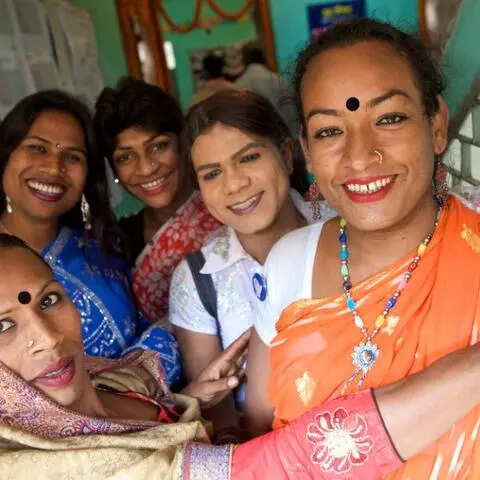
The amendment limits legal recognition to historically accepted socio-cultural groups such as hijra and kinner, as well as intersex individuals effectively removing legal recognition for those who self-identify as trans men, trans women, or gender non-binary people.

Under the new framework, a transgender person must apply to a District Magistrate for a certificate of identity, which will only be issued after examination by a designated medical board headed by a Chief Medical Officer or Deputy Chief Medical Officer. The state does not simply need to recognise you anymore. It needs to certify you.

Aakar Patel, Chair of the Board at Amnesty International India, described it plainly: "This law is not just a bureaucratic overreach; it is a fundamental shift in how the state views transgender people. Identity is no longer treated as something inherent, but as something to be checked, certified, and controlled."

"From the first line to the last line"

On the afternoon of March 16, 2026, the Women's Press Club in Delhi hosted a crowd it was never built for. In a small room on Ashoka Road, queer and trans activists were pressed against students, students against lawyers, lawyers beside journalists and community organisers.

The energy in that room, as one reporter present described it, was not panic. It was
recognition.

"From the first line to the last line of this Bill is completely arbitrary, nonsense, and it violates every kind of human right that is possible," said Krishanu, a trans activist.

Raghavi, a transwoman and Supreme Court lawyer, broke down the constitutional violations with clinical precision: "It goes against the previous version of the Act, and in doing that it also goes against Articles 14, 15, 19, and 21 of the Constitution."

Aryan Pasha, an Indian trans man activist, was direct about the amendment's gaps: "There are loopholes from start to finish."

And from Kanmani, responding to the government's rhetoric around decolonisation: "This government keeps talking about decolonisation. Then why are you getting into a colonial mindset?”


Protests Erupt Across India

The bill did not pass in silence.

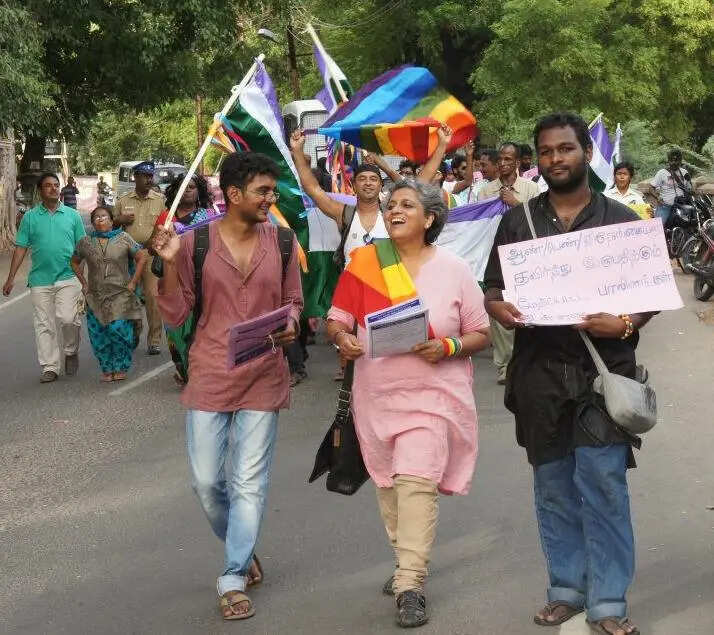
After it was tabled, gatherings and protests convened in cities across the country. In Kolkata, an emergency press conference was held at the Press Club. In Bengaluru, activists from eighteen districts of Karnataka mobilised toward Freedom Park. In Bhubaneswar, members of the Odisha Transgenders Association took to the streets. In Hyderabad, demonstrators gathered at Dharna Chowk.

The People’s Union for Civil Liberties (PUCL) condemned the Bill as unconstitutional and demanded its immediate withdrawal, stating that the amendments would result in the exclusion of a large number of transgender persons, denial of their constitutional and statutory rights, and the targeting of their support systems.

Opposition members of Parliament criticised the bill and sought a parliamentary committee to review it. The BJP-led government, however, hastily pushed it through both houses in the face of widespread protests.

The Shadow of Colonial Law

Critics are not just alarmed by what the bill does they are alarmed by what it resembles.

The 2026 Bill has been compared to the Criminal Tribes Act, which presumed all registered eunuchs were suspected of kidnapping children, and penalised eunuchs for having a boy under sixteen in their household. The Supreme Court in NALSA had itself called the Criminal Tribes Act a "brutal legislation with a vicious and savage mindset."

The bill also introduces up to life imprisonment for "coercing or alluring" people to be transgender provisions that critics say could be used to criminalise the very support systems, friends, family, and allies, that trans people rely on most.

A Global Backlash With a Local Face

India's amendment does not exist in a vacuum.

The TGEU's 2025 Trans Rights Index recorded the first year in its thirteen-year history in which more rights were taken away globally than were gained. In the United States, the Trans Legislation Tracker recorded 740 anti-trans bills under consideration across 42 states in 2026 alone. The United Kingdom's Supreme Court ruled in 2025 that for equality law purposes, sex means biological sex. And TGEU recorded 281 trans and gender diverse people murdered between October 2024 and September 2025, with Asia recording its highest ever number of cases.

"Amidst a global backsliding on trans rights," as one legal analysis put it, India has not stood apart it has joined the tide.

What Now?

India's last census recorded 487,803 transgender persons. So far, only about 32,500 have identity cards, essential for accessing various social security measures. The 2026 Amendment narrows the door for those who haven't made it through yet and threatens to push back those who already have.

At its core, the amendment removes the right to self-identification, a right firmly recognised by the Supreme Court in 2014, replacing it with a system where identity must be verified by a medical board and thereafter recognised by the District Magistrate.

For trans communities across India, the question is no longer just about paperwork or policy. It is about whether the state sees them as people who have a right to name themselves or as anomalies that require official approval to exist.

In that small room in Delhi on March 16th, the answer felt painfully clear. Outside that room, the fight has only just begun.

(Voices quoted in this piece were drawn from community gatherings, press conferences, and published testimonies by trans activists and legal practitioners in the days following the Bill’s introduction)

(The writer is a second-year student of BA Mass Communication. She is passionate about Expression and Media. And loves to write in her free time)
Tags
#bill#lok sabha#supreme court#rajya sabha#Trans Amendement Bill

Related Articles

Beyond Headlines: The war of West Asia from youth's lens
Article
Features

Beyond Headlines: The war of West Asia from youth's lens

Has the popularity of social media hastened war news reporting or sensationalism? Does the youth of today find themselves torn between deciphering real news and misniformation? This article aims to look beyond the surface and uncover the answers to these questions and more.

Apr 24, 20266 min
#west asia#prabhjot kaur#point+3 more
11,000 litres of milk: Spiritual offering or extreme prolifigacy?
Article
Features

11,000 litres of milk: Spiritual offering or extreme prolifigacy?

Video Controversy SynopsisA video from April 9, 2026, showing 11,000 liters of milk (worth ₹5.5–7.7 lakh) poured into the Narmada River during a religious ritual sparked national outrage online, pitting devotion against accusations of waste, excess, and environmental harm.Public BacklashSocial media users condemned the act as irresponsible amid food insecurity and river pollution risks, arguing the milk should have fed the needy instead of treating the river like a "sink."Defenses and Expert WarningsSupporters defended it as sincere faith, but environmentalists like Subhash Pandey and Ajay Dube highlighted ecological damage: the organic load depletes oxygen, harms aquatic life, drinking water, and local communities.Broader ImplicationsThe Narmada's cultural significance amplified the debate, turning a local ritual into a flashpoint on balancing tradition with ethics, responsibility, and river health—raising timeless questions on when devotion crosses into waste.
Apr 24, 20264 min
#narmada#subhash pandey#ajay dube+2 more
BENNETT DIALOGUES launch with the War in West Asia
Article
Campus

BENNETT DIALOGUES launch with the War in West Asia

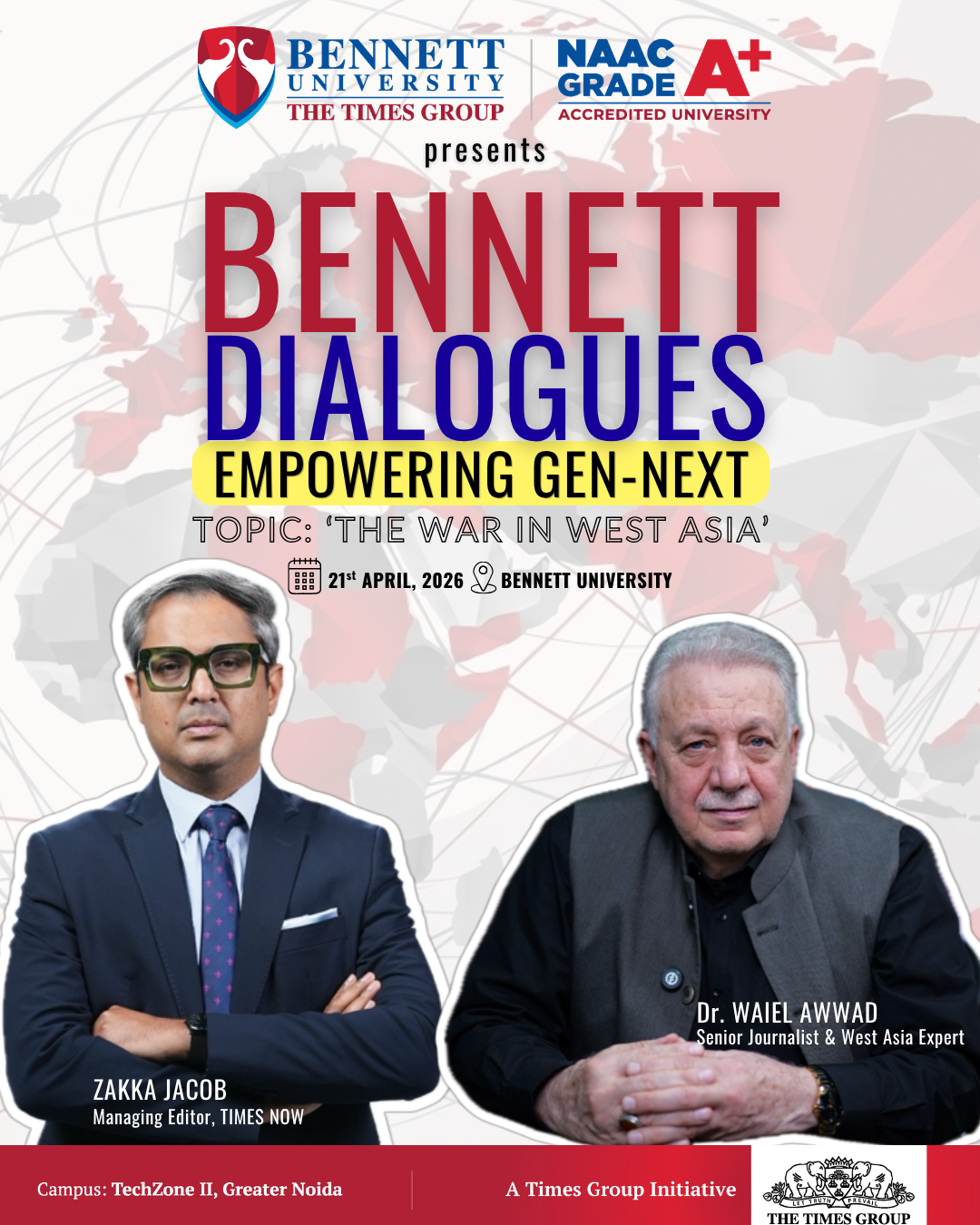
Bennett University has launched BENNETT DIALOGUES, a fortnightly talk series conceptualized by Chancellor Vineet Jain (Times Group MD) to help students grasp global geopolitical shifts. Led by Prof. Dhiraj Singh (Head, Centre for Media & Technology), it features informal fireside chats and Q&A with experts in geopolitics, business, and media. The series aims to connect world events to everyday impacts, like how the US-Israel-Iran war affects India's petrol and LPG prices. The inaugural edition on April 21 explores "The War in West Asia," with Times Now's Zakka Jacob and Dr. Waiel Awwad (Syrian-origin expert on West Asia conflicts, based in Delhi). Prof. Singh highlights its blend of Times Group media legacy and Bennett's academic excellence, benefiting media, liberal arts, business, and law students.
Apr 18, 20262 min
#dialogues#zakka jacob#dhiraj singh+3 more
War bugle disguised as a ceasefire: Examining Lebanon's situation post Israeli air strikes
Article
Features

War bugle disguised as a ceasefire: Examining Lebanon's situation post Israeli air strikes

On April 8, a fragile ceasefire briefly eased global tensions after 40 days of war between Israel, Iran, and allies, announced by Trump on Truth Social and confirmed by Iran and Pakistan's PM Shehbaz Sharif, who brokered it. Celebrations ensued worldwide as markets surged and oil prices fell, until Israeli jets struck Lebanon that morning, killing 357 civilians in what Beirut dubbed "Black Wednesday," while Israel excluded Lebanon from the deal. No formal agreement exists; conflicting statements emerged immediately, with Pakistan and Iran insisting it covered Lebanon, but Israel and the US rejecting that after a Trump-Netanyahu call. Lebanon, already devastated with over 2,000 deaths since March, was sidelined in a multi-front conflict involving Hezbollah, Iraqi militias, and Gulf interceptions. Post-ceasefire issues mounted: Iran kept the Strait of Hormuz choked, charging exorbitant fees and slashing traffic from 110 daily ships to four. Historic US-Iran talks in Islamabad on April 11 collapsed, prompting a US naval blockade that doubled down on the disruption, halting all oil route traffic (20% of global supply). The two-week truce window lasts until April 22 amid ongoing messages, but optimism fades after the deadliest civilian day coincided with its announcement.

Apr 17, 20264 min
#lebanon#trump#iran+5 more
Dhurandhar: Propaganda or not?
Article
Features

Dhurandhar: Propaganda or not?

This article attempts to find an answer to whether Dhurandhar a propaganda film or not? For a film so highly acclaimed and criticized, Dhurandhar has managed to become a topic of debate in almost every Indian household.

Apr 16, 20266 min
#dhurandhar#rekha pachauri#jaskirat singh rangi+2 more
Exploring Why The Voice of Hind Rajab Sparked a Quiet Censorship Storm in India
Article
Features

Exploring Why The Voice of Hind Rajab Sparked a Quiet Censorship Storm in India

The film "The Voice of Hind Rajab", directed by Tunisian filmmaker Kaouther Ben Hania, reconstructs the tragic final moments of six-year-old Palestinian girl Hind Rajab, killed in Gaza amid the Israel-Palestine conflict. It serves as a powerful commentary on civilian suffering, war's human cost, humanitarian crises, and global indifference, transforming a personal loss into a broader critique of geopolitical silence. The documentary has sparked controversy in India, where distributor Manoj Nandwana reports an oral block by the Central Board of Film Certification (CBFC) due to fears it could strain India's strengthening ties with Israel in defence, tech, and trade. No formal written order exists, raising concerns about transparency, artistic freedom, and censorship influenced by diplomacy rather than by cinematic guidelines. Director Ben Hania voiced heartbreak on Facebook, lamenting the decision amid her lifelong love for India and Bollywood, while questioning if the "honeymoon" between the "world’s largest democracy" and the "only democracy in the Middle East" is so fragile. The case highlights broader trends of political sensitivities curbing films on contentious issues, unequal treatment of global narratives, and tensions between art, authority, and empathy in India's media landscape.

Apr 7, 20266 min
#hind rajab#kaouther ben hania#voice of hind rajab+2 more