

Times of Bennett
ArticleFeatures

I Buy, Therefore I Am

The article explores how capitalism, social media influencers, and FOMO fuel modern consumerism, turning everyday products into symbols of status and identity. It questions whether we buy things out of genuine need or a manufactured desire to fit in.

Published:October 19, 2026 at 06:12 PM3 min read
I Buy, Therefore I Am
By Arnavi Gupta

René Descartes famously wrote, “I think, therefore I am.” Modern consumer culture seems to offer a different argument: “I buy, therefore I am.”
Capitalism and modern consumerism are two systems that feed upon each other. Capitalism is an economic system where businesses are privately owned and the main goal is to earn profit. Consumerism, on the other hand, is a culture in which buying and owning goods becomes important to people’s lives. The two reinforce each other. Capitalism encourages businesses to sell more, while consumerism encourages people to buy more.

With the era of social media influencers and the trend to post everything you do on social media, the things you own take on a new meaning rather than just their functional purpose. Your phone is not just your phone, but a status symbol. Even the brand name on your clothes is a marker of your status and personality. Everything you own becomes a part of who you want to portray yourself as.

This shift becomes particularly evident when we look at the popularity of the Stanley tumblers and Labubu dolls. Most didn’t even know about these products when they were launched. But when celebrities and social media influencers were seen using them, they instantly became viral and created a sense of desire amongst the consumers. The stores they were being sold at were sold out in a matter of days if not hours. The hype was further exacerbated when limited editions of these products were released, inducing a sense of FOMO amongst those who did not hop in on the trend.

What makes these trends particularly interesting is how quickly an everyday object can gain significant value when advertised via social media influencers and celebs. Social media generates visibility, visibility induces desire, and desire fuels demand. Buying something is no longer simply about owning it, it is about being seen possessing it. It doesn’t matter if one needs the product. It is about being part of the crowd and not missing out. That is what modern consumerism is all about.

Capitalism further fuels businesses to cater to the desires of the masses. By using strategies such as creating a sense of scarcity and releasing limited editions, businesses actually provoke consumers to buy their products and be a part of the larger group that already owns them. Promoting their products through influencers allows them to make their product not just another thing consumers want, but rather a part of their lifestyle. What the consumers are actually buying is not a product, but the lifestyle it is supposed to represent.

This relationship between capitalism and modern consumerism has given birth to trends such as fast fashion, where people’s wardrobes are constantly evolving based on the changing consumer preferences. What was fashionable yesterday is outdated today, which pushes consumers into an endless cycle of buying and discarding. The desire to stay relevant is greater than the cost of the price tag.

That is not to say that capitalism and consumerism are inherently bad. They do have their positive aspects, including keeping the economy alive and creating jobs. However, the main question we need to ask ourselves here is not whether we should stop buying things, but whether we understand why we buy them. What we really need to ask ourselves is whether the things we possess reflect our status and who we are.

Do we buy something because we genuinely have a need for it, or is it a
manufactured desire? Are we what we buy?
Tags
#labubu#stanley#fomo#capitalism#economy#consumerism#fast fashion#fashion

Related Articles

Gloria Steinem: A Mortal Heroine
Article
Features

Gloria Steinem: A Mortal Heroine

The article examines Gloria Steinem’s complex feminist legacy, acknowledging both her contributions to the movement and criticisms of her approach to intersectionality. It argues against idealizing or demonizing public figures, urging readers to recognize their complexities and the collective nature of social movements.
Oct 19, 20265 min
#steinem#gloria steinem#white feminism+2 more
Unravelling The Language Of Consent In Qala's “Ghodey Pe Sawaar”
Article
Popculture

Unravelling The Language Of Consent In Qala's “Ghodey Pe Sawaar”

This article dissects Qala's lead single 'Ghode Pe Sawaar', through a feminist lens.
May 2, 20265 min
#ghodey pe sawaar#urmila#qalas+4 more
Beyond Headlines: The war of West Asia from youth's lens
Article
Features

Beyond Headlines: The war of West Asia from youth's lens

Has the popularity of social media hastened war news reporting or sensationalism? Does the youth of today find themselves torn between deciphering real news and misniformation? This article aims to look beyond the surface and uncover the answers to these questions and more.
Apr 24, 20266 min
#west asia#prabhjot kaur#point+3 more
Certified Out of Existence: Why India's 2026 Trans Amendment Bill faced severe backlash
Article
Features

Certified Out of Existence: Why India's 2026 Trans Amendment Bill faced severe backlash

On March 13, 2026, India's government introduced the Transgender Persons (Protection of Rights) Amendment Bill in the Lok Sabha, which swiftly passed both houses by March 25 and became law despite widespread protests from trans activists, lawyers, and opposition parties. The bill scraps self-identification for gender—upheld in the 2014 NALSA Supreme Court judgment—replacing it with mandatory medical certification by a board and District Magistrate approval, while limiting recognition to hijra, kinner, and intersex groups, effectively sidelining trans men, women, and non-binary individuals. It also imposes severe penalties, including life imprisonment, for "coercing" others into transgender identity, which critics fear could criminalize family and allies. Activists like Krishanu, Raghavi, Aryan Pasha, and Kanmani slammed it as unconstitutional (breaching Articles 14, 15, 19, 21), arbitrary, and reminiscent of colonial-era laws like the Criminal Tribes Act, with protests erupting in cities from Delhi to Hyderabad. Amid global anti-trans backsliding (e.g., TGEU's 2025 index, US and UK developments), figures like Aakar Patel of Amnesty International India decried it as state overreach on inherent identity. Affecting ~487,803 trans persons (only ~32,500 with ID cards), the law unravels hard-won rights, framing the fight as one for the state's recognition of self-naming over official control.

Apr 24, 20266 min
#bill#lok sabha#supreme court+2 more
11,000 litres of milk: Spiritual offering or extreme prolifigacy?
Article
Features

11,000 litres of milk: Spiritual offering or extreme prolifigacy?

Video Controversy SynopsisA video from April 9, 2026, showing 11,000 liters of milk (worth ₹5.5–7.7 lakh) poured into the Narmada River during a religious ritual sparked national outrage online, pitting devotion against accusations of waste, excess, and environmental harm.Public BacklashSocial media users condemned the act as irresponsible amid food insecurity and river pollution risks, arguing the milk should have fed the needy instead of treating the river like a "sink."Defenses and Expert WarningsSupporters defended it as sincere faith, but environmentalists like Subhash Pandey and Ajay Dube highlighted ecological damage: the organic load depletes oxygen, harms aquatic life, drinking water, and local communities.Broader ImplicationsThe Narmada's cultural significance amplified the debate, turning a local ritual into a flashpoint on balancing tradition with ethics, responsibility, and river health—raising timeless questions on when devotion crosses into waste.
Apr 24, 20264 min
#narmada#subhash pandey#ajay dube+2 more
BENNETT DIALOGUES launch with the War in West Asia
Article
Campus

BENNETT DIALOGUES launch with the War in West Asia

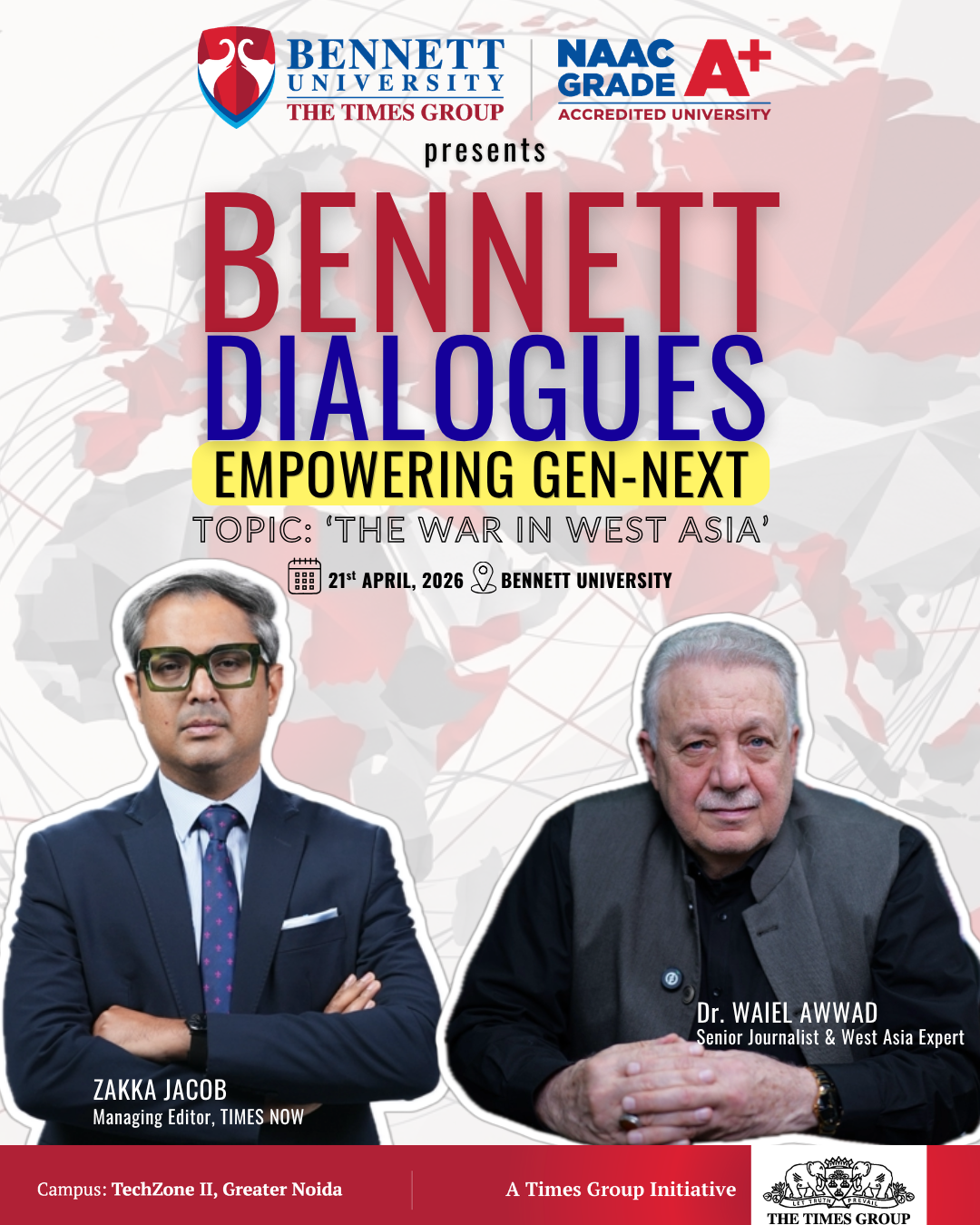
Bennett University has launched BENNETT DIALOGUES, a fortnightly talk series conceptualized by Chancellor Vineet Jain (Times Group MD) to help students grasp global geopolitical shifts. Led by Prof. Dhiraj Singh (Head, Centre for Media & Technology), it features informal fireside chats and Q&A with experts in geopolitics, business, and media. The series aims to connect world events to everyday impacts, like how the US-Israel-Iran war affects India's petrol and LPG prices. The inaugural edition on April 21 explores "The War in West Asia," with Times Now's Zakka Jacob and Dr. Waiel Awwad (Syrian-origin expert on West Asia conflicts, based in Delhi). Prof. Singh highlights its blend of Times Group media legacy and Bennett's academic excellence, benefiting media, liberal arts, business, and law students.

Apr 18, 20262 min
#dialogues#zakka jacob#dhiraj singh+3 more