Times of Bennett
ArticleFeatures

The Murmuring 20s: A Look Back at the Decade So Far

As we officially enter the late 2020s, this article retrospectively analyzes the defining events and cultural shifts that have taken place this decade.
Published:October 30, 2026 at 03:48 PM7 min read
The Murmuring 20s: A Look Back at the Decade So Far
By Pearl Sarin

“It was an age of miracles, it was an age of art…”, F. Scott Fitzgerald famously wrote of the 1920s, which are often dubbed ‘The Roaring Twenties’, due to the dynamism and distinctive edge of those years. But when we look to their modern cousins- the 2020s- do they sound as sweet, or are they more muffled than roaring? As the summer of 2026 came to a close, we also bid adieu to the Mid-Twenties, and have now officially stepped into the last phase of this decade, making the time ripe for a retrospective look at the phases and stages that we’ve shaped- and that have moulded us back, in turn- these past 6 years.


The Pandemic’s Shadow Looms Still

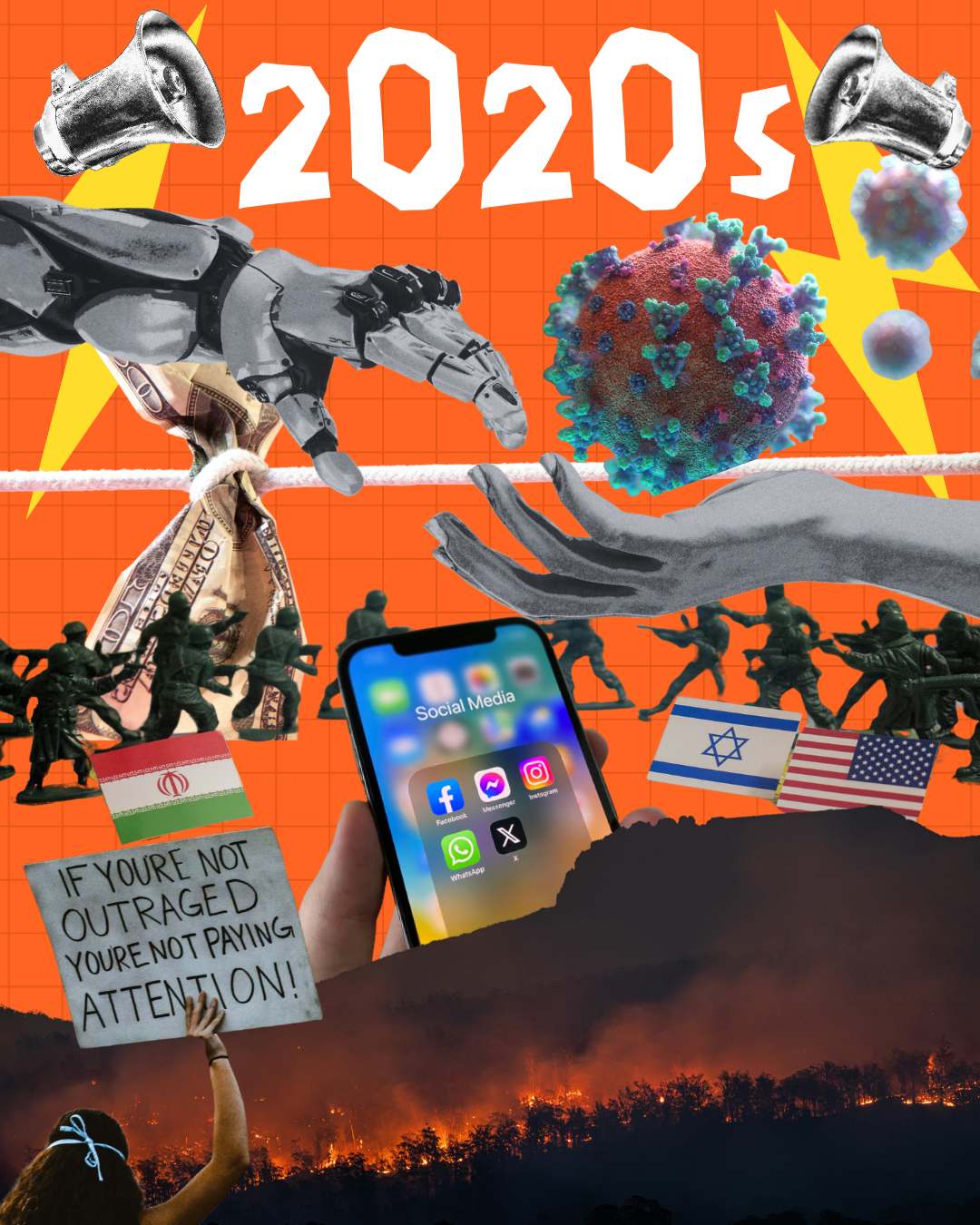
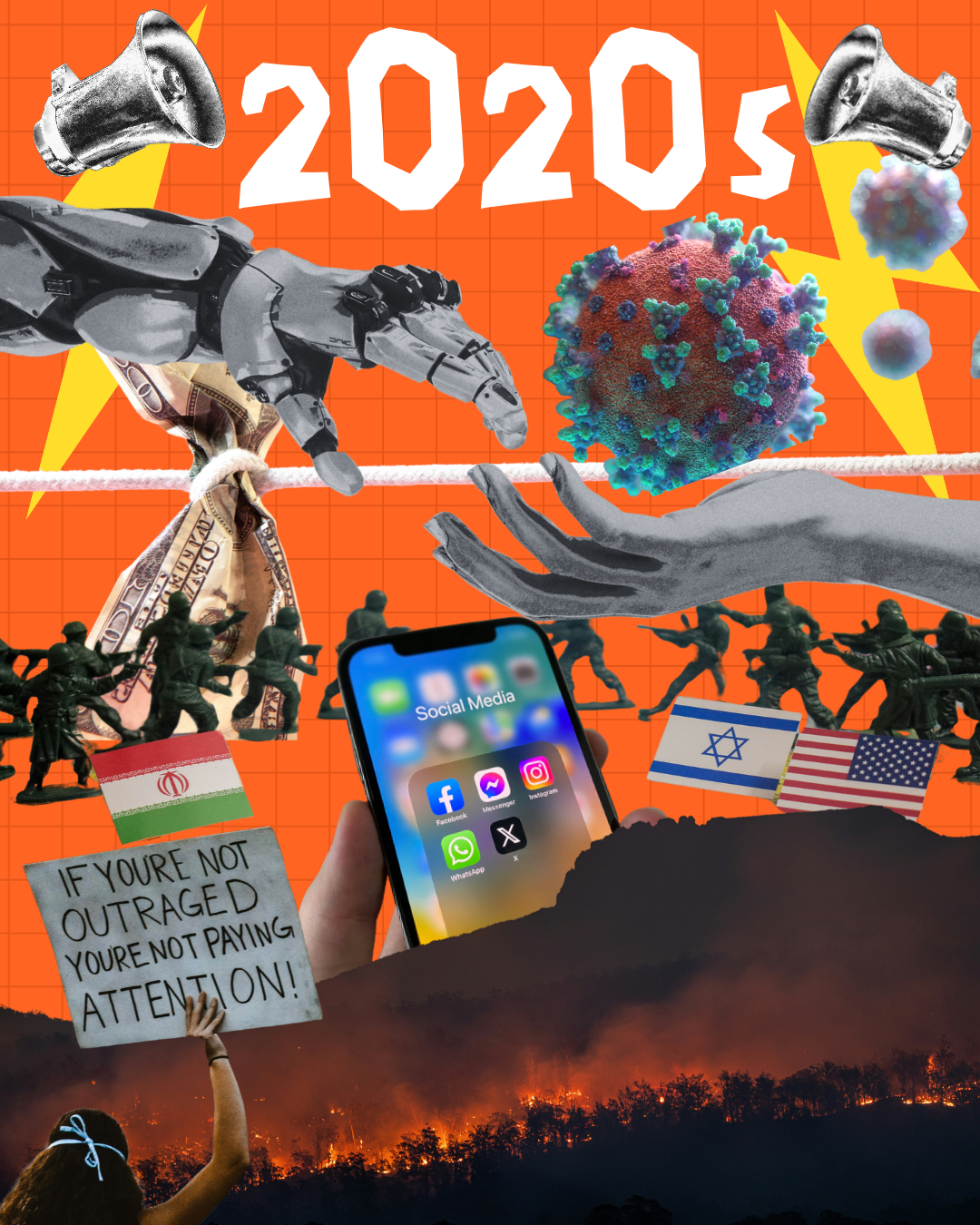
The modern 20s began with quite the bang- with a year that many deemed the worst since the end of the Second World War, thanks to a global pandemic that made the phrases “unprecedented times” and “new normal” feel almost trite with how overused they became. Wreaking havoc across the world for over three years, Covid-19 claimed more than 7 million lives, as per reported figures- though estimates suggest the actual number to be anywhere between 18.5 to over 35 million- while also permanently altering the way we work, learn, commune, earn, spend, vote, trust, and even feel and think. Indeed, many of our present challenges- from widespread social isolation and increasing polarization, to ever-decreasing attention spans and the plague (no pun intended) of social media-driven misinformation- can be traced back as having been exacerbated or accelerated by the Early-Twenties.

In that sense, one could argue that a lot of the Mid-Twenties have been a consequence of, or a response to, the earliest years of this decade. Billionaires’ wealth has skyrocketed since 2020- with one study finding their wealth share of GDP to have risen by 38%- as everyone else deals with climbing costs of living, widespread unemployment and stagnating wages. Mental health issues and a lack of close-knit community have been worsening worldwide, particularly since the quarantine era; according to data released by the World Health Organization, over a billion people across the globe suffer from mental health struggles today, while one in every six reports feeling lonely. Covid doesn’t get all the credit, though.

A World at Unease


Save some credit for world leaders, as they steadily steer the ships of geopolitical conflicts across the globe- from Israel and Palestine, the United States and Iran, and their broader spillover in the whole of West Asia; to the Russo-Ukrainian war, the Ethiopian civil conflict, and the U.S. withdrawal from, and subsequent Taliban takeover of Afghanistan; to the recurrent India-Pakistan flare-ups and the Pakistan-Afghanistan skirmishes. In fact, this year, the Doomsday Clock was reset to 85 seconds to midnight- the closest it’s ever been- in part, due to international uncertainty among shifting allegiances and dwindling diplomacy. This goes hand-in-hand with the recent resurgence of far-right rhetoric and strongman-ship in political landscapes around the world.

But perhaps the biggest- yet most guiltless- victim of the past decade has been Mother Earth herself. Climate change continues to pose an existential threat to not only humanity, but the planet’s delicate ecological systems as a whole, with 2024 being crowned the warmest year ever on record; as wildlife habitat destruction and environmental imbalances worsen, weather patterns change, and natural disasters such as forest fires become much more frequent and brutal. One can reasonably expect this issue to not be alleviated any time soon, thanks to what will perhaps be remembered as the watershed moment of the 2020s- the breakthrough of Artificial Intelligence.

A question posed to ChatGPT consumes ten times the electricity than one looked up on Google. Meanwhile, A.I. infrastructure around the world is estimated to soon start requiring six times more water than the entire nation of Denmark- which is kind of an issue, considering that 25% of all of humanity lacks access to clean water. Moreover, reports published by the United Nations and the International Monetary Fund suggest that A.I. poses a serious problem in terms of potentially triggering the “Next Great Divergence”, i.e., a split between the ones who control artificial intelligence, and those who may be controlled by it. Furthermore, the possibility of A.I. itself becoming a safety and security threat is an ever-growing concern, with many A.I. founders themselves drawing attention to the issue.

Every Cloud Has A…

So, are the 2020s all doom and gloom, then? Depends on how you look at it.
While there’s certainly no shortage of doom around, and plentiful of gloom to go about- as with any thundery sky, there are silver linings.

While climate change remains a critical frontier for the coming decades, it is also true that progress has been made in certain areas. Renewable energy has become the largest destination for global energy investment, reaching around $450 billion USD in 2024. Meanwhile, the number of electric cars sold per year, globally, has jumped from a little over 2 million in 2019, to over 21 million in 2025. Furthermore, calls for A.I. regulation are starting to garner strong support from all sides of the political spectrum- a much different reality, compared to how things were in this regard even a couple years ago.

Many of these progressive developments also owe much to Gen Z, as they begin to take the centre stage in political movements across the world. From grassroots level protests in Europe and South Asia alike, to a recent election victory in Brazil that is, in part, being credited to fandom stan accounts on social media- current world affairs are a testament to the fact that while Gen Z’s political style may be unconventional, it’s also often effective, thanks in no small part to them being digital natives, and thus being able to utilize that resource to its fullest.

To that last point, while social media has certainly contributed its fair share to the various obstacles that we currently face, it has also helped foster a sense of community and has amplified diverse voices. It has contributed significantly to de-stigmatizing mental health issues, and has created a space for conversations of socio-political justice. Elsewhere in the media realm, movies and shows such as Barbie, Sinners, and Heartstopper continue to break barriers and highlight the perspectives of women, queer folk and marginalized communities.

The Murmuring 20s

All of this to say- while the 2020s certainly don’t seem to be roaring so far, they also don’t need to be muffled. Murmuring seems to be a good compromise; for what’s most important is to keep talking- even if it’s quietly at the moment- and taking action, rather than letting our anxieties silently become a self-fulfilling prophecy.

And for what it’s worth, the 1920s weren’t all jazz parties and flapper dresses either; colonial empires were well and alive, and the decade eventually collapsed in on itself, as the Wall Street crash of 1929 marked the beginning of The Great Depression. There’s a flip side to every coin, including the quote we began with. “It was an age of miracles, it was an age of art…”, Fitzgerald wrote, before continuing, “it was an age of excess and it was an age of satire”. To that end, it seems like The Murmuring 20s have got at least one thing covered already.


(Pearl Sarin is a media student and rabbit-hole aficionado who enjoys analyzing the symbiosis between the online and the offline).
Tags
#artificial intelligence#gen z#covid#2020s#Climate Change

Related Articles

Between Two Worlds: An American in Russia
Article
Features

Between Two Worlds: An American in Russia

What if the country we think we know is not what it seems? At the second edition of Bennett Dialogues held at Bennett University, American-born cross-cultural analyst Jozef Schutzman challenged dominant media narratives about Russia and the United States, drawing from his experience of living in Russia. His conversation raised a compelling question: are we forming our own opinions about other nations, or simply believing the stories we are told?
Oct 28, 20264 min
#russia#times school of media#bennett dialogues+2 more
Gloria Steinem: A Mortal Heroine
Article
Features

Gloria Steinem: A Mortal Heroine

The article examines Gloria Steinem’s complex feminist legacy, acknowledging both her contributions to the movement and criticisms of her approach to intersectionality. It argues against idealizing or demonizing public figures, urging readers to recognize their complexities and the collective nature of social movements.

Oct 19, 20265 min
#steinem#gloria steinem#white feminism+2 more
I Buy, Therefore I Am
Article
Features

I Buy, Therefore I Am

The article explores how capitalism, social media influencers, and FOMO fuel modern consumerism, turning everyday products into symbols of status and identity. It questions whether we buy things out of genuine need or a manufactured desire to fit in.
Oct 19, 20263 min
#labubu#stanley#fomo+5 more
Unravelling The Language Of Consent In Qala's “Ghodey Pe Sawaar”
Article
Popculture

Unravelling The Language Of Consent In Qala's “Ghodey Pe Sawaar”

This article dissects Qala's lead single 'Ghode Pe Sawaar', through a feminist lens.

May 2, 20265 min
#ghodey pe sawaar#urmila#qalas+4 more
Beyond Headlines: The war of West Asia from youth's lens
Article
Features

Beyond Headlines: The war of West Asia from youth's lens

Has the popularity of social media hastened war news reporting or sensationalism? Does the youth of today find themselves torn between deciphering real news and misniformation? This article aims to look beyond the surface and uncover the answers to these questions and more.
Apr 24, 20266 min
#west asia#prabhjot kaur#point+3 more
Certified Out of Existence: Why India's 2026 Trans Amendment Bill faced severe backlash
Article
Features

Certified Out of Existence: Why India's 2026 Trans Amendment Bill faced severe backlash

On March 13, 2026, India's government introduced the Transgender Persons (Protection of Rights) Amendment Bill in the Lok Sabha, which swiftly passed both houses by March 25 and became law despite widespread protests from trans activists, lawyers, and opposition parties. The bill scraps self-identification for gender—upheld in the 2014 NALSA Supreme Court judgment—replacing it with mandatory medical certification by a board and District Magistrate approval, while limiting recognition to hijra, kinner, and intersex groups, effectively sidelining trans men, women, and non-binary individuals. It also imposes severe penalties, including life imprisonment, for "coercing" others into transgender identity, which critics fear could criminalize family and allies. Activists like Krishanu, Raghavi, Aryan Pasha, and Kanmani slammed it as unconstitutional (breaching Articles 14, 15, 19, 21), arbitrary, and reminiscent of colonial-era laws like the Criminal Tribes Act, with protests erupting in cities from Delhi to Hyderabad. Amid global anti-trans backsliding (e.g., TGEU's 2025 index, US and UK developments), figures like Aakar Patel of Amnesty International India decried it as state overreach on inherent identity. Affecting ~487,803 trans persons (only ~32,500 with ID cards), the law unravels hard-won rights, framing the fight as one for the state's recognition of self-naming over official control.

Apr 24, 20266 min
#bill#lok sabha#supreme court+2 more