


Times of Bennett
ArticleFeatures

UP Polls: BJP banks on mega projects to woo Bundelkhand

Published:February 24, 2022 at 01:36 PM4 min read
UP Polls: BJP banks on mega projects to woo Bundelkhand
By Shobhit Gupta

In parched Bundelkhand region, Bharatiya Janata Party (BJP) is banking on mega projects like the Ken-Betwa River linking plan and the Defence Industrial Corridor to see it home in the assembly elections.

The rivals are counting on smart choices of candidates to turn the caste equation against the ruling party.

All six assembly constituencies under the Banda Lok Sabha seat -- four in Banda and two in adjacent Chitrakoot - are currently held by the BJP. The saffron party had swept all 19 assembly segments in Bundelkhand region in the 2017 Uttar Pradesh Assembly polls.
The BJP has reposed faith in its current MLA, Prakash Dwivedi, in Banda Sadar assembly seat again.

The Samajwadi Party (SP) has fielded Manjula Singh, widow of former Congress MLA Vivek Singh for the same seat. The party hopes to cash in on the popularity enjoyed by the late Thakur leader.

The Bahujan Samaj Party (BSP) has nominated Dheeraj Rajput from the Lodhi community. The party believes that in addition to its Dalit vote, their candidate will bring in the Brahmin and the Lodhi votes as well.

With BJP stalwarts Kalyan Singh and Uma Bharti not on the scene this time, the BSP candidate hopes to wean away the Lodhi voters to his side.

Not many appear to be rooting for Congress nominee Laxmi Narayan Gupta, despite party leader Priyanka Gandhi Vadra's "Ladki hoon lad sakti hoon" campaign event at Ram Ghat.

The Opposition parties have tried to tweak the caste equation in the remaining three constituencies too in Banda, picking their candidates carefully.

BJP MLA Brajesh Prajapati has switched over to the SP along with rebels led by Swami Prasad Maurya, a move which may attract Other Backward Class (OBC) votes to Akhilesh Yadav's party.

Banda Sadar has about 3.15 lakh voters. Dalits account for 49,000, Thakurs 28,000, Brahmins 21,000, Lodhis 15,000 and Vaisyas 26,000, according to estimates.

While Jatavs, who constitute a bulk of the Dalits, appear to be standing behind BSP's Mayawati, the non-Jatav voters seem to be leaning towards the SP in this constituency. The BJP is projecting the development work in Bundelkhand region as the ace up its sleeve that will pull the region out of backwardness.

The Centre recently constituted the Ken-Betwa Link Project Authority to implement the first initiative under the national river interlinking policy. The Ken-Betwa link is expected to bring 11 lakh hectares of land under irrigation in Bundelkhand region, straddling Uttar Pradesh and Madhya Pradesh.

The "Har Ghar Nal" (tap water for every home) scheme is another effort to deal with the water shortage in the region.

Land acquisition for the Defence corridor in Chitrakoot, construction of the Bundelkhand Expressway, an airport at Chitrakoot and development of Chitrakoot Dham under the religious tourism project are the other initiatives by the "double-engine government". The party says they will perk up the region's economy.

Sanjay Singh, BJP's Banda district working president, claims that people here are charmed with the "Modi-Yogi" pair of the prime minister and the chief minister, thanks to the big-ticket projects.

But SP's Banda unit president Vijay Karan Yadav says the welfare schemes and the development projects started by the Akhilesh Yadav government in 2012-17 continue to enthuse people. His BSP counterpart Gulab Verma looks back at Mayawati's term from 2007 to 2012.

The opposition also raises the issue of stray cattle eating away crops, a problem flagged by many people.

The neighbouring Karbi and Mau Manikpur assembly seats in Chitrakoot are also witnessing a tough poll battle.
In Mau Manikpur, the SP has fielded Vir Singh, the son of a dacoit, Shiv Kumar Patel alias "Dadua", who operated in Chitrakoot's Patha region, known as "mini-Chambal".

Dadua whose diktat is said to have swung elections in the region once was killed in a police encounter during Mayawati government's term.

Vir Singh avoids talking about his father, telling PTI that he is in the field to carry forward the development work undertaken by the previous SP government. Singh says that his father and he had their own way of living, and he kept away from that life.

Tags
#UP elections 22#Elections 22#Bundelkhand Ken-Betwa linking project#Bundelkhand#UP assembly elections#Bundelkhand assembly elections#Bundelkhand assembly candidates#BJP promises in Bundelkhand#BJP UP elections#Defence Industrial Corridor in Bundelkhand

Related Articles

Unravelling The Language Of Consent In Qala's “Ghodey Pe Sawaar”
Article
Popculture

Unravelling The Language Of Consent In Qala's “Ghodey Pe Sawaar”

This article dissects Qala's lead single 'Ghode Pe Sawaar', through a feminist lens.
May 2, 20265 min
#ghodey pe sawaar#urmila#qalas+4 more
Beyond Headlines: The war of West Asia from youth's lens
Article
Features

Beyond Headlines: The war of West Asia from youth's lens

Has the popularity of social media hastened war news reporting or sensationalism? Does the youth of today find themselves torn between deciphering real news and misniformation? This article aims to look beyond the surface and uncover the answers to these questions and more.
Apr 24, 20266 min
#west asia#prabhjot kaur#point+3 more
Certified Out of Existence: Why India's 2026 Trans Amendment Bill faced severe backlash
Article
Features

Certified Out of Existence: Why India's 2026 Trans Amendment Bill faced severe backlash

On March 13, 2026, India's government introduced the Transgender Persons (Protection of Rights) Amendment Bill in the Lok Sabha, which swiftly passed both houses by March 25 and became law despite widespread protests from trans activists, lawyers, and opposition parties. The bill scraps self-identification for gender—upheld in the 2014 NALSA Supreme Court judgment—replacing it with mandatory medical certification by a board and District Magistrate approval, while limiting recognition to hijra, kinner, and intersex groups, effectively sidelining trans men, women, and non-binary individuals. It also imposes severe penalties, including life imprisonment, for "coercing" others into transgender identity, which critics fear could criminalize family and allies. Activists like Krishanu, Raghavi, Aryan Pasha, and Kanmani slammed it as unconstitutional (breaching Articles 14, 15, 19, 21), arbitrary, and reminiscent of colonial-era laws like the Criminal Tribes Act, with protests erupting in cities from Delhi to Hyderabad. Amid global anti-trans backsliding (e.g., TGEU's 2025 index, US and UK developments), figures like Aakar Patel of Amnesty International India decried it as state overreach on inherent identity. Affecting ~487,803 trans persons (only ~32,500 with ID cards), the law unravels hard-won rights, framing the fight as one for the state's recognition of self-naming over official control.

Apr 24, 20266 min
#bill#lok sabha#supreme court+2 more
11,000 litres of milk: Spiritual offering or extreme prolifigacy?
Article
Features

11,000 litres of milk: Spiritual offering or extreme prolifigacy?

Video Controversy SynopsisA video from April 9, 2026, showing 11,000 liters of milk (worth ₹5.5–7.7 lakh) poured into the Narmada River during a religious ritual sparked national outrage online, pitting devotion against accusations of waste, excess, and environmental harm.Public BacklashSocial media users condemned the act as irresponsible amid food insecurity and river pollution risks, arguing the milk should have fed the needy instead of treating the river like a "sink."Defenses and Expert WarningsSupporters defended it as sincere faith, but environmentalists like Subhash Pandey and Ajay Dube highlighted ecological damage: the organic load depletes oxygen, harms aquatic life, drinking water, and local communities.Broader ImplicationsThe Narmada's cultural significance amplified the debate, turning a local ritual into a flashpoint on balancing tradition with ethics, responsibility, and river health—raising timeless questions on when devotion crosses into waste.
Apr 24, 20264 min
#narmada#subhash pandey#ajay dube+2 more
BENNETT DIALOGUES launch with the War in West Asia
Article
Campus

BENNETT DIALOGUES launch with the War in West Asia

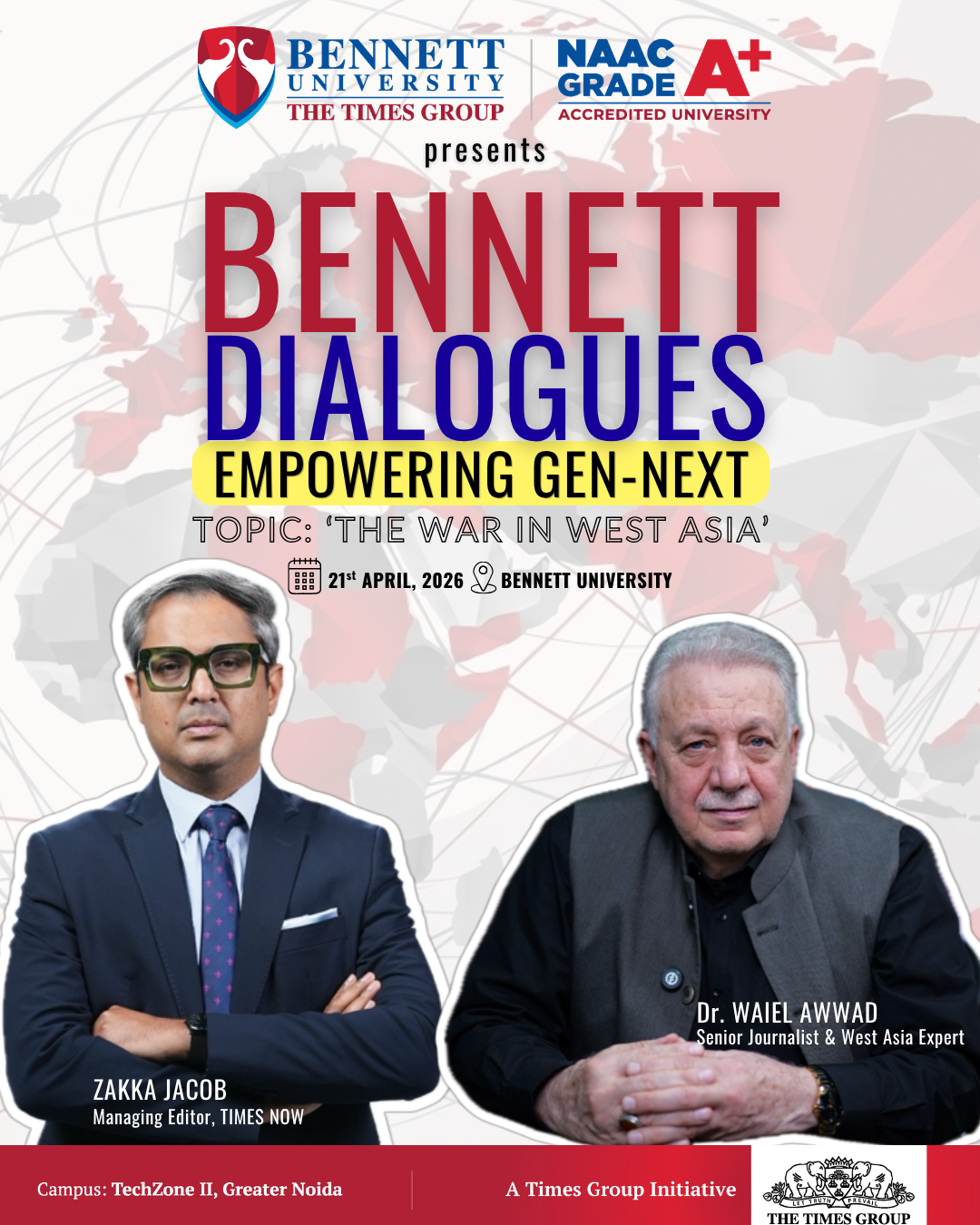
Bennett University has launched BENNETT DIALOGUES, a fortnightly talk series conceptualized by Chancellor Vineet Jain (Times Group MD) to help students grasp global geopolitical shifts. Led by Prof. Dhiraj Singh (Head, Centre for Media & Technology), it features informal fireside chats and Q&A with experts in geopolitics, business, and media. The series aims to connect world events to everyday impacts, like how the US-Israel-Iran war affects India's petrol and LPG prices. The inaugural edition on April 21 explores "The War in West Asia," with Times Now's Zakka Jacob and Dr. Waiel Awwad (Syrian-origin expert on West Asia conflicts, based in Delhi). Prof. Singh highlights its blend of Times Group media legacy and Bennett's academic excellence, benefiting media, liberal arts, business, and law students.
Apr 18, 20262 min
#dialogues#zakka jacob#dhiraj singh+3 more
War bugle disguised as a ceasefire: Examining Lebanon's situation post Israeli air strikes
Article
Features

War bugle disguised as a ceasefire: Examining Lebanon's situation post Israeli air strikes

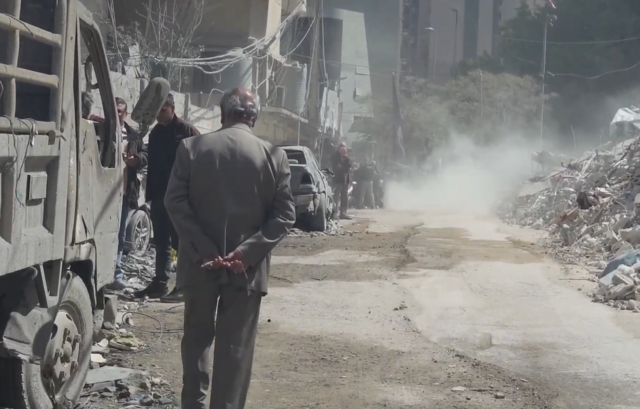
On April 8, a fragile ceasefire briefly eased global tensions after 40 days of war between Israel, Iran, and allies, announced by Trump on Truth Social and confirmed by Iran and Pakistan's PM Shehbaz Sharif, who brokered it. Celebrations ensued worldwide as markets surged and oil prices fell, until Israeli jets struck Lebanon that morning, killing 357 civilians in what Beirut dubbed "Black Wednesday," while Israel excluded Lebanon from the deal. No formal agreement exists; conflicting statements emerged immediately, with Pakistan and Iran insisting it covered Lebanon, but Israel and the US rejecting that after a Trump-Netanyahu call. Lebanon, already devastated with over 2,000 deaths since March, was sidelined in a multi-front conflict involving Hezbollah, Iraqi militias, and Gulf interceptions. Post-ceasefire issues mounted: Iran kept the Strait of Hormuz choked, charging exorbitant fees and slashing traffic from 110 daily ships to four. Historic US-Iran talks in Islamabad on April 11 collapsed, prompting a US naval blockade that doubled down on the disruption, halting all oil route traffic (20% of global supply). The two-week truce window lasts until April 22 amid ongoing messages, but optimism fades after the deadliest civilian day coincided with its announcement.

Apr 17, 20264 min
#lebanon#trump#iran+5 more