

Features
In-depth features and stories from campus life
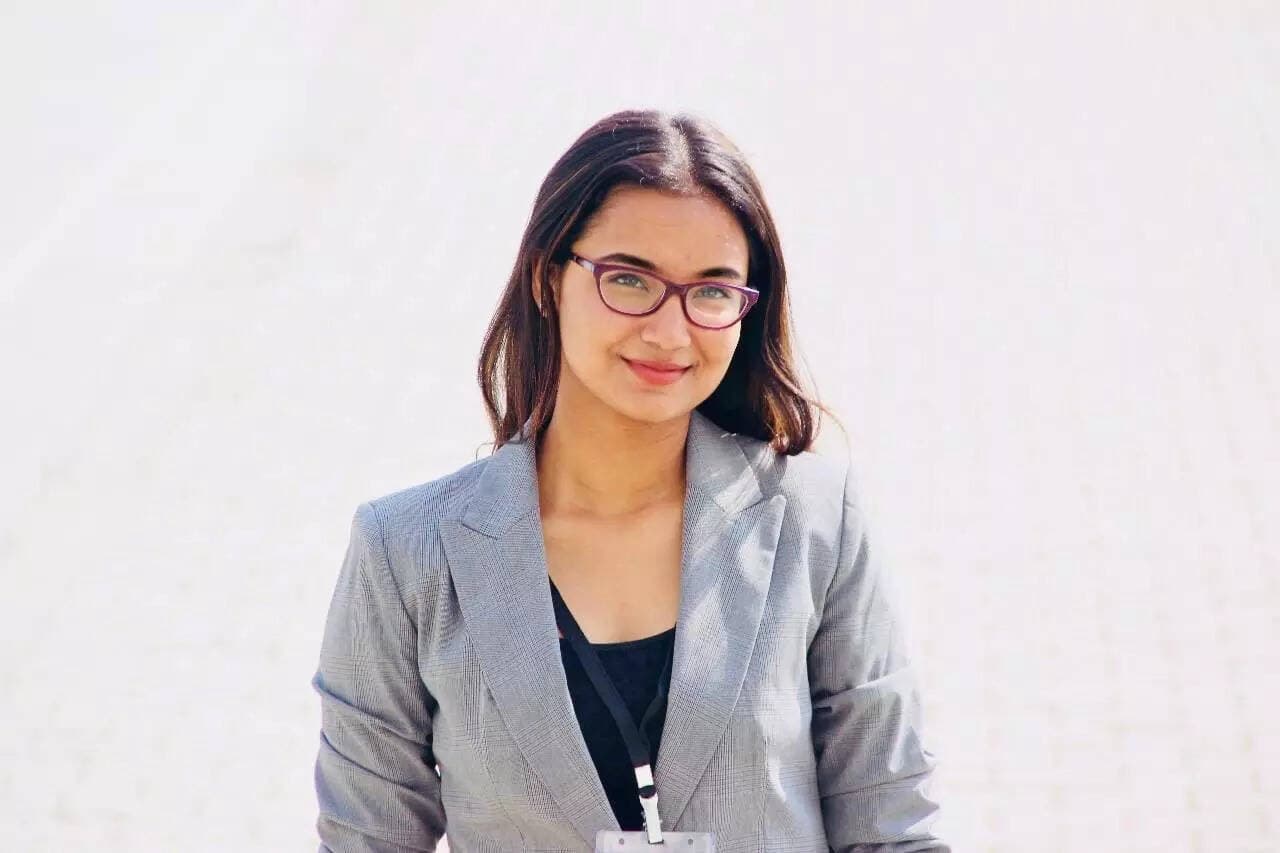
Equality at work & home leads to better experiences
At the workplace, gender equality helps ensure better productivity and increased job satisfaction. Equality at home assures a healthier and more comfortable environment for the child, mother, and father to flourish in their lives.

Equality boosts men’s mental health, not just women’s
By Yash Bisht Feminism should not be given a tag of a “woman thing” because it is a topic that can benefit both genders. Studies have already shown that the countries which are more gender-equal tend to boast more happy people, across both sexes. Thus, that’s the first seal of approval of the topic that feminism is important and beneficial to men too. The burden that comes with being a “provider” to the family is also decreased on men when girls are given equal education opportunities and women are given equal job opportunities because those societies produce a healthy number of women in the workforce. Keeping the topic in the same lane, when men don’t have the sole burden of running a family, they also start taking care of their emotional side. Which improves their mental health . An environment that is not oppressive to women is bound to make them more comfortable and eventually happy. That means the environment will spontaneously become better, be it at the office or at home.

Why only the unprivileged understand privilege
By Eusebia Kimde S Sangma Michael Kimmel ’s TED talk is all about engaging men into the conversation of gender equality because gender equality is not just about women and what it benefits them. He emphasizes repeatedly throughout his talk that achieving gender equality is a win-win game for all of us including men. He highlights the fact that it is easy for men to take this issue lightly as they might think it is something that does not concern them and ignore the adverse effects of gender equality. This is because they are on the privileged side, and he quotes “Privilege is invisible to those who have it.” He goes on to say that it’s in the interest of countries, companies, men, and everyone, in general, to achieve gender equality because achieving it brings more happiness to the individual and to those around them.

Gender quality is win-win for all genders
By Avni Daga “Feminism will make it possible for the first time for men to be free.” But what is feminism? Feminism implies equality amongst both men and women, socially, economically, and politically. “Gender equality is actually a way for us to get the lives we want to live.” Being a part of a deep-rooted patriarchal society where oppressing women has been considered the “way of life”, it has now become essential to include men while investing in women and redistributing powers. Michael Kimmer , in one of his TED Talks, while he spoke of gender equality, said, “That’s how privilege works. Privilege is invisible to those who have it.” Men have now been accustomed to being the more privileged section of society, so much so, that it is now considered to be “THE” norm. The privilege is invisible, however, in order to turn the tables, or at least, come at par, a realisation needs to take place. Gender equality is not a win-lose scenario, but the need of the hour. It is a win-win deal for everyone! For the growth of an individual and in turn the growth of society, it is essential that both men and women not only talk of gender equity but also take steps to implement it. From men over women, to share responsibilities and work together both at home and at work is what has led to healthier and happier lives, according to studies.

Gender equality is good for everyone, especially men
Feminism is taken as a gateway to oppress men - or rather turn the oppression of women towards men.
To reduce gender crimes, we need feminism
Treating every gender as an equal will lead to a safe and healthy society. The complete potential of women will be utilized to increase output and gender-based crimes such as rape, acid attacks and assault can be prevented.

The need to free gender of patriarchy
Gender equality helps us to break free from the notions of patriarchy whose stereotypes has not only shackled women but also men.
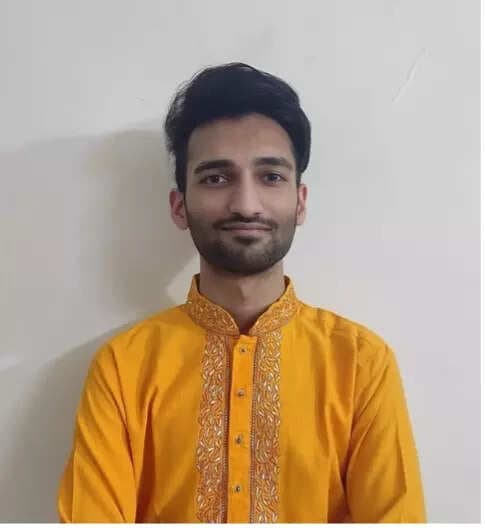
Men should be allowed to be themselves
Being a housewife is okay but if a male is staying at home, he is criticized. All these small things matter to those individuals who have to face these problems.

Feminism brings us closer to gender equality
An environment where women in their working field are treated equal to men and given same salary package or more than a male employee.

Finances and safety in a cornered world
We often speak about women safety on roads, if security and safety systems like street- lights among others were placed strategically at the time of planning, we would’ve been a step ahead in avoiding the grave crimes.

Feminism and its roots in India
Draupadi, a lady conceived out of the fire, vindicated the embarrassment dispensed to her in the Mahabharata.
Challenging the misunderstood feminism
Feminism is equally important for both the genders because it's not a women-centric movement rather it also gives men the platform to be vocal about the issues they face and break the stereotypes surrounding men.

Why patriarchy is bad for men
Actions speak louder than words. Even if one believes against patriarchy, in practicality, these expectations and notions invariably do pop up, at least in a country like India.

Why feminism will benefit the society
But in India men think that household chores are only meant to be done by women in the house but that is not the case at all.

The number of male friends does not define anything
When men are okay with being around feminine issues and strong confident women is when feminism will flourish in India.
Feminist issues grassroots of the society
Having read and researched a lot about importance of feminist perspective in the Indian diaspora, I firmly believe the concepts of inter-sectionalism among women.

Creating a better world by rethinking Feminism
Giving equal rights to women won’t be in anyone’s disadvantage, in fact supporting feminism will make things a lot easier.
Feminism helps fight patriarchy and its side effects
While patriarchy has affected women greatly – it has also affected the men. Men have been forced to suppress feelings or act stoic; it ingrains the toxic masculinity into children from a young age.
Feminism is one-stop destination for gender equality
I highly agree to fact that making gender visible to men is the first step of engaging men to support gender equality. Without confronting men’s sense of entitlement, there is no scope of understanding why men resist gender equality.

Welcome to feminism: A place for everyone
For decades, women have been facing the brunt of society, be it Sati Pratha, Female Foeticide, Dowry System or Unequal pay at work.

Pushes and pulls of re-rooting in foreign land
By Bhavya Talwar Ms Moem writes, “Spread your wings It's time to fly. Make the leap. Own the sky”. Rumi stirs by suggesting, “Open the window in the centre of your chest and let the spirits fly in and out.” There is no dearth of motivation and inspiration from thinkers and scholars on blurring man-made boundaries. Well, the goal of living a happier and more meaningful life has taken a more international turn. The entire globe is a workstation and there are no boundaries for those who dare to dream and strive to make it a reality. “I wasn’t a gold digger but just wanted to find a better identity for myself, so, I found a connection in Dubai, sold the property and the gold I had, made several promises to my wife and son and came to Dubai full of aspirations for a life worth living.,’’ said Ravindra Dewan . Little did he know he was about to become the newest member of the Dubai mafia. He was subjected to unfair conditions, and experienced some sticky situations But as time passed, he got acquainted with some resourceful people and, with their help, was able to make a daring escape from the big bad world Although his wings were broken, he was not lost. He learned from his mistakes and guided his wife to follow proper channels, get the right visa, work on the documentation, investigate and check the companies. His wife applied online, got selected and has a PR job in Dubai now. His son is studying computer science and is doing very well academically. Although Dewan is still a struggler, he is hopeful of possibilities Dubai has to offer. The grass is always greener on the other side. Jatin Vedi was looking for a career leap and his desire to move to Singapore was stimulated by his money spinning friends, the captivating ambience of the country, diversity, openness , business spirit and the rich lifestyle . His initial days in Singapore were full of stress as he got his Employment pass with great difficulty and then was actually thrown off guard by the local strict laws and bans. Vedi had heard that Singapore was the happiest nation in Asia but his experience was contrary to that notion . “Leaving your home country and settling outside sounds interesting but the biggest challenge you face is loneliness said Vedi, who works in a shipping company in Singapore. His house was just four rigid walls and lacked the warmth and the fragrance of mouth watering dishes that his mother made at home. No fireworks on Diwali, no stress busting chewing gums but hefty fines for silly mistakes were hard for him to cope with. He missed driving his own car as cars are ridiculously expensive in Singapore and with the salary he had he could not buy his own car. He was disheartened but then he realized he was looking at only the negatives and missing out on all the fun So, he started interacting with local people. The pollution free and manicured beauty of Singapore filled him with happy thoughts and yes the traffic congestion made him forget about owning his own car. “I am contented now with the choice I made of moving to Singapore said Vedi. A dream turns into reality only through determination, perseverance and making efforts in the right direction. Sumit Chadda, who is a Program Manager with Wipro in ‘Reading Ukhad to deal with the bitter winter season. He had to keep himself and his four month old son covered in several layers of clothing. Unpredictable UK weather made it more difficult as clothes would not dry up because of rains and hail. “I had to take care of my office as well as the household chores as my wife developed Chilblains and her body constantly ached because of extreme cold said Chadda. Dry skin, regular sniffles, headaches, long period of darkness, confinement to indoors became a way of dull and treacherous life for them. He was actually scared initially. One of his co-workers came forward as a blessing and got him TV licences which kept the family entertained at home. A gym-worker living in the neighbourhood taught them how to get through the season , not just get through but actually enjoy it thoroughly. They all started regular exercises, were introduced to the clubs and campfires, discovered winter warming drinks like Irish coffee, hot toddy and muled wine, started enjoying layers of clothing as fashion statement and finally the beauty of Christmas and the Christmas markets was so enchanting that they did not want to be anywhere else in the world. “ In an unfamiliar environment of Germany I kept wondering why people gave me weird looks.” said Sona Kathuria ,who works in an engineering company in the European country . Germans were hesitant sitting next to her in trains or buses. She was always uncomfortable whenever she went to buy provision or other materials as she experienced subtle racism here and there. “People looked at me like I am some kind of a zombie.” said Kathuria She felt lost and lonely all the time. Kathuria was told by her immediate boss one day that she was not making an effort to sync in and he only guided her to learn German first and foremost. She focused on putting her best foot forward in the office, stayed punctual, honest and patient, always smiled and greeted and helped people around without expecting anything in return. “After a year or so I was thrilled at receiving a dinner invitation from my German colleague, which meant I was accepted in the German circle.” Kathuria came to understand that Germans believe in quality rather than quantity. She respects the cultural differences that they have and although it took her sometime but she has made ‘friends-forever’ in Germany who she knows would stand by her through thick and thin. As Kathuria overcame all the obstacles by understanding German culture and learning German language, Ashmit Mehra who went to Dubai for studies also did the same. He said “language was the biggest challenge for me because most of the professors and students interact and communicate in Arabic and I was not at all familiar with that language’’. Social interaction was missing in his life. He could not even score good marks so he decided to learn this language and conquer this problem . He signed up for the language class in Dubai and also downloaded the language app. “The biggest mistake I made was coming to Dubai without preparing myself.” said Ashmit Ashmit and the others suggested that advised aspiring migrants to be fully informed and prepared, use proper procedures and channels before flying out to any country. They also suggested to focus on positive things as it is one of the most important aspects in succeeding when faced with some difficulties . Join exciting programmes offered by Bennett University
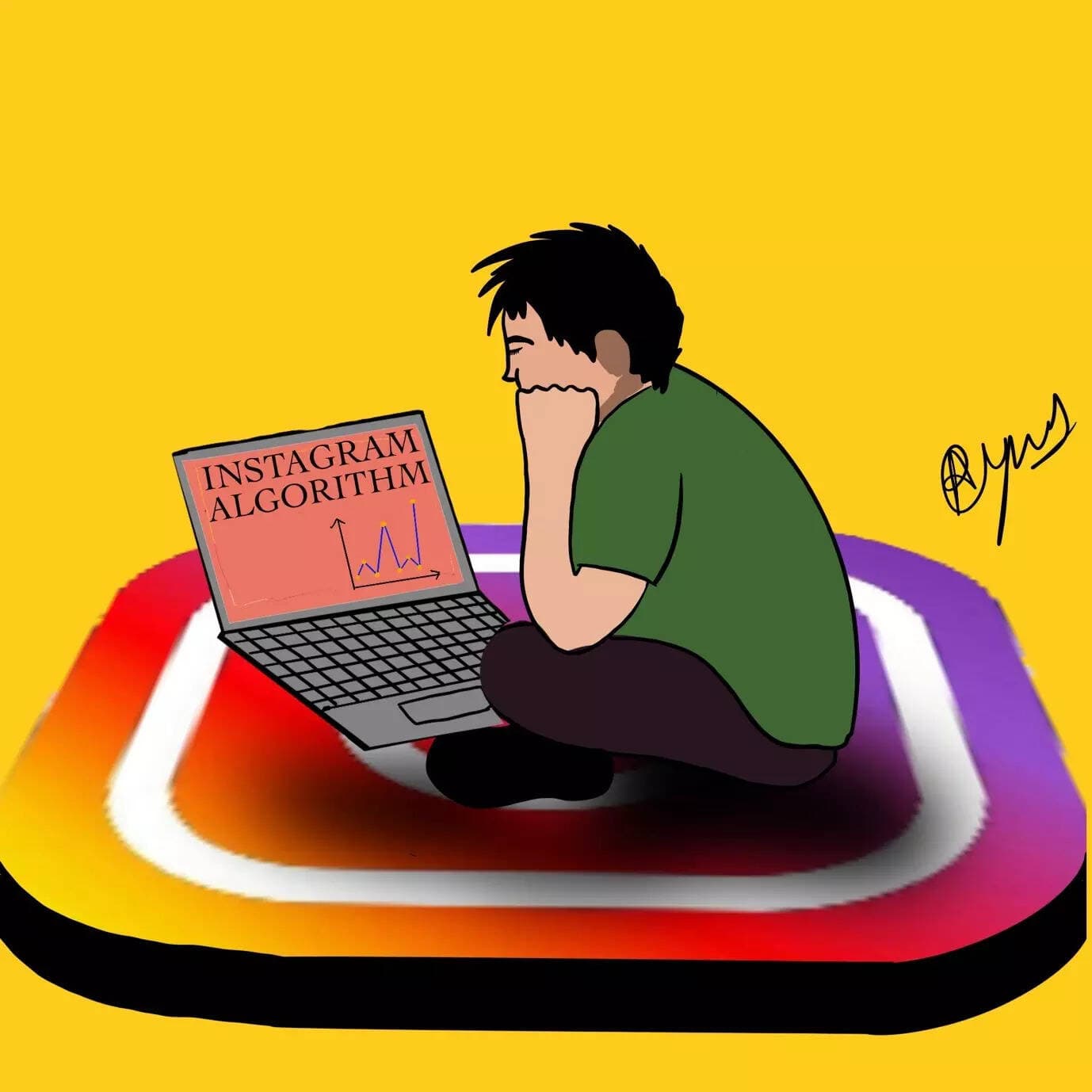
Keeping up with the Instagram algorithm in 2021
By Ayush Khurana It goes without saying that content is king regardless of the medium. This truism manifests itself differently in different situations. For instance, Instagram has changed its algorithm and forced its users to focus on their content. “Talking about the Instagram algorithm of 2021, this was a big transition comparing to the previous year’s algorithm, it has become stricter which has made us more serious about our content,” said a user, Ashutosh Bhatia. Before 2020, when the Covid-19 pandemic hit the world, life was easier and hassle-free just like the Instagram algorithm. Getting desired number of likes and views on any type of content, be it a post or an IGTV (Instagram TV) video. This platform was very convenient in terms of getting reach for the so-called social media influencers. What is ‘Instagram’? Instagram is an American photo and video sharing social media platform in which, there are more than 1 billion users active on it. Instagram is not about influencers or marketing; it is a platform where you can connect to your friends and families. Here, we can see various types of users present, from social media influencers to big business companies. It is one of the most renowned social media platforms known for its privacy and the quality of the platform it provides for creative type of content, for bloggers and many people. Instagram is the only platform where users post content in terms of photos or videos, can do video calls, go live, and interact with their followers. And Instagram is a source of Income for many bloggers and social media influencers. Ashutosh Bhatia, 18, who is from Delhi and makes content on Instagram said, “Before 2021 posting content and getting maximum number of views for any social media creator was a bliss. There were fewer competitions and getting videos viral or sponsored was a cakewalk. Posting content and getting views was less of a hassle.” The strategies adopted by Instagram to increase its popularity are unique . Its main competition was with TikTok , where a user can publish a video on any topic, be it informative, funny, or creative. and it should be less than 30 seconds. During the lockdown, many people saw the growth of TikTok in terms of the number of users. The engagement on TikTok was increasing daily while it was decreasing on Instagram. When TikTok got banned in India and in many other countries due to Sino- Indian border tensions, Instagram took advantage of the space in the market by changing its home page layout.Weeks after TikTok was banned, Instagram launched ‘ Reels ’. Reels is like TikTok, wherein any Instagram user can publish videos under 30 seconds and it is located at the bottom of the Instagram home page. With the inclusion of Reels, Instagram’s user field became very wide, and its user average started to increase daily. After the inclusion of Reels, an average user’s Instagram usage time increased to 6 hours. After the addition of reels on Instagram in 2020, people got views on their videos within a snap. The main reason behind this was that people started putting hashtags such as #fyp#reelitfeelit etc. These hashtags became popular within a month, and people started getting reach and their reels/ videos started to go viral. This brings us to the algorithm of 2020; where hashtags became a weapon to tackle the algorithm successfully. When we put hashtags, it reaches more people and there is a possibility that the reel/ video goes viral. For example, if any Instagram user uploads a video/reel with some hashtags which are widely popular or trending during a week, his/her post can reach more people and go to the explore page. Coming to the Instagram algorithm of 2021, it has become stricter, getting views on Reels/videos in 2020 was easier compared to 2021. The most disheartening development to almost everyone who creates content is that hashtags don’t work in 2021. Without hashtags, it has become very difficult for a person to gain reach. Now, to beat the Instagram algorithm, one must post consistently, ensure that people like one’s content so that they can save one’s reel and share it on their story. Ansh Arora, 19, who lives in Lucknow, is a music producer. He makes content on Instagram related to music, mainly comprises old and new song remixes, making his beats on an old Bollywood song and singing his verse. He said, “Instagram algorithm in 2021 has changed almost everything now, I have to plan my content before uploading, I make sure that people engage with my content and like it”. One of his reels touched half a million, just because people liked his content and found it interesting. He also said that” I have started making content which people like, so that my videos can get more reach. Aryan Batra, who lives in New Delhi, is a content creator and has his own YouTube channel running successfully. He makes short vines also known as short comedy videos.. He makes content on Instagram related to comedy and his main aim is to make people laugh and entertain by his content. “I have seen that in 2021 Instagram has drastically changed, now planning content regularly and engaging with the audience has become a necessity. Keeping up with the trend is a must to make sure that my viewers are entertained.” Aryan said. Arsh Bhatia, who is in Class XII and an artist, currently living in Mumbai said, “Now, we have to plan our content and post accordingly. Being an artist, it becomes very difficult to show consistency as it takes several hours to complete one project. However, the flip side is we are becoming more knowledgeable about Instagram, which might benefit us in the future.” Comparing the algorithm of 2020 and 2021, people have become more serious and responsible about their content. Planning and uploading on time has made the content creators more aware. POST REGULARLY: this is one of the main strategies to beat the Instagram algorithm of 2021, now to gain more reach. One should post content more regularly. It is recommended that one post at least 2-3 reels a week. SAVE AND SHARE: Another element to make your content go viral. One needs to make sure that people like the content one makes, so that they save and share one’s reel/video. The algorithm focuses on how many people save one’s reel. If an increasing number of people save one’s content, then it can go to the explore page. ENGAGE WITH YOUR FOLLOWERS: Start engaging with your followers, ask them through polls that what type of content they prefer. For example, if you upload a reel, it will only reach your followers and others. To ensure that it reaches more people, your followers need to save the reel and share it on their stories.
Survival a daily battle for migrants in maximum city
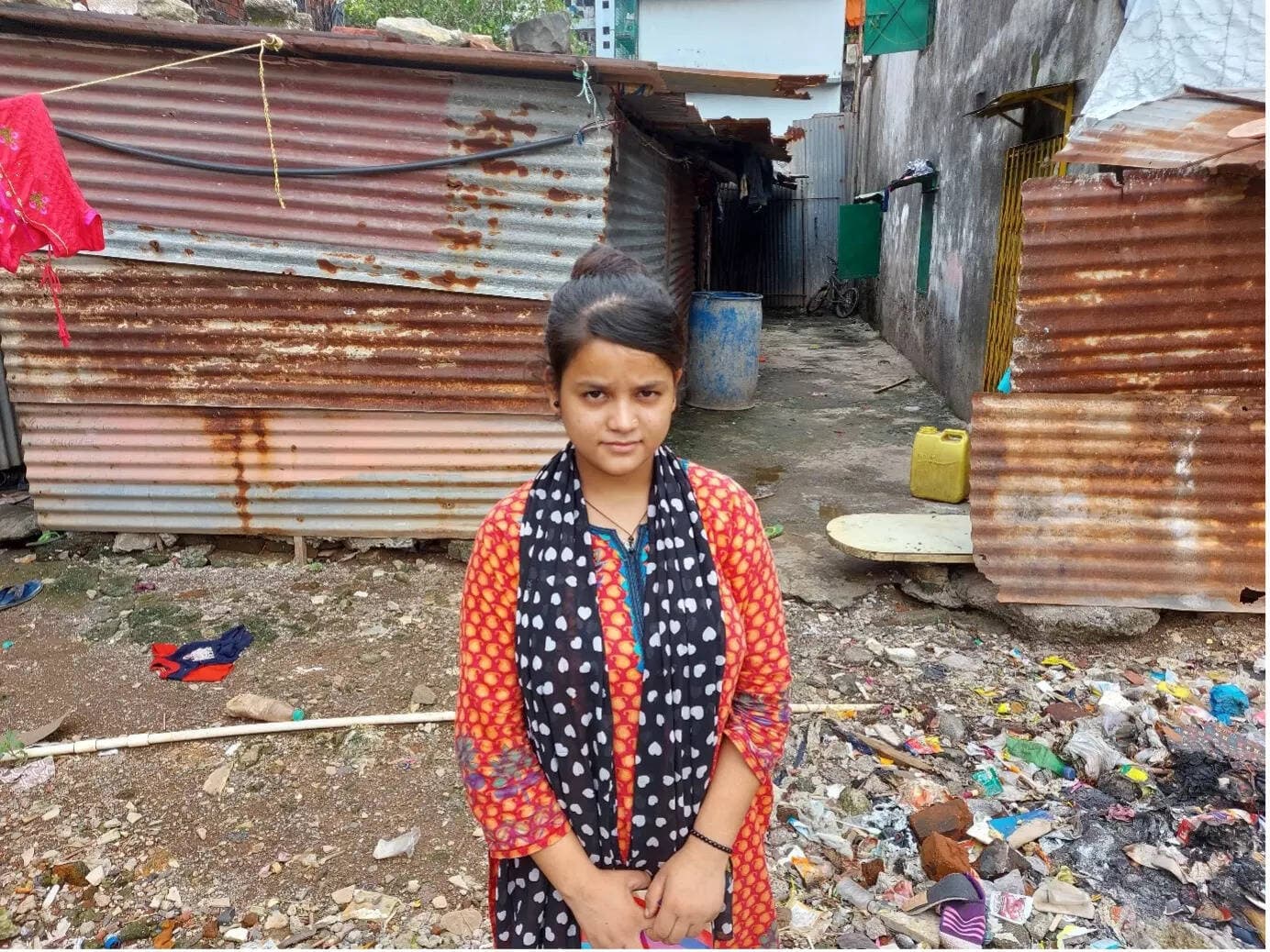
By Vidhi Goswami "There is no other place to go to, we’ll have to bear with the troubles … this is life, we’ll have to accept it,” says Manisha about her survival at her ‘jhopadi’ or ‘kaccha room’. There is a dark-truth behind this ‘city of dreams’, and it is `something that many consider more than a nightmare. ‘Roti, Kapda Aur Makan – these are all the necessities of life, if even one of them is missing, then life becomes very difficult. In the financial capital of India, many don’t have the privilege of owning their own house. And the most unfortunate are individuals who belong to the lower strata. “I work at a factory and make necklaces, my husband is a mason … together make about 6000 per month, and trust me it’s not enough”, said Jyoti while swaying her grand-daughter in her arms and sitting on the concrete. It is only her husband and she who work, and take care of six members in their family. Hour/wage workers, housemaids, carpenters, masons, and watchmen are some of the occupants of these makeshift houses. Living in a tin house is not easy during summer, “It is extremely hot, sometimes this table fan is also of no use … We just sit outside. Buying an A/C is out of my league,” says Manisha. Rains also bring water seepage other troubles for them; sometimes the rainwater floods their homes, giving them sleepless nights and difficult mornings when they have to drain out the water. “We usually put some clothes over the roof in order to prevent the water from getting in, but still, we have water seeping in from the gaps …”, explains Saraswati, pointing out at the roof of her house. Many living here migrated from their native homes in various parts of the country. “We came here from Nepal eight years ago, as there is no work there and my husband had seen really bad days,” says Rani. According to Census of India 2001, about 14.7% of the population migrated for work/employment. “If there is no job, then there is no food … We also don’t have any savings that could help us, our condition was really bad during the 3-month lockdown . We don’t know how we managed to survive,” says Jyoti, describing the state of her family during the lockdown triggered by the pandemic . Many people migrate to Mumbai for jobs because in their villages, there is no proper system in place that could provide them with food. It is not just work, but many migrants think they will get better schools and facilities in a large city. “This room has been given to us by the builder, he does provide us with free electricity and water, but we are still fearful of our situation. If we say something against him or even if he misunderstands something we say, he’ll throw us out and we’ll have nowhere to go,” says Manisha. The builder of a society owns the land on which there are at least 10 makeshift rooms, everyone living here has worked or is still working for him. There are no charges taken for electricity and water, but we are at his mercy. Something that keeps them going in life is the roof over their heads. They know that even if there is no food to feed themselves, they can always come to their ‘jhopadi’ for comfort. Another pressing problem faced by them is menstruation . “I’ll tell you what we do of the used cloth during menstruation, I throw it in the bushes or the mud next to the half-constructed building, all women here do the same,” Manisha says as she points towards the bushes. Teenage girls on their periods, avoid the use of common toilets here as they are poorly maintained and unhygienic. Sixteen-year-old Sakshi says, “Sometimes I feel that I cannot completely express my pain during those days; no one is there who I can share this with. My mother doesn’t let me talk to my father or brothers as well.” There is awareness about menstrual hygiene among the women living here. But the BMC, which provides them with sanitary napkins, has not been coming to help them during this pandemic. Owing to lack of a proper garbage disposal system, they are left with no option but to burn their garbage. According to them, it the garbage fire doubles up as a repellent to kill mosquitoes. “The common toilets provided to us by the builder are very dirty, and they stink really bad. Last year we paid Rs 600/- to get it cleaned, and look now it’s back to what it was,” saysManisha sharing her concerns about the unhygienic toilets in the area. These toilets are the only option for women, even though they are frustrated over having to to use them. Aunshaya, who has recently given birth to a baby girl, says, “During pregnancy, I had to walk daily up to that toilet.” This sensitive issue is something that women here usually avoid telling their husbands, because they know that they are also equally helpless. The three-month lockdown was a period that made their ‘struggles’ ‘intense struggles’. There was no food, no job, no money, it was came pilling up on these families. This was a storm that weakened many hearts and led many living there into depression. “My husband was almost on the verge of committing suicide because of lack of work,” says Saraswati, describing her family situation. The compromises people make here are more like sacrifices that even their children have to endure. Some days, there is no proper water supply from the BMC, while on other days due to heavy rains, their houses are filled with water and there are days when there is no food… “Well, I don’t really know what/how our future will be… I just pray to God that everyone is happy and healthy,” says Saraswati with a smile on her face. Join exciting programmes offered by Bennett University

Covid taught us to slay different variants of stress
By Surbhi Kaul The Covid-19 virus didn’t just prove fatal to some and bring misery to many. It also instilled a morbid fear of being infected and caused new types of stress . Shagun Saxena, a student at Delhi University, went through chronic Covid stress last November, her whole family was positive and realized the seriousness of the disease. “I lost three people in my own family in nine days and it was traumatic. I had never faced something like this in my entire life . I started to have anxiety attacks,” said Shagun. According to a study conducted by a Delhi-based mental health service platform, The Centre of Healing (TCOH), 74% and 88% of Indians reported stress and anxiety respectively. Since the pandemic hit the country, followed by an unprecedented lockdown, cases of Covid stress had increased. This stress was not just in one form but came in multiple forms. The virus triggered the stress of losing a job, family relationship issues, no social interaction, being stuck at home, etc. But loneliness and grief over losing a near and dear one provoked stress and anxiety on a large scale. “With the coming of the second wave of the virus, people are struggling with grief because many lost their loved ones. The worst part is that there is no social support to help people struggling with grief,” said Kriti Kaul, a mental health professional. She said that the time needed for this grief to heal is getting extended because of the pandemic. The ramifications of this grief will be seen in the coming months. The virus left a trail of destruction, so to speak, in the aftermath of the infection among victims. The impact was both physical and mental. Arya Anil Kumar, a junior architect who had contracted the virus, said, “I can clearly see a difference in my strength and energy level and I am not able to focus as much as I could earlier.” Others simply broke down mentally. “Covid stress immensely affected us. Physically dealing with the disease, then seeing my parent in the critical stage. The thought of losing a father was a mental setback as I wasn’t ready for acceptance,” said Nidhi Chauhan, Research Assistant at DecodeDNA Pvt Ltd. The anxiety stemming from the situation lowered the physical immunity of people and they became more negative, irritable and some felt helpless. People were helpless and hopeless about the situation. Psychologist Sonia Dhar asserted that mostly the first question asked by people is, when will it end? “That’s the first question people ask me and even I ask myself. No one knows the answer right now and anyone who says they do is simply making a lot of assumptions. Those assumptions are important, but they need to come with the caveat that there is so much uncertainty,” said Dhar. Despite all this, people fought back by coming up with ways to cope with this stress. Meditation, art, talking to friends on the phone, healthy eating, mindfulness, etc., helped the majority to defeat the stress. Faith was also one of the ways people adapted to deal with this stress. According to the mental health professional, Kriti Kaul, a very important coping mechanism for people was faith in a higher entity or faith in God. Drawing, sketching, and art kept their minds busy and art helped people to build a bridge between the Covid stress and positive thinking, eliminating the negativity. “Art and creativity became a perfect escape for me. Hence, to cope with the Covid stress I drew, made paintings, sketches and tried to learn different art forms,” said, Shreya, a student of B. Com Hons at SRCC. Positivity played a vital role and became the key for people to overcome the hurdles and struggles they were stuck in. Acknowledging the feelings that people were going through and making the perception positive was what kept them going. Nidhi Chauhan, Research Assistant, said, thinking that the flower would bloom instead of worrying that it would wither was what thinking positive meant. Nidhi added that she and her family kept themselves positive amid the situation and faced the hurdles bravely. “Dealing with this situation where my father was battling for life and we had no financial help was difficult. But we faced the challenge with our changed thinking.” Listening to music too became a perfect coping strategy. When listening to music, the soul turned calm, uncertainty withered away and Covid stress became manageable. “I bought Spotify subscription just to continuously stay connected to music because it helped me to keep my mind diverted,” added Shreya. With the coping strategies came the realisation that they could succeed in fighting off the stress caused by the pandemic. People came to understand that keeping themselves busy was a good way to combat the Covid stress. “Yes, I was successful, the methods actually helped me. I started getting my mental peace back. I started accepting that we are in a pandemic and took the necessary precautions,” said Vrinda Goel, a BTech student. Aarushi Narang, an independent counselor, said that her clients really did find such recommendations helpful.“Themain reason behind the success was the realisation that they were responsible for their own wellbeing and they're following it up with action. Apart from this, giving importance to self-care has a significant impact.” However, some were still stuck and trying to figure out how to de-stress themselves. “I don't have a solution to the Covid stress as I am figuring out a way to get things back on track. I shall definitely love to share my success story but after I manage to cope with it,” said Arya Kumar. There were some who learned new lessons by merely living through difficult experiences. “From this pandemic, I have learned a lot of things. I have understood the real meaning of life. We don’t know what's going to happen tomorrow, seriously we don't,” said Shagun, who had lost her grandfather to Covid-19. She said that even the day before it happened, no one in the family thought it was coming. “We had no idea that we would lose him the next day. He had a cardiac arrest due to a low oxygen level. Everything happened all of a sudden,” Shagun added. Shagun said that from the shocking experience of losing a family member she had learned the importance of enjoying every moment in life. “Smile as much as you can. Find happiness in little things. Spend time with your family and friends as much as you can. Don't hate anyone. Be the reason for people's happiness. Start apologising for your mistakes and start forgiving more,” said Shagun. Others learned to cherish small things, be grateful for what they have, and stay strong. The indispensable learning was taking mental health seriously and not losing hope.
How awareness can help ‘detoxify’ relationships
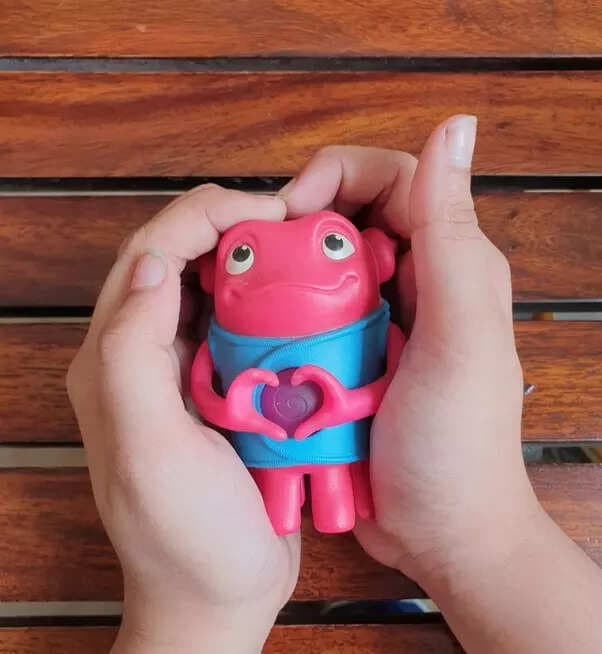
How awareness can help ‘detoxify’ relationships
There is danger lurking behind that smile
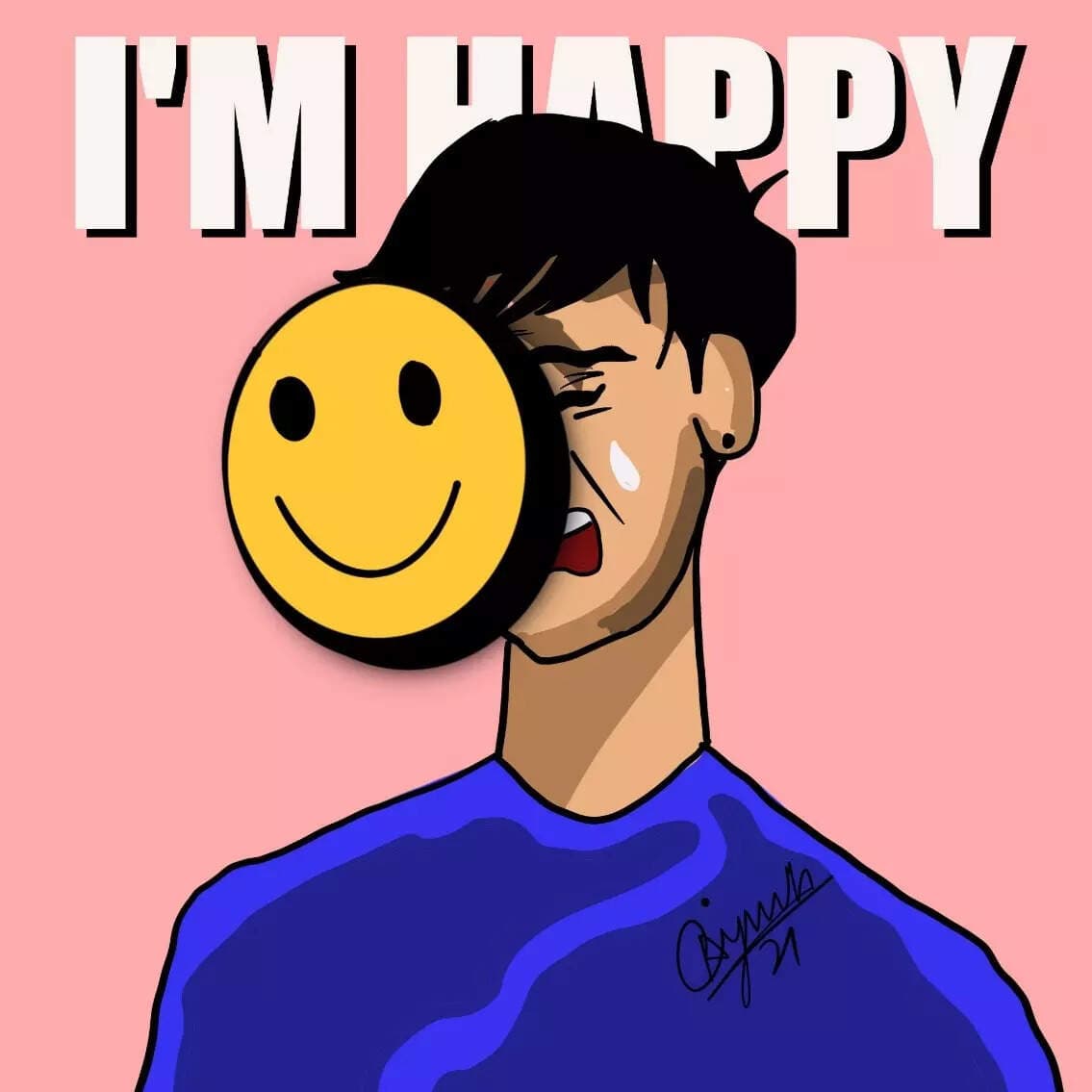
There is danger lurking behind that smile
When the going gets tough, Nandita gets going
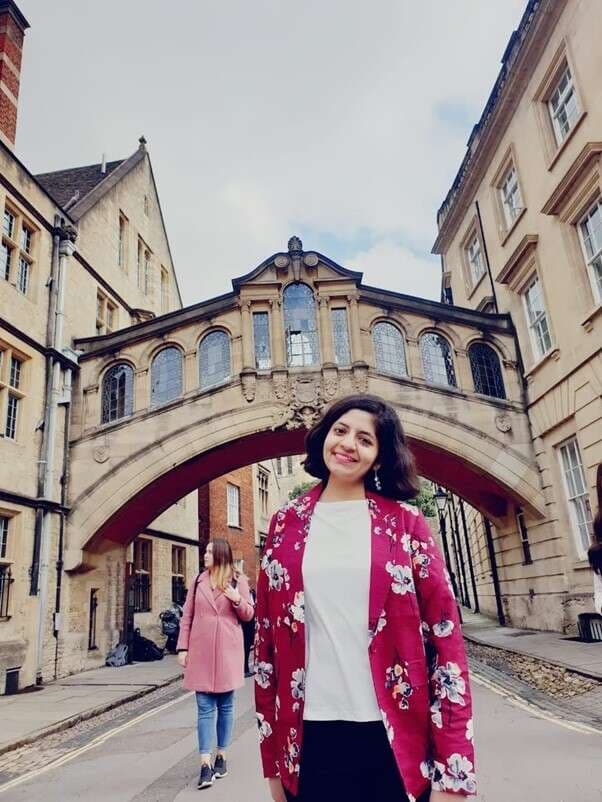
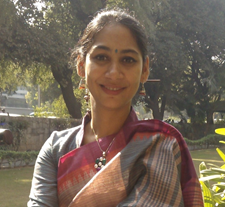
By Vidhi Goswami MUMBAI: The life of Nandita Venkatesan is an epitome of the adage, “When the going gets tough, the tough get going”. In her fight against tuberculosis, she lost 80% of her hearing ability and, most importantly, she lost hope. Just like any protagonist in a motivational story, she bounced back, picked up the pieces of her life and eventually made a name for herself in journalism and is now studying at Oxford on full scholarship. Nandita first encountered tuberculosis in 2013 when she was just 18 and was cured after a prolonged treatment. However, she had a relapse in 2017. As the treatment progressed, she faced a sudden hearing loss as a side effect of an injection. At the age of 24, normal life was a distant dream for Nandita. She could see nothing but pain and isolation with her personal dreams falling apart. ‘I felt like a loser’ “I felt like a loser as I wasn’t able to do anything,” said Nandita. Because of her hearing loss, she stayed at home and stopped going to work. Nandita said that she faced plenty of hurdles and every step forward in her life was challenging. “I believe that when things go down, they eventually come up. It is easy to go down, but difficult to come up,” said Nandita, who is doing her master’s in public policy at Oxford. However, all that happened to Nandita only made her stronger and she decided not to give up. She took to Bharatanatyam to overcome all the problems she was facing. One day, her dance teacher called Nandita and asked her if she would like to give a public performance. “I declined the offer as I was not able to hear anything. But suddenly it dawned on me that if I am able to perform, I would be able to face the world,” said Nandita. For her, dance is not just an art form but something through which she is able to express herself. Working for society Giving back to society, Nandita along with Riya Lobo, another TB survivor, has started a foundation, ‘Bolo Didi’, to spread awareness on TB. “Bolo Didi is a community where we talk to people who are suffering from TB. While facing this infectious disease, it becomes difficult for many to relate to you. So, we speak to patients as well others,” said Nandita. “The stigma around TB is that only poor people are exposed to it, which is a pathetic notion,” Nandita pointed out. The story first appeared in The Times of Bennett , the lab newspaper produced by the first semester students of The Times School of Media .
E-waste policy eludes implementation
By Vidhi Goswami MUMBAI: There is an electronic waste management strategy to address the immediate concerns about pollution emanating from electronic devices but unfortunately it is not implemented properly. However, some private organisations are working to spread awareness about the problem of electronic waste and solutions. One such non-profit organisation is Toxics Link . “Our goal right now is to bring focus on reducing e-waste , by bringing back the repair culture, as recycling cannot be the complete or the only solution” said Priti Mahesh , Chief Programme Coordinator at Toxics Link. Toxics Link is an NGO “working for environmental justice and freedom from toxics”. It collects and shares information about the sources and dangers of the poisons in the environment and bodies, as well as about clean and sustainable alternatives for India and the rest of the world. “Increasing use of electronics means huge quantities of waste , and improper e-waste management can be very harmful to the environment,” according to Mahesh. “The lifespan of electronic appliances is getting shorter. When it comes to phones, it is now 2-3 years,” she said. Electronics are now being designed for dump, increasing the amount of waste generated. “With new versions of smartphones, televisions and refrigerators, there seems to be no end to the demand for electronics and hence the waste,” said Mahesh. “People should understand that environment and health are interlinked, and waste impacts both. It is important to bring in the minimalistic lifestyle – people should buy new gadgets only when they need them and not just because there is a new model available ,” said Mahesh. New phones are entering the market with a lot of changes in their features. Various companies are launching unique phones, with glass back, gorilla screen, new chargers that make the phone’s battery last longer, you name it. “I believe a certain company is the worst offender generating a lot of e-waste. Every time you see them change their chargers or some other element, rendering the older version useless. The corporations have to be held liable for this,” said Mahesh. She said corporates should work hand in hand with the people at large if we have to take care of this planet. The daily household waste also at times includes a few e-waste, be it spoiled wires, damaged earphones or end-of-life lamps. Not having proper e-waste management systems means that the mixed-up waste is either dumped at the landfill or picked up by the informal sector. “Pollution control boards and municipal corporations should monitor the handling of e-waste ; but again, if we don’t have adequate capacity, punitive measures should be taken to put the system back on track,” said Mahesh. According to Mahesh, there is still not enough awareness in our society. The government has initiated programmes like Swachh Bharat which looked at waste as an issue, but a lot still needs to be done. “There should be incentives and disincentives, for people to actually take action and bring about change in their behaviour with regard to waste management,” Mahesh said. The story first appeared in The Times of Bennett , the lab newspaper produced by the first semester students of The Times School of Media .
Media ignored LGBT issues
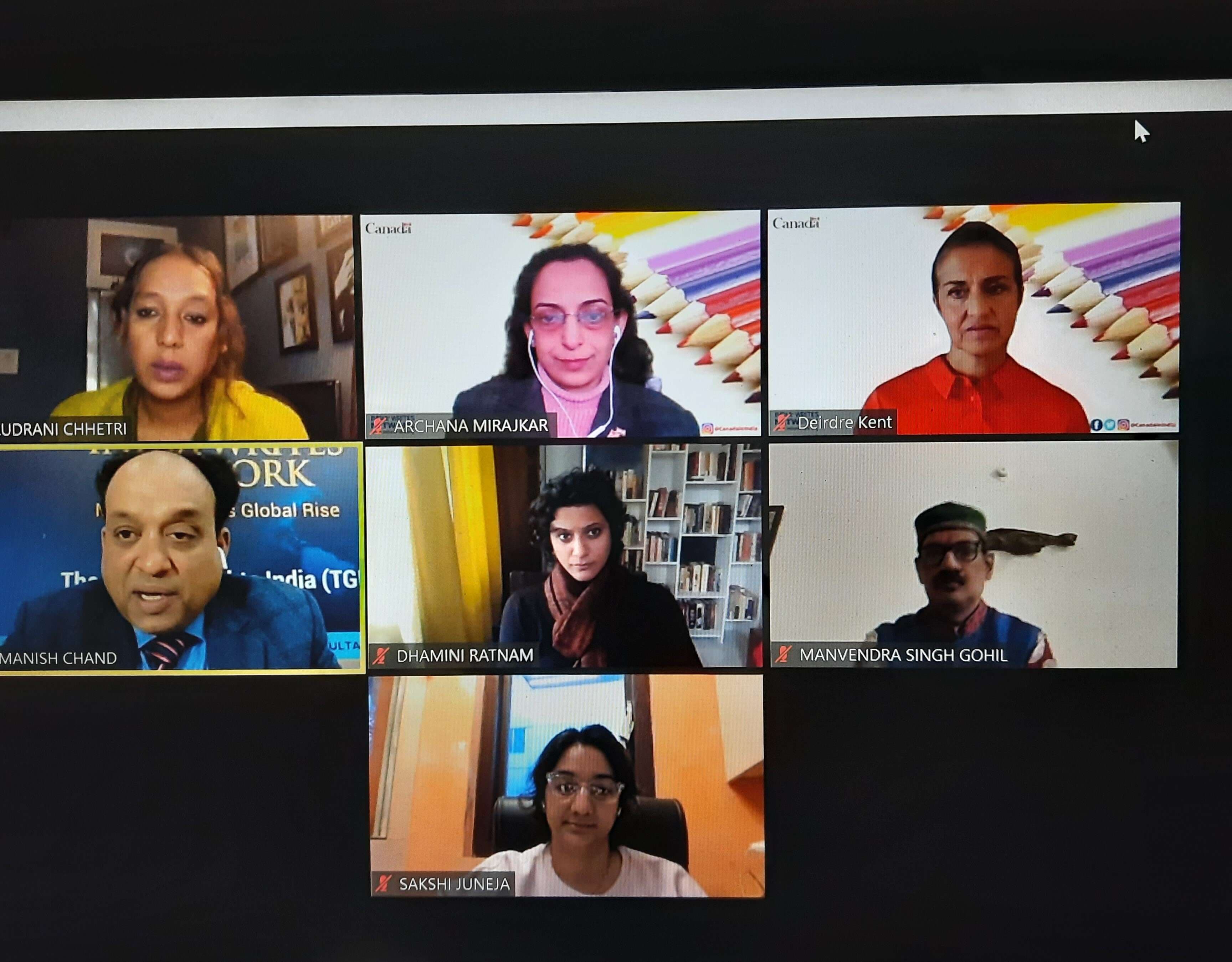
By Nikita Sharma The High Commission of Canada in India, in association with India, held a webinar titled ‘Covid-19 and Beyond: LGBTI in the Media ’. The webinar was addressed by by six expert epeakers. The CEO of India Writes Manish Chand initiated the webinar by welcoming all the speakers and attendees. The speakers were Rudrani Chettri who opened the first LGBTQ modelling agency in India, Sharif Rangekar, a communications consultant and writer, Dhamini Ratnam, Associate Editor of Hindustan Times , Dhrubo Jyoti, Assistant Editor of Hindustan Times, Sakshi Juneja, founder of Gyasi Family and Manvendra Singh Gohil, the world’s first openly gay Prince. The attendees consisted of journalists,journalism students and writers. A video presentation of how Canada evolved and legalised the LGBTQ community was shared by Chand. Deirdre Kent, the Deputy High Commissioner of the High Commission of Canada in India, thanked the speakers and the journalists for the role they are playing in the recognition of the LGBTQ community. Archana Mirajkar, Communications officer at the High Commission started the session by asking the speakers a question on which the speakers shared their views. The first speaker was Chettri who shared her experience of how she was on the streets helping transgender people by providing them food. On being asked how the COVID-19 pandemic has affected the LGBTQ community socially, she said: “The media talked a lot about migrant labours and daily wagers but no one even considers transgender people as migrants. They have no access to so called ‘normal jobs’, and have one or two ways of survival either sex work or begging these people didn’t have anywhere to go to in lockdown,” Rudrani said. In response to Mirajkar’squestion how the LGBTQ community was covered in the media, especially during the pandemic, Dhrubo Jyoti stated that the media did not talk much about the distress of the LGBTQ community in the pandemic and even before that. “The pandemic showed the media how the material questions of healthcare, education, jobs are very important and the media should focus on these issues when it comes to representing the LGBTQ community … and in the future how the media can help the LGBTQ community, give them a channel to get back from the massive blow of the pandemic”, Dhrubo said. Rangekar in response to media’s sensitivity towards issues that affect the LGBTQ community said, “the Press doesn’t dwell into the issues that affect the community at large. “I received calls from strangers on messenger saying they just came out to their families and now there is a lockdown. They were scared and depressed,” he said. He believes that the media does not have enough knowledge about the diversity of the LGBTQ community. The media is not aware of the problems faced by the community and that is why there is less coverage of the main issues related to the community. On being asked what is the role of media in stereotyping of the LGBTQ community, Dhamini Ratnam replied, “there are different forms and channels of media. “Media serves as a mirror of the society and yes media is not that aware of the problems faced by the community.” She believes that media plays a very important role in the society and in the present time media has started providing a voice to the big LGBTQ community. “The pandemic taught me how much responsibility an activist has. People look at us as their leaders”, said Manvendra Singh Gohil when he was asked what role do activists play in spreading awareness about the LGBTQ community and what should be their interface with the media. He believes that the community and the activists should stand on a united front to tackle all issues. The last speaker, Sakshi Juneja was asked what can the media and non-media platforms do to help the LGBTQ community in times of crisis like this pandemic. Sakshi replied, “We at Gaysi brought people who need help in terms of mental health to people who can give that help. Our motive was to start healthy conversations.” She was overwhelmed to see groups that provide mental health support come forward and start conversations on topics like gender and sexuality on social media platforms. A series of videos of activists working on the frontline and helping the community and spreading awareness about the community were presented elaborating how communication is necessary to help the queer people. How it is vital to have knowledge about the queer community in order to help them. The story first appeared in The Times of Bennett, the lab newspaper produced by the first semester students of The Times School of Media . Join exciting programmes offered by Bennett University
Assamese films need better reach: Director Jahnu Barua
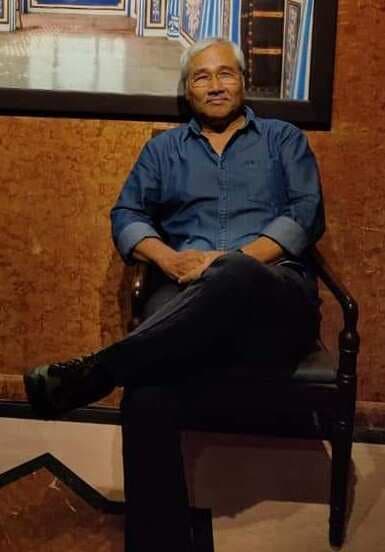
By Saanya Borah Jahnu Barua , the well-known Indian film director, talks about his upcoming film on the Ahom military commander, Lachit Borphukan. The movie focuses on the famous Battle of Saraighat. It will depict the naval battle fought in 1671 between the Mughal empire and the Ahom kingdom. It’s on how the small number of Ahom soldiers were able to defeat the huge Mughal army and not letting Mughals invade the State. Though in pre-production phase, Barua is looking forward to work on this project. "It is important to remember our heroes of our beloved state.’" Coming from a lower middle class family, he faced financial struggles. He went for his classes during the evening and worked during the day to cover for his expenses. He credits his family for supporting him as much as they could. His interest in films started at a Film Festival organized by the Guwahati Cinema Club while he doing his BS c where he got to see classic international films. Satyajit Ray , the legendary film maker inspired him to make movies and tell stories. He felt that it was a very artistic and aesthetic medium of cinema to communicate with the audience. He said, “Cinema may look easy to people but, itis one of the hardest fields to tell a story.” His movies mostly revolve around the aspect of humanity. He brings simplicity in his stories to connect with his audience. “Somewhere, there is always a reflection of your life in your stories.” The audience can find the special touches in his films as he is emotionally involved while making them. Hailing from a village background, he always wanted to share rural stories in which he succeeded when he directed his social genre feature film ‘Halodhia Soraiye Bau Dhaan Khai’ which won the National Film Award for Best Feature Film in 1988. Assamese films, he believes, need to reach a wider audience to be recognised. “A film becomes popular because of the audience. The number of people watching Assamese films is very less. “Despite language differences, movies get attention when their stories touch the hearts of the people,” he said. Filmmakers, he added, are chasing after commercial movies so much, that they have lost the touch of good quality stories. He believes that there are many good stories to be found in the rural areas but no one in interested in telling them. Barua has been bestowed the Padma Shri in 2003 and Padma Bhushan in 2015 for his work. He feels that although receiving awards makes him happy, he never prefers to run after them as he believes it will affect his work. He considers himself as a storyteller and focuses on making films but along the way, recognition or awards, make him feel that he has done something good. His message to the young people who aspire to be directors is to have faith in themselves be prepare ,as life is full of hard work. You will never get satisfaction if you don’t do hard work. So have faith in yourselves and you will succeed.’ The story first appeared in The Times of Bennett, the lab newspaper produced by the first semester students of The Times School of Media . Join exciting programmes offered by Bennett University
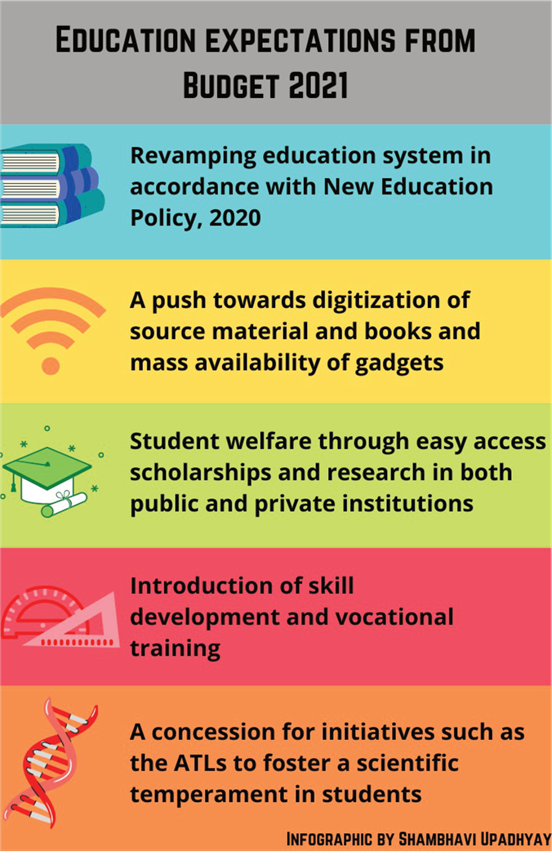
Budget 2021: Great expectations for NEP
Focus to be on digitisation of Education, FDI and skill development
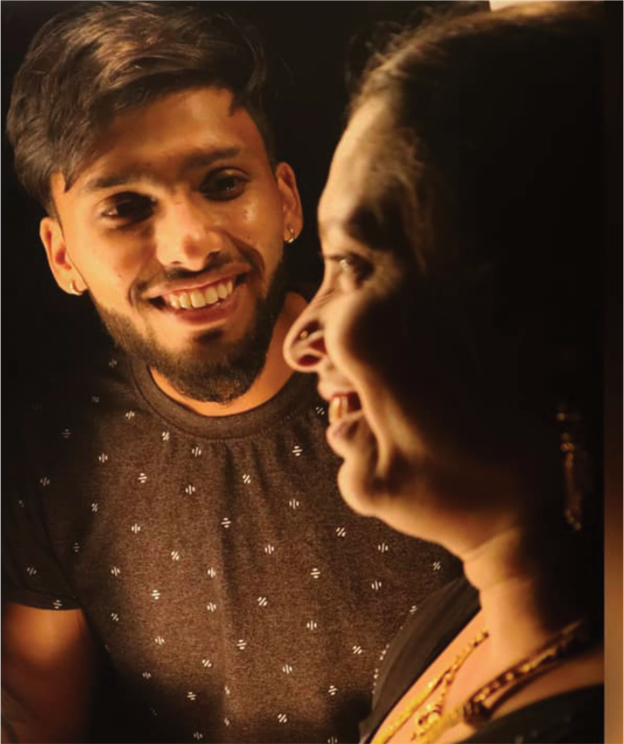
This love is "Ageless"
By Janvi Buddhiraja An age gap of 20 years did not stop Vishal from getting hitched to his best friend ’s mother Anupama. Their family , especially Dhruv, Vishal’s best friend, was caught off-guard when he came to know about the relationship but that did not bother the couple. In 2019, Vishal lost his parents to a road accident. Eventually the couple tied the knot after almost five years of dating each other. The wedding took place at a Shiv mandir with a few close ones gracing the occasion. Despite all the hate comments, the two moved in together along with Dhruv, Anupama’s 28-year-old son and her grandchild. “My son is of the same age as my husband, but the age gap never came in between us. I love him. He is very caring and understanding. We are lucky to have each other,” Anupama, who had a failed first marriage, says. The couple has got used to the derogatory comments and taunts hurled at them. “Vishal used to get comments like ‘Why don’t you leave her’ or ‘She is old, you deserve better’ but this does not bother us anymore. We have learnt to ignore them,” she adds. Vishal, who lost many friends, says: “As long as we are by each other’s side nothing matters. We know our relationship is special and beautiful and hate comments cannot break what we have.” The story first appeared in The Times of Bennett, the lab newspaper produced by the first semester students of The Times School of Media .
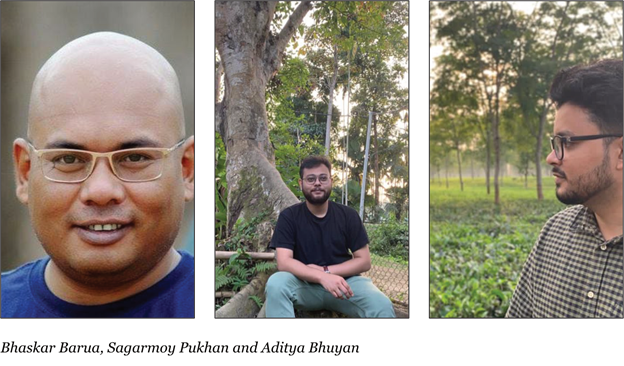
3 'friends of nature' in Assam work to save the planet
By SAANYA BORAH NEW DELHI : Environment is defined as everything that surrounds us but everyone views it differently. Given the recent circumstances, the environmentalists have given their opinions on environment, climate change , pollution and health. Bhaskar J Barua from Kaziranga, Assam, works in the field of eco-tourism, conservation and farming. He runs a trust called ‘Kaziranga Foundation’, which works towards empowerment of the local community working on conservation issues. Barua’s house is built using 70 per cent of recycled materials. It is also powered by solar energy, including solar water pumps, water heaters and campus lighting. He said that the evolving technology in sectors like non-conventional energy sources, electric vehicles, shared and efficient public transport system, procuring and patronizing local foods are some areas where we all need to work on. “With the increasing awareness towards environmental protection, and the fact that the young generation has taken the lead in this sphere, I believe the earth to be safe in future ,” he said. Sagarmoy Phukan from Dibrugarh, Assam, is an expert on climate change and sustainability issues. He is also a Ph.D. student at SEI York. His interest in environment developed because of the Paris Agreement which brought in the concept of sustainable development to the world platform. Phukan says, he started noticing climatic change in 2013. “The trends of temperature have been changing each year. Even though we might have the coldest winter, yet the average temperature is rising each year,” Sagarmoy said. As EIA Consultant, he has monitored air pollution and several industries in India. Phukan stated that environmental toxicity has caused diseases like Minamata disease, cancer and many others. He believes that there needs to be a combined effort, policies and lateral thinking and an integrated effort on the people’s part to combat and reduce pollution. Aditya Bhuyan is a research analyst in the field of air pollution from Assam. He believes that people are dependent on the environment for livelihood as well. Staying in harmony with environment will not just help in conserving but also protecting it for the future generations. In many locations all over the world, with climate change frequency of rainfall has increased manifolds within a short period. Bhuyan analysed that there are cumulating of reasons for such high concentrations of pollutants in Delhi, stubble burning in the neighboring states of Punjab and Haryana, climatic conditions of landlocked Delhi, dustsand huge traffic as well as construction debris. “Behavioral change among the general public is must to change their perception and work towards the betterment of the environment,” Bhuyan said. Everyone has a different story but, their journey and efforts towards keeping Mother Nature sustainable for future generations is inspiring. ( (The story first appeared in The Times of Bennett, the lab newspaper produced by the first semester students of The Times School of Media.) Join exciting programmes offered by Bennett University

Memes not just for fun: 'A new medium of expression'
By MISHA ARORA NEW DELHI: Social media and memes have become the primary way of expression for today’s youth. The relatable feature has instated a sense of belonging into today's youth . Delhi-based English lecturer Shruti Chachra feels that memes work as a coping mechanism to deal with the void that today's youth is facing. Shruti said, “Memes tells a lot about the person’s state of mind and consciously or unconsciously art becomes the medium to communicate. Memes are the most relatable art of our times.” “It’s shocking but true.” she added. She also believes memes are related to mental health . Shruti said, “In the world where mental health is still not given priority and depression is just a “word” it is becoming scary to share the feelings. Today feelings are associated with weakness and abnormality.” “Sometimes it is difficult to talk about it. So, memes or sarcastic comments act as an easy escape and space of the same. My favorite meme are the 2020 memes. They usually include all the funny events happened in 2020,’’ she added. She sometimes relates herself to memes. Shruti said, “Being a voracious reader, I usually detach myself from the story so that I can have an objective set of eyes. Some memes make me feel nostalgic and some make me feel happy to be not born in a generation of broken people with broken hearts”. Amity University student Aditi Ghosh believes, “Today's youth should be educated from a younger age on how to perceive memes and how it should be just a source of entertainment. However, ‘dark and dank’ memes must have a borderline too.” Aditi said, “One should not incite hatred in the name of humour. This generation should also be made aware that how much affect these memes have on today's society and how we can use them wisely to ‘improve the society’”, she added. “Sometimes, Gen Z uses dark humour to showcase the unhealthy behaviour pattern which runs through the family," she further said, "Memes are representation of one's definition of a family. I personally like brown family memes. They are common and relatable to the youth of countries like India , Pakistan, Saudi Arabia etc.” Medical Receptionist Ritu Bokolia, from Australia, said, “It is easy to communicate via memes without saying anything yourself. They bring a smile on your face. Sometimes we can relate to them and other times, they are a breath of fresh air’’. “I mostly like them as they are either relatable, funny but true or just a jovial version of an issue like we saw with Donald Trump," she added, “Memes have been a strong media form for people to voice their opinion on values, emotions, Social media and memes are about connecting with people online. Memes are a way of expressing a culturally relevant idea.” Ashutosh Gupta, 18-year-old undergraduate student from SRCC, Delhi University, believes that “memes are effective way to express emotions. They are widely used by today's youth while chatting with others because memes helps in knowing emotions as well as ‘tone’ of the person using them.” “People use memes to shows their life situations and their mood which can be a good sign to know what they are going through in their life,” he added. He said, “Memes are mostly made from some scenes of a movies or video clips to joke or to tease somebody which can have psychological effect on some while some enjoys such memes on others. He further added, “My personal favorite meme is the Among Us game meme. I watch a lot of them on Instagram. Sometimes even I create a few memes.” (The story first appeared in The Times of Bennett, the lab newspaper produced by the first semester students of The Times School of Media.) Join exciting programmes offered by Bennett University
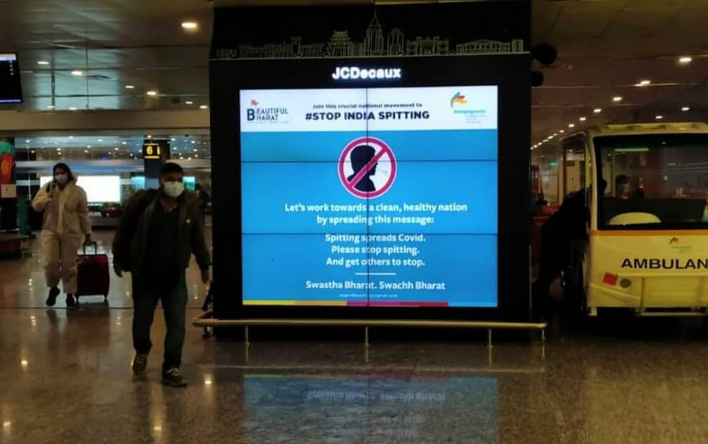
Covid shows how spitting is a hazard
By Sharvi Sharma BENGALURU : Rampant spitting makes all precautions against Covid-19 ineffective, as this habit of spitting, intrinsic to Indian culture, continues to transmit various infectious diseases. Beautiful Bengaluru, a voluntary citizens ’ initiative, working for clean, green, safe cities (now known as Beautiful Bharat) is driving the # StopIndiaSpitting campaign. It started in March 2020 with a petition and open letter to Prime Minister Narendra Modi to ‘ Restrict coronavirus and make spitting in public places punishable ’. They raised a red flag that continued spitting was a ‘crucial missing link’ in Covid prevention. Stop India spitting campaign board at the airport in Bengaluru. Odette Katrak , a Bengaluru-based human resource professional, soft-skills trainer, writer and co-founder of ‘Beautiful Bengaluru’, has worked on behaviour change at an individual level. “In the last 10 years, I realised the importance of change at a societal level, and shifted my focus,” she says. Katrak’s realisation came early in the lockdown while looking at the street beneath her window, noticing people spitting. “We were being told about masks, washing hands but nothing about spitting – a huge gap.” The team’s petition, open letter, social media campaign and media coverage all resulted in bringing this issue into the national spotlight. Spitting in public was made punishable and paan/gutka banned throughout the country on April 15, 2020, under the Ministry of Home Affairs ’ ‘National Directives for Covid-19 Management’ (page 9, points 5&6). Beautiful Bharat’s aim was not just a law against spitting, but to kickstart a movement and eradicate this social ill in a now-or-never chance provided by Covid-19. The law was ‘a backdrop and deterrent’ and the first step of a long journey to get India to stop spitting. This mass movement hinges on every resident getting involved. Awareness about diseases spread through spitting is crucial – as wearing a mask, sanitising and hand hygiene are not enough. Another step was an appeal to the PM to address the issue in his ‘Mann Ki Baat’ address. “This was to ensure the message reached every corner, which happened on April 26, 2020, with the PM’s specific mention making this a national priority, and the crucial message reached millions across the country.” She added that it was Spanish Flu in 1918 that got Western countries to finally address spitting in public places through mass campaigns, and this is a chance India cannot miss. The specific use of ‘StopIndiaSpitting’ as the campaign name is a call-to-action that involves everyone, including non-spitters, rather than focusing only on those who spit. “We are asking all who do not spit to patiently explain the link between saliva and Covid-19, through incident-based or preemptive conversation. Ignoring a spitter won’t help, shouting won’t either. Our aim is not to shame or spark angry exchanges, but to spread realisation. Spitting brings shame to our country – in the UK, spitting is high in Indian-dominated areas. In our country of 1.3 billion citizens, enforcement cannot work; mass awareness is needed as most spitters do not realise the habit is dangerous,” she added. “We ask them instead to use a toilet, carry a small container or just swallow – which they mistakenly believe is bad for health!” “What started as a petition is now a national movement,” Katrak says proudly. Increased messaging through radio/TV shows and a creative collaboration of signs, animated videos, art, music and other resources is helping spread the message to villages, towns, cities. “We are networking through partners across states through the newly formed Alliance to StopIndiaSpitting. Influencers like Puneeth Rajkumar, Kannada film artist, and Dr Devi Shetty, noted cardiologist, are giving crucial support for the campaign. Kempegowda International Airport, Bangalore, has prominent messaging with CEO Hari Marar confirming a reduction in spitting. Katrak ends optimistically, “We hope across the country, more will join #StopIndiaSpitting, because everyone must play their part!” (Access signs in 14 languages + other resources at beautifulbengaluru.org. or mail stopindiaspitting@gmail.com ) The story first appeared in The Times of Bennett, the lab newspaper produced by the first semester students of The Times School of Media.

Success needs patience, says Jasleen Bhalla
By Yash Singhal LUCKNOW: Announcing the next station in Delhi Metro or alerting you to follow Covid protocols when you call someone, her voice has reached millions who listen to her almost daily. Jasleen Bhalla , the voice behind the famous Covid-19 caller tune, is a renowned voice actor with over 10 years of experience. She was a sports journalist earlier, but then started voiceovers as a part-time job to make her profile but switched to fulltime in 2010. “Over a period of time you realize that it’s not just about good voice. Good voice is only one attribute”, said Jasleen . She maintained that versatility plays a major role as well because you may not have a very good voice texture but the variety of emotions can compensate for that. “Then comes the ability or sense to understand what the client wants out of you, because they have written a character that doesn’t exist and it’s your job to bring it to life,” added Jasleen. Jasleen has worked in radio ads, TV commercials voice-over, Discovery promos , Nat Geo documentaries, sports channels like ESPN , TenSports and Zsports and in IPL as well. Podcast also interests Jasleen where she is very active. Voice-over as a career is an interesting field offering a lot of opportunities in India. It is essentially an off-camera commentary over various platforms. People can get famous with their voices and make it a career as well. Bhalla said that “patience and humility are as important as talent. One should be humble about accepting their weaknesses and should be able to take criticism in the right spirit.” “You will be appreciated and criticized and you have to be your best each and everyday. Often a 10- seconds line might take you 45 minutes to record and maybe 51 takes till the time the producer doesn’t get what they really want,” Jasleen said, while stressing the importance of patience in this profession. She said that turnaround time of an artist is an asset in cutthroat competition in her profession. “If you are quick, it’s an added advantage because of the digital age and work from home environment, deadlines are very short,” said Jasleen. Jasleen Bhalla, Voice actor (The story first appeared in The Times of Bennett, the lab newspaper produced by the first semester students of The Times School of Media.)
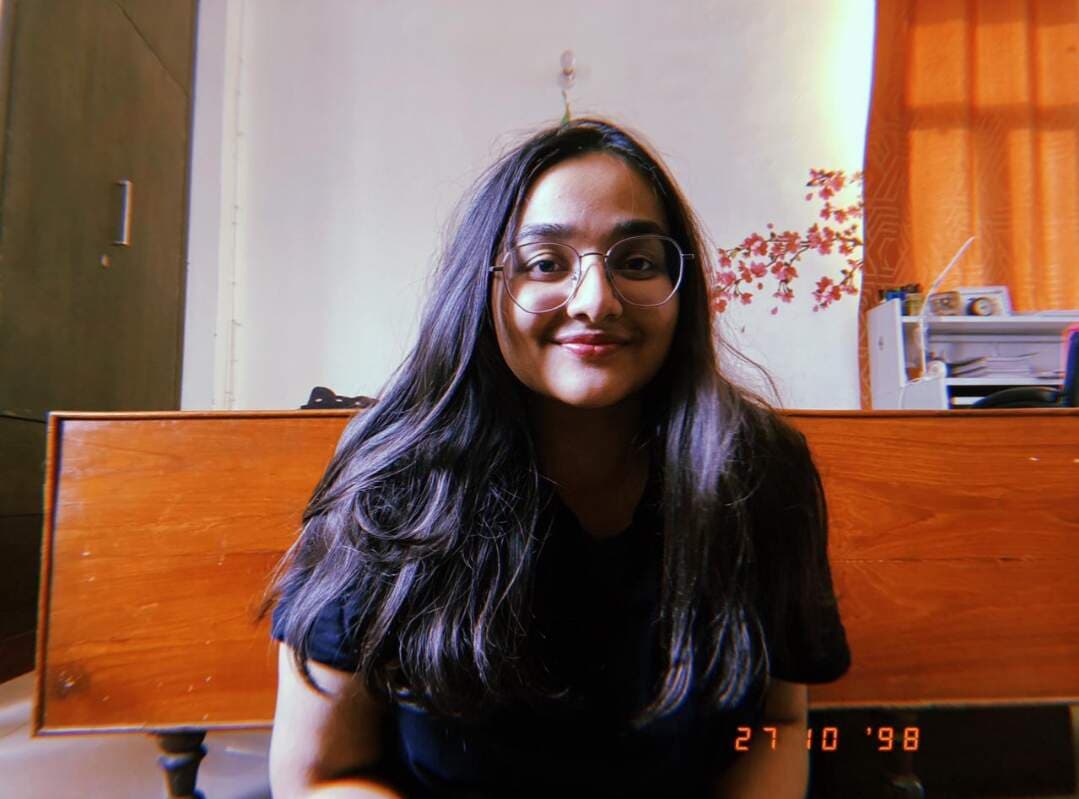
Fast fashion takes a hit as thrifting becomes trendy
By Ria Pipalwa GREATER NOIDA: Fashion is a way of communication, expression. In recent years, fast fashion brands like H&M , Zara and Fashion Nova have grown rapidly. Fast fashion brands replicate designer clothes quick and retail them at cheap prices. They are also not durable. Fast fashion brands manufacture clothes according to what is trendy in the now. A documentary about fast fashion (‘The True Cost’) reveals how poor the working conditions are in these factories that manufacture clothes on the daily. Thrifting has become a new trend. People have gradually started making conscious decisions about what they shop and where they shop. The fashion industry is the second most polluting industry of all. Fast fashion brands like Zara and H&M contribute to this pollution in tones. People have started becoming conscious of these facts and gradually started to shift towards thrifting. Jaya Shekhar, an 18-year-old psychology student at Lady Shri Ram College , New Delhi , said, “Thrifting for me had always been a foreign concept. Eventually, social media and advertising made me realize how impressive Indian thrifting had become, now it is a go-to place,” said Jaya. She remembers her first purchase came in an upcycled wrapping paper, the articles were dry cleaned and perfumed. The effort small thrift store owners put into every single order is unmatched. The care and caution reflect in everything. Jaya added that she stopped buying from huge corporations when she came across articles highlighting how “conscious” and “sustainable” drives were barely for welfare. Jaya Shekhar, Psychology student at Lady Shri Ram College Youtubers like Arden Rose and Verena have tried to make their audience aware of the damage that the fast fashion industry is causing to our environment. Aprajita Sharma, who is also an 18-year-old a psychology student at Lady Shri Ram College, said, “Thrifting to me simply means supporting a very novel cause as well as having the fortune of wearing something which might have been pre-loved by someone. I came across online thrift stores during the lockdown period. That was my first introduction to the concept of thrifting. Prior to that, I only knew thrifting as something Macklemore wrote a song about” Aprajita highlights that she has not switched to thrifting 100 per cent but the change is gradual, and it feels nice to be a part of a larger cause, no matter how small her part is. Aprajita Sharma, Psychology student at Lady Shri Ram College (The story first appeared in The Times of Bennett, the lab newspaper produced by the first semester students of The Times School of Media .)
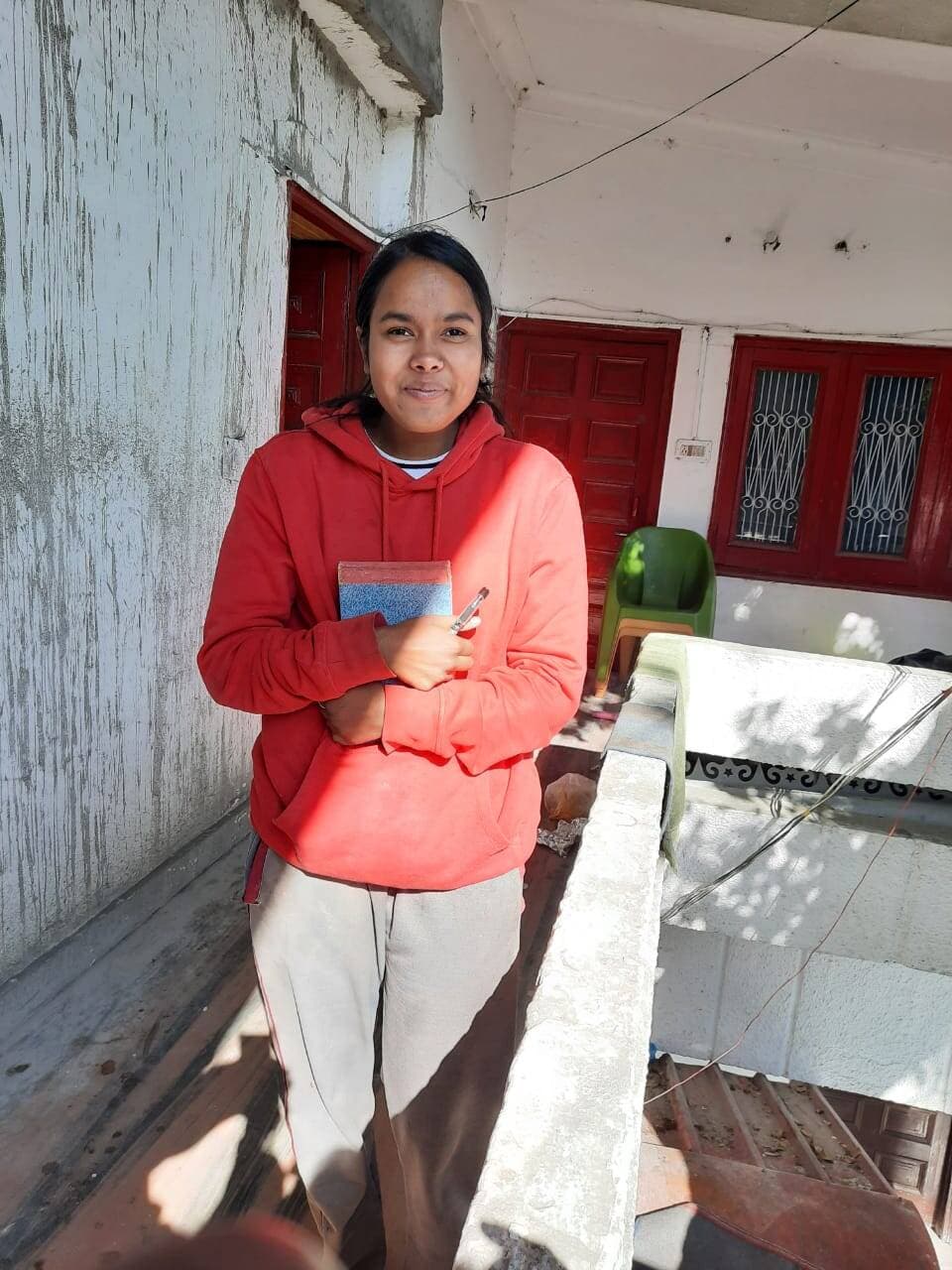
How a Mussoorie girl beat all odds to study
By Sakshi Bagri GUWAHATI: Riya Das a 22-year-old from Mussoorie , graduated from G.R.D IMT in Dehradun , B.Sc . Microbiology, is from a lower economic group. With an alcoholic father and sharing one room with four people, she managed to thrive in any condition and through tough times . She went through a lot when she was young, despite all these she topped her school in Biology and Riya is among 20 students who have made it to M.Sc. Microbiology in a government college in Srinagar , Uttarakhand. She credits her mother for all her achievements. She did a lot of jobs to support Riya and her family. She Riya used to cry a lot because of the conditions she was in but not anymore as she says, " Crying won't help me but working hard for what I want, will, I realized this as I matured." Her school didn’t have the best resources and her teachers demotivated her and told her that she will never achieve anything. “They always encouraged the hostlers and never bothered to help us,” said Riya. She also mentioned that she didn’t have much help from the school and did a lot of self study to prove her teachers wrong. She used to travel 35 km from Mussoorie to Dehradun everyday to attend her college. She didn’t have anyone to guide her and was often told by her own family members that studying isn’t going to get her good in-laws in the future. She said that her grandmother doesn’t like her studying and insist on marrying her as soon as they can and sometimes her father agreed to it. Riya wants to travel the world and became independent but she has a family who doesn’t trust her. “My mother doesn’t like when I talk to boys, she doesn’t trust me and all I want is their trust so I can be a little free,” she said. She has two brothers and said that she is discriminated at times. She gave an example, if Riya and her brothers spent some money she would be interrogated about how she spent it but her brothers won’t face any questions. Riya wants to work in the army as a nurse and is preparing towards achieving her goal. She wants to became independent and travel the world and give back to her family especially her mother. With all the problems and maybe more to come she has managed to make the best of what she has. Riya Das, 22-year-old from Mussoorie (The story first appeared in The Times of Bennett, the lab newspaper produced by the first semester students of The Times School of Media .)
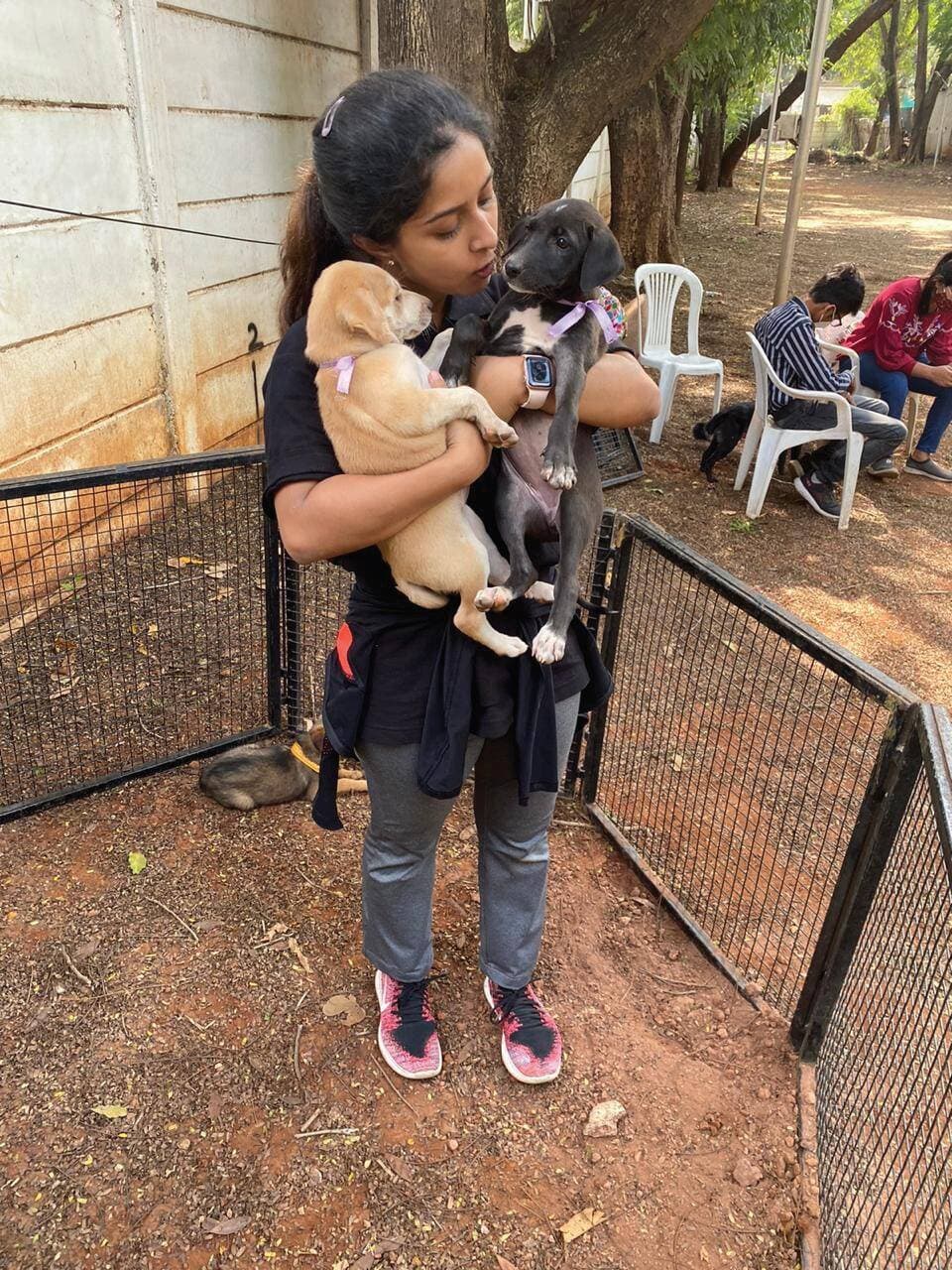
Wings of hope for furry friends
By Yutika Sharma Pune: A 21-year-old resident of Karve Nagar here, Simran Kulkarni took care of more than 200 stray dogs amidst the Covid-19 lock down despite opposition from the people in the neighborhood. Asked about her motivation, she said, “One day, when I went to grocery shopping, I saw a stray dog who hardly had any flesh on him. His ribs were visible. I fed him biscuits.” “During the lock down, it had become impossible for the dogs to get food from the garbage bins. Food vendors who have them leftover were not present. Touch wood, many of us are blessed with food, but the strays had nothing,” she added. After some research, Simran came across a group of 20 volunteers who took it upon themselves to care for the animals. They took the initiative of neutering the dogs, besides getting them vaccinated against rabies. Simran was assigned 30 dogs from her locality to ensure every dog is fed and proper care is given. Simran also helped a litter of nine stray puppies to find homes. She said she also populated the existing trend #ADOPTDONTSHOP and made people aware of how dogs are tortured into reproducing “elite breed” puppies . She tagged all the strays with LED collars that illuminate so that they are visible at night and do not get run over by vehicles. On Diwali , 25 more dogs were neutered and vaccinated for rabies while five cats were also vaccinated and neutered. Simran shared her life mantra too, “Stick to your morals and ethics; differentiate between right and wrong, and help the needy.” “These fluffy souls are speechless and they need our help. They don’t have a house but we do and it’s our responsibility that we take care of them in any way possible” said Simran Kulkarni. Simran Kulkarni with the rescued puppies in Pune. (The story first appeared in The Times of Bennett, the lab newspaper produced by the first semester students of The Times School of Media .)
Pen becomes voice for DU science student
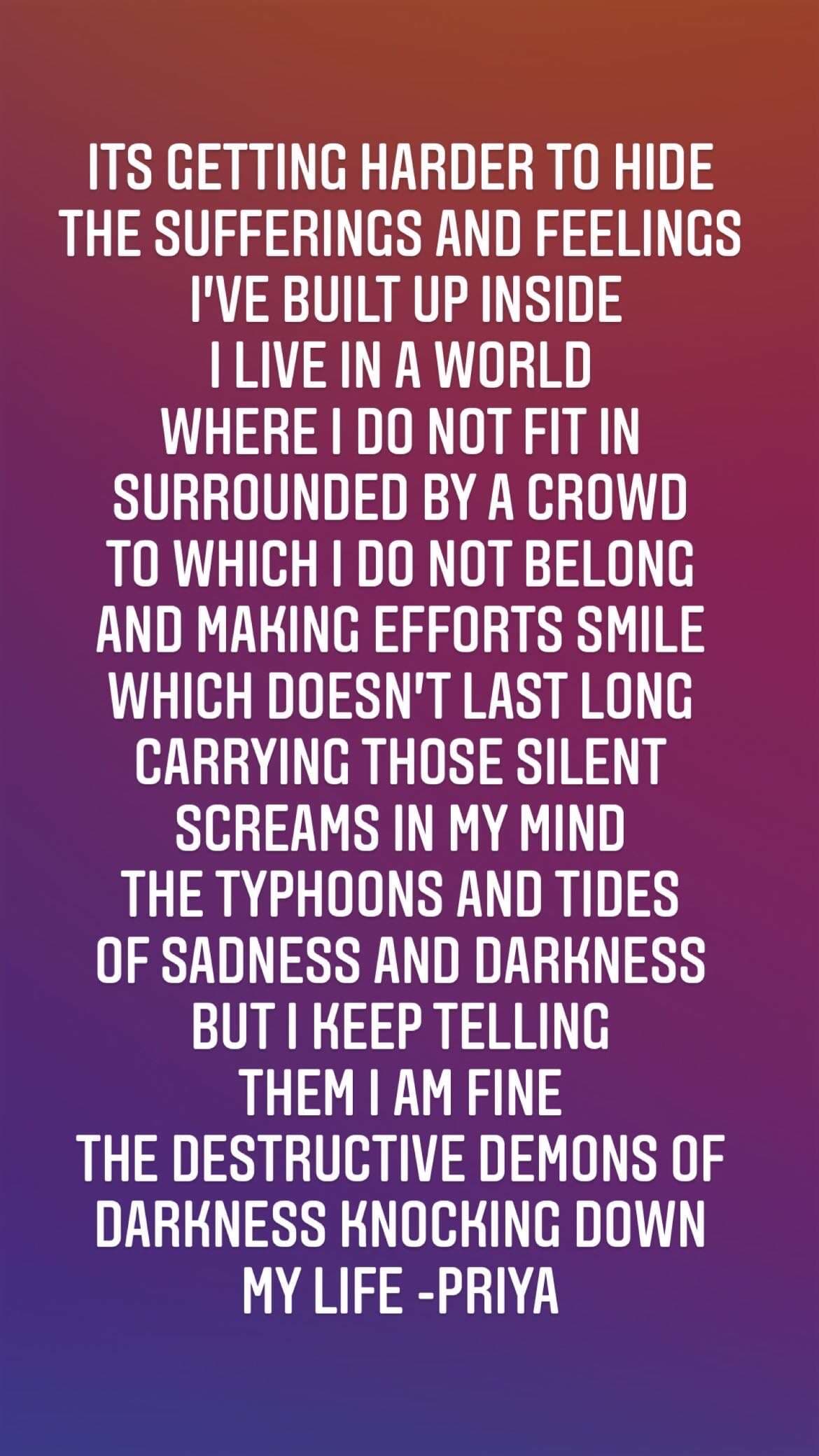
By Smriti Goyal NEW DELHI: Sometimes when voice is suppressed under stereotypical beliefs, one needs to hold a pen to transform it into words. And that’s how one becomes a writer. Priya Verma, a 19-year-oldsecond-year student of Medical Biotechnology at the Delhi University , is an inspiration for many as she followed her passion, and today she enlightens the world with her thoughts and charm of her pen. She is a native of Bettiah, Bihar, and had completed her schooling at St. Mary’s English Medium School , Bettiah. It was just for the college that she went to Delhi. She studies medical sciences but loves to learn literature. She is a writer and her writings and quotes have been uploaded on Google . This is quite a big achievement at such a tender age. Priya shared her journey that instead of being a science student, how she developed a love for literature and came into writing. She said that she was always into literature from her school days itself but never got the courage to say this to her parents. “There was a lot of pressure from my family to go for science which never allowed me to speak my desire,” said Priya. Sharing one of her incidents Priya said that once she asked her father about girls being subjected as untouchables during their menstrual. Just after she asked, her mother took her to the room and scolded her for talking about it in front of her father. She said that this was the incident that forced her to pick up a pen and a diary to write down what she felt. “I started to pen down each and everything I felt about life and society because there was nobody to listen,” said Priya. One of Priya Verma's piece of writing. Priya feels that it was after she went to college she started reading her writings. Her professors like her pieces and were published every time in a college magazine. She continued her love for literature in the form of writing. Priya said that now when her parents read her thoughts, they are really proud of her. She does not blame her parents for anything; rather, Priya says that it is a part of their growth. She concluded by saying, “The society needs to be changed and my pen works for it.” ( The story first appeared in The Times of Bennett, the lab newspaper produced by the first semester students of The Times School of Media .)

Indians head to Aus for opportunities
By Aanvi Gupta NEW DELHI: Indians prefer to study and work in Australia as it offers better educational facilities and job opportunities . “The best thing about Australia is their education system. They encourage working alongside learning. Although, due to this, time management sometimes becomes an issue for me. But I don’t mind that as I am able to provide for myself with the high wage that I get,” Ishan Sardana, a 28-year-old student at Deakin University , Melbourne, said. The same is the case with Srishti Aggarwal, a UI-UX designer in Sydney. “Experiencing Australian work culture made me realize how work can be fun. Here, the workplace environment is very friendly and casual. They care about your mental health. They’ll make sure you are not stressed and enjoy while working by organizing frequent outings and office parties. When I was working in India maintaining a work-life balance was quite a task. This changed after I came to Australia as everyone here works for eight hours only and gets ample personal time,” she said. When one moves to another country that is different in culture, it is normal to expect a culture shock in the beginning. Umang Mittal a 28-year-old engineer in an IT company in Sydney, felt the same only to adjust in a short time. “There were many cultural surprises on my journey from Namaste to good day mate. My first surprise was spotting the Australian Prime Minister at common places, not just once but many times. Coming from India where we have the VIP culture, this was surprising. The Prime Minister here appears and acts like a normal citizen and is humble. You can freely speak with him and express to him,” Mittal said. For Pooja Sharma, a quality assurance engineer with the IT company InfoTrack, Sydney, the culture shock was all about the city sleeping early. “Most of the stores close by 5 pm. So, if you are working then you may just get time to shop on Thursday which is a late-night shopping day,” she said. Palak Garg, a student at the University of Adelaide , went to Adelaide for its world-class education system. “But I didn’t know that I will fall in love with the city so fast. It has some beautiful beaches, clouds, forestry, flora and fauna. Even watching the roads in Australia for the first time from my taxi was exciting. Australia is less populated as compared to India. In India, the infrastructure is still not good enough,” she said. Garg remembers, back in India, getting stuck in traffic jams for hours. “Well, that’s not an issue here,” she added. Despite the differences between the two countries, they are similar in diversity. Hence, when it comes to cuisine and festivals, Australia is no less than India. Agraj Mangal, a solution architect with Microsoft , Sydney, finds Australia a food haven. “The cuisine here is influenced by migrants. I enjoy the variety and the multiple festivals celebrated here,” he said. The story first appeared in The Times of Bennett, the lab newspaper produced by the first semester students of The Times School of Media .
Can e-theatre replace live performance?
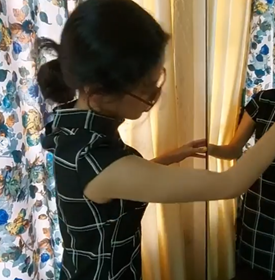
By Sharvi Sharma New Delhi : The subject of theater has capitulated to the tension and anxiety the COVID-19 pandemic has caused to the immediate and close interactions. With featuring in online plays and learning to get a dramatic encounter on the web, to envisioning the quintessence of acting face to face, the aspiring students of dramatics and theater have now recently been restricted to online courses and webinars. The learning that happens by creatively communicating dialogues, having to practically and physically enact plots and to have the option of collaborating with various individuals face to face, is a route not quite the same as watching and observing YouTube recordings. The college freshers this year had to resort to recording monologues for their end semester exams as opposed to their seniors who had the privilege to perform the act in front of a live audience. “At times I consider myself lucky to not learn long discourses, but at the same time I would love to get an experience of performing on stage,” said Kritika, an 18-year-old undergraduate theatre student from Christ University , Bangalore . Their seniors, who have just had the chance and introduction to learn by rehearsing, have begun to join startups which additionally are broadcasting their shows on the web. “I am always sulking in classes, even though I love the subject, as I would love a little in-person drama ,” she added, chuckling. Kritika Thapar performing her acts before a mirror. Rehearsing different roles and expressing emotions through monologues with unsolicited judgement by anyone, is an inspiration and opportunity to improve at it and work harder. Students are looking forward to classes in campus where they do live performances. The presence of an entire team additionally is also fruitful. A variety of skilled individuals belonging to different bionetworks, also contributes to show success. The 2020 pandemic has challenged live performances, along with a plethora of creative fields . Be that as it may, many believe that the very essence and creativity of live audiences and staged shows cannot get less integral for the art of acting and drama. (The story first appeared in The Times of Bennett, the lab newspaper produced by the first semester students of The Times School of Media.)

Woes of living in the city of love
By Pronoy Shukhla AGRA : This is one city that is on the itinerary of most international and domestic tourists who visit India from different countries around the world. Agra is known for its monument of love, the Taj Mahal . Though the city holds international significance, it is not an easy place to live in. Agra is ranked 55 on the “Ease of Living Index 2018”, by the Ministry of Housing and Urban Affairs . Bad roads, unmanaged traffic, rising pollution levels, law and order problems, and lack of proper healthcare facilities are some of the problems that plague this city. Akanksha Chadda, a school teacher in Agra, finds the condition of the roads “pathetic” and can no longer bear to live in the city of her birth. “There is no denying that the conditions of the roads have improved over the years but still there is a long way to go before they become nearly perfect everywhere in the city,” she said. Nineteen-year-old college student Khushi Jain agrees with Chadda. She adds that the increased use of private vehicles instead of public transport has added to the pollution level in the city. A fact that is corroborated by statistics from the Central Pollution Control Board ( CPCB ). The major pollutants in Agra, according to CPCB, are particulate matter – both PM 10 and PM 2.5 – and emissions from vehicular traffic. Traffic and air pollution, however, are not the only problems in the city of the Taj. Noise pollution is another major issue. Madhurima Singh, a teacher in a primary Government school in Agra, says that the use of loudspeakers should be banned, especially, at night. “Rickshaws carrying loudspeakers should also be banned,” she added. Another big problem in the city is the law-and-order situation. Many women find it unsafe to travel alone, especially, at night. “It’s unsafe for women to travel alone at night in the lesser developed parts of the city. The laws should be stricter so that people abide by them,” Harimaya, a 32-year-old lady who has been living in Agra for over a decade, said. Another student, Aryan Chadda, blames the local civic authorities for the lack of cleanliness and poor healthcare facilities. “The banners of ‘Clean Agra, Green Agra’, can be seen at all major landmarks of the city, but garbage bags are freely littered on the streets. Lack of proper sewage system is also a problem for the citizens as it eventually leads to many health issues for the residents,” he said. Despite its civic issues, Agra seems to be attracting people from smaller towns and villages, as land prices here are cheaper than in big cities. “The result is more congestion, pollution, and municipal problems,” Jain said. While the romance of the Taj Mahal may be drawing more than eight million visitors to this city, as per Uttar Pradesh Government statistics, evidently for locals the infrastructure leaves much to be desired. It may be the city of love for tourists but for residents, it is a city of woes. The story first appeared in The Times of Bennett, the lab newspaper produced by the first semester students of The Times School of Media .
At theatre workshop, discussion on acting as profession
By Saumya Gairola Noida : Bennett University conducted an online workshop for acting and theatre freaks on 24th December, 2020, titled ‘Talk to Your Body’ by Ashok Kumar Beniwal , who has worked in more than 100 movies so far. “ Learning is a continuous process. Development of skills never stops and acting is something that will take a lifetime of learning,” said Beniwal, who has dedicated more than 25 years of his life in learning acting from various gurus and co-actors such as Amitabh Bachchan . When asked about entering the Bollywood industry, he explained that we shouldn’t be afraid of any difficulties that come in our way. “To become an actor, coming out of our comfort zone is the most vital step. Besides, if something is being done with passion, fear is not an element coming in our way.” He further explained the importance of the foremost nine emotions as known in the Indian culture, the ‘Navrasa’. He added, “A 10 th emotion is added to the navrasa, which is self-made and is of utter importance.” Participants in the webinar with the actor Ashok Kumar Beniwal. Screenshot by: Saumya Gairola When a student asked him some ways to concentrate while practicing, he said, “I would like to suggest some ways to cure this problem of anxiety and less concentration. Anulom-Vilom Asana helps in reducing anxiety. Staring at a circle for 5 minutes continuously also helps. Standing steadily on one leg while holding something in hands can cure these kinds of problems.” He also did a monologue to display his skill. He suggested some books to read and movies to watch which will help students in their future. (The story first appeared in The Times of Bennett, the lab newspaper produced by the first semester students of The Times School of Media .) Join exciting programmes offered by Bennett University
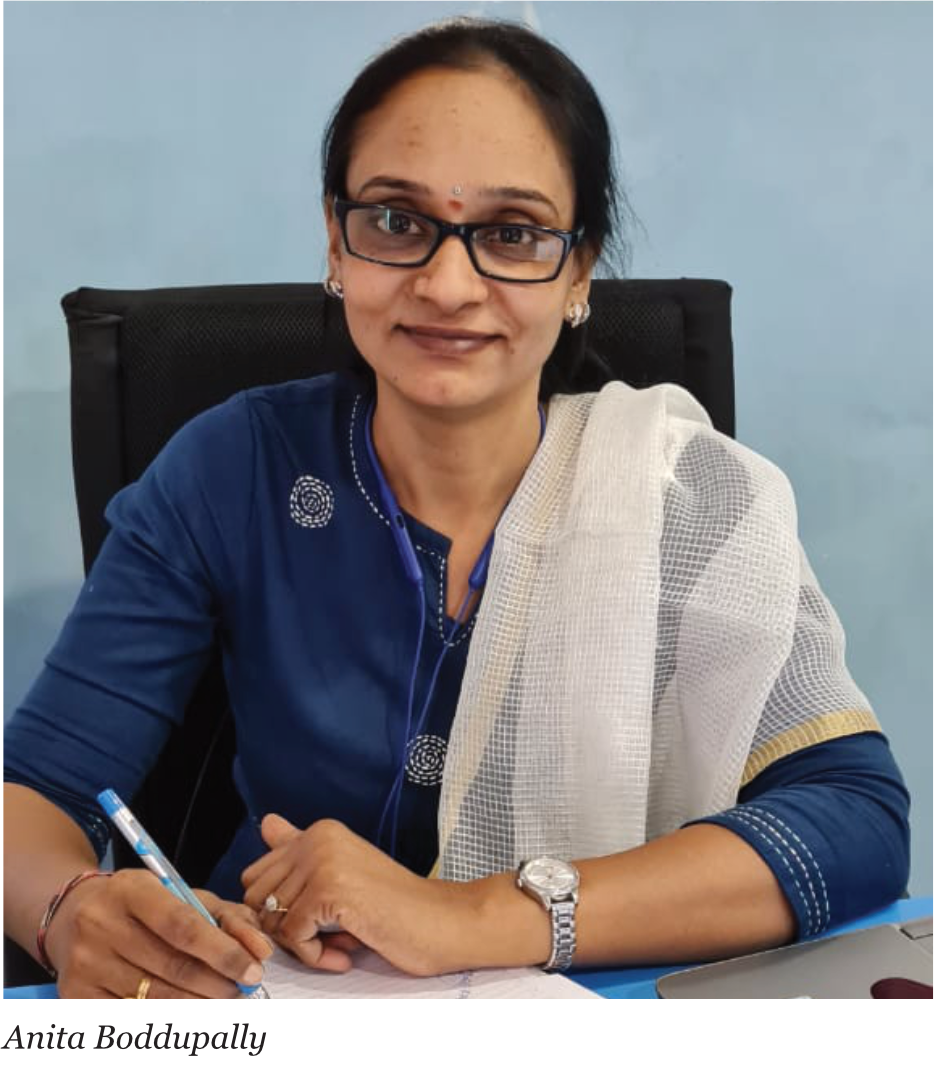
Budget more reactive than proactive
By SAI SNEHA PS HYDERABAD: Anita Boddupally is a 39-year-old woman who graduated from Jawaharlal Nehru Architecture and Fine Arts University and did her Masters in transport planning from the School of Planning and Architecture , New Delhi. Anita had an interest in economics but unfortunately couldn’t study that as a subject. She always follows the Budget and hence followed the 2021 union budget which was presented on February 1 by Financial Minister Nirmala Sitharaman . Anita said, “The following budget is important as it allows an individual to create a spending plan for their money, not only that budget or spending plan will help people to come out of debt or help them to work their way out of debt.” When asked about her opinion if this year's budget was more reactive than proactive, she said “Yes, the budget is reactive than proactive because COVID-19 hit the economy hard and India is still under recession so there is no way the budget is proactive as it requires individual to take early steps to manage money wisely, but unfortunately people still are facing financial problems, but it will soon get over and everything will be back to normal.” She mentioned that this year's budget focused a lot on FDI (foreign direct investment). She appreciated the government as she felt that in a growing and developing country like India, FDI is particularly important to increase job opportunities and to control inflation. She felt this will also help the local private insurers to grow fast and expand their presence in India, which has one of the lowest insurance penetration levels globally. The past year tested India on many fronts. Even as Pandemic-induced lockdown ravaged the economy. Many lost their jobs and had to leave the cities they began to call home. A question was asked to her if she had a chance to change the 2021 budget as a citizen of India what would she change. “Though the recovery is still fragile and uneven, and fiscal interventions are still very essential, the State Government Budgets may matter more, as they together spend 70 percent and 90 percent more than Centre , I would ask the Centre to recheck where the money is going. “The Budget has two distinct parts: Financial accounting and Budget speech. “The latter, by laying out the medium-term road map, can significantly affect “animal spirits” and forward growth. “I would like to change these things if I had a chance to make changes in the Union Budget,” she said. The story first appeared in The Times of Bennett, the lab newspaper produced by the first semester students of The Times School of Media .
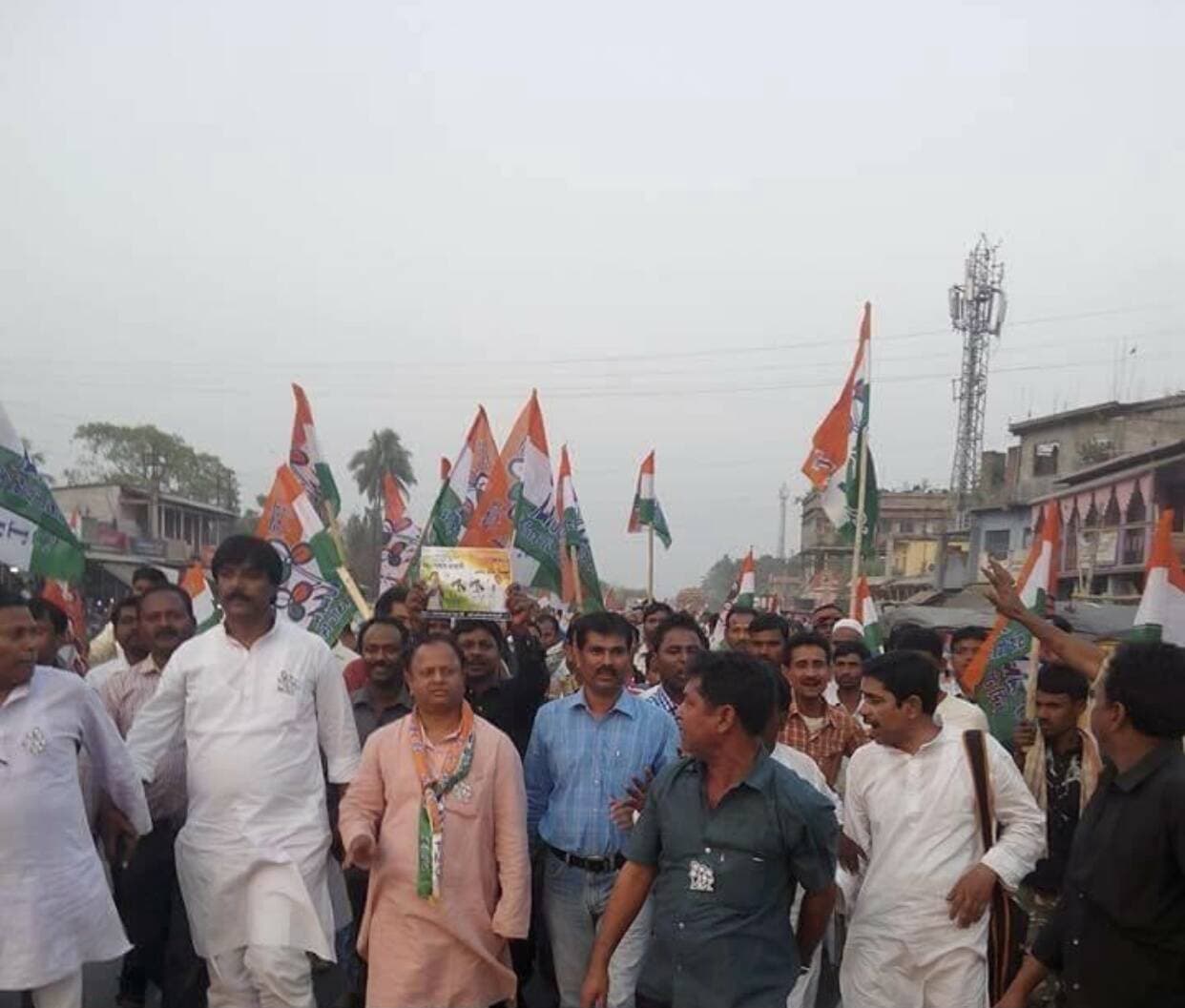
Pandemic fails to douse election fever in Bengal
By Arshiya Rabbani SILIGURI: WestBengal is gearing up for Assembly elections, considered to be the toughest due to the ongoing pandemic . Goalpokher, an Assembly constituency in Uttar Dinajpur district will have its elections in April 2021. For the past 10 years, Trinamool Congress is ruling in Goalpokher with Ghulam Rabbani as its MLA . Karim Chowdhury, former Minister for Mass Media Extension and Library Services in the West Bengal Government and the present MLA said that “the upcoming elections of 2021 will the toughest due to the pandemic which is refusing to die out.” According to him, the candidates did not get enough time for canvassing. Meetings, rallies, and parties were not permitted, which resulted in lesser interaction with the people. “The TMC has been the ruling party for the past 10 years and will continue to rule. MD Ghulam Rabbani, former Labour Minister, has a high chance of winning again. The position he holds is very strong and people respect him a lot. I wish him all the best for the elections,” Chowdhury said. MD Rasul, a member of the Panchayat Samiti, from the Goalpokher constituency, however, refused to be put down by the prevailing conditions due to the pandemic. “Despite the current situation the world is facing, elections in Goalpokher will not be any different. Yes, there has been very less interaction with the candidate for the past year, but we will always support Chief Minister Mamata Banerjee and her candidate,” Rasul said. Keeping all the pandemic precautions in mind, the members of the Panchayat Samiti, including Rasul, are busy preparing for the voting day in their constituency. Dilip Ghosh, a 50-year-old voter from Goalpokher said: “This place is my land. I was born and brought up here. Before the TMC Government, the condition of my village was very bad. We hardly had any educational institutions, medical help or electricity. But now our village is well-maintained and it is more like a town. We have been and will continue to support our candidate,” he said. According to a cross-section of people this reporter spoke to, despite there being minimal interaction with the party representative, the developmental work carried out by Rabbani “is enough for us to vote for him. In the run-up for the elections, we attended three-party meetings with proper safety measures. This time, we are making sure that the turnout is high and maximum votes come to our candidate,” Ghosh asserted. “Despite the danger of getting infected by the Coronavirus, people are determined to make their representatives win with a larger margin. Hence, we are hoping to have a safe and fair election,” he concluded. The story first appeared in The Times of Bennett, the lab newspaper produced by the first semester students of The Times School of Media.

Affirmation ‘vital in fight against Covid-19’
By Sakshi Bagri Guwahati: It is important to have a positive affirmation during Covid times. If one is mentally fit, they can overcome any difficulty, says a Mumbai based counsellor in a conversation about mental health especially during Covid times. The stigma surrounding mental illness keeps people from getting the help they need to get better and causes them to hide their pain. According to the so-called society, seeking help for depression , anxiety or other problems makes a person crazy or abnormal. At a time when we are asked to wear masks and take precautions, are we taking care of our mental health? In an interview, Shruti Jajoo Jhanwar, M.A. Psychology, talked about the stress this pandemic has brought and how mental health is very important. Anxiety, stress, depression, fear, loneliness and insomnia are some of the problems people are dealing with. The sudden changes combined with new realities have affected the human mind more than we could anticipate. All age groups have suffered from anxiety or depression equally. Kids are away from their school and friends, which can have long term effects on their mental health. People are working from home, which has led to depression. Elderly people are unable to go out and are experiencing stress because of that. This pandemic has affected all. She stressed that people who test positive for Covid need to stay strong as the stronger their will power, the faster will be the recovery. Also staying positive and having positive affirmation like “I am strong, I can fight Covid,” will help a person to be mentally strong. “Mental illnesses should not be thought of any differently from physical illnesses. I believe the two are inseparable,” she said. She further explained that “The brain is an organ just like everything else in the body and can be hurt like everything else. When the brain is ill, it is not isolated in just the brain, instead affects the whole body and the overall wellness. Substance abuse, self-harm, and suicide are very common among those with mental illnesses. Mental illness is not something to be ashamed of or thought about differently.” Psychologist Shruti Jajoo Jhanwar. Photo by: Sakshi Bagri People may not realise that they are depressed; some signs may include excessive worry or anxiety. Long-lasting sadness or irritability. Extreme changes in moods, social withdrawal, changes in eating or sleeping pattern. Daily exercise, speaking to loved ones, meditation, reading a book, listening to music and healthy eating can help people ease their mind and overcome anxiety and depression, talking being the most effective. When mental illness is treated as something similar to other illnesses, more people will have the courage to get the help they need and better their lives. (The story first appeared in The Times of Bennett, the lab newspaper produced by the first semester students of The Times School of Media .)
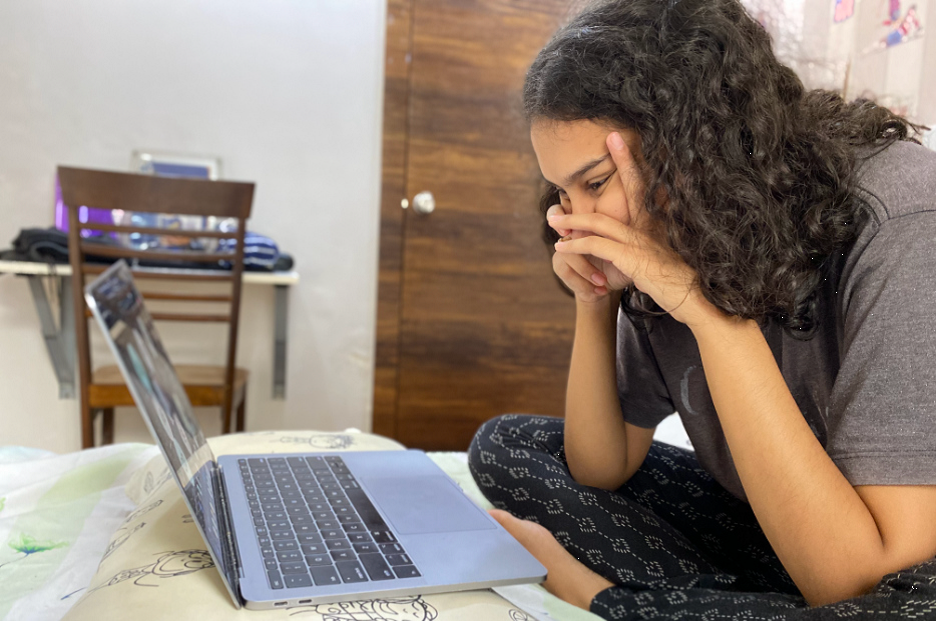
Online classes damaging students’ mental health
By Ridham Yadav Changing the mode of education from offline to online is taking a toll on students ’ mental health . They are missing experiencing college life, and increased screen time is slowing their learning process. With many students confined to their homes for long, with almost no physical and mental activities, the sudden outpour of work has been overwhelming. Things have been worse for students transitioning from high school to college. “It is all the work of college without any fun of it,” says Isha Shah, a first-year student at Ashoka University. It is all the work of college without any fun of it: Isha Shah. Photo by: Ridham Yadav Students never thought such a day would come when their laptop screens would be their campuses. Being on their screens almost continuously for about 6-9 hours a day has increased fatigue and made learning difficult and exhausting. Back-to-back online classes have had a severe impact on the mental and physical health of students. Tishya Sinha, a clinical psychologist, said, “Video calls are energy drainers as students have a hard time processing non-verbal cues, like body language and this increases misunderstanding.” "A delay in as low as 1.2 seconds can make users perceive the responder as less friendly or distracted and make users anxious about the technology," according to the report by Katrin Schoenenberg, an expert in human communications over audio-visual systems. Lack of social interaction has been a primary problem for most students. However, they have other concerns as well. Sanyam Bhandari, a freshman at BITS Pilani, said, “I have always had a short attention span, online classes have only increased my procrastination for I have so many distractions right in front of me.” Ameya Naik, another first-year student at Ashoka University, complained about the requirement to keep the webcam on, she says, “I find it difficult to focus on my classes when my webcam is on because I get self-conscious of my appearance.” Experts have warned of a grim situation ahead. Yogesh Jog, a mental health specialist, claims that there has been a rise in the number of cases where students are showing early signs of depression. He suggested that long working hours, no change in environment, increased screen time and lack of social interaction have taken a toll on students. He believes that online classes have a direct link with social anxiety. “Webcam is a menace; signs of social anxiety have increased due to the constant need to look presentable on-call. Furthermore, video lags and embarrassing accidents add to social anxiety," he added. The pandemic and remote learning has undoubtedly been devastating to the students’ mental well-being. With the re-opening of schools and colleges still looking doubtful, will the government and educational institutions focus on making things more effective and less stressful for the students? (The story first appeared in The Times of Bennett, the lab newspaper produced by the first semester students of The Times School of Media .)
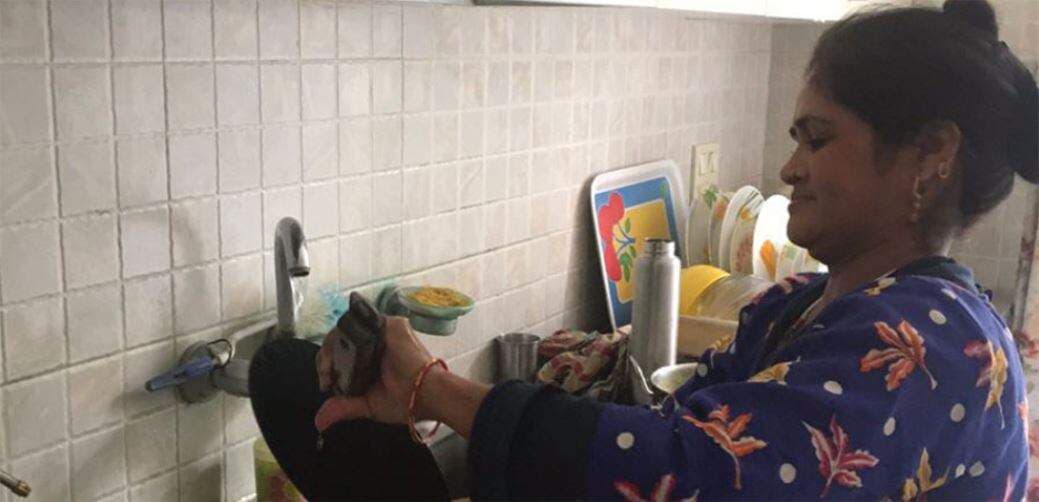
Domestic workers get worst end of stick amid pandemic
By RIA PIPALWA India’s class system is deeply rooted in society. Being a domestic help is typically not a well-respected job. There are almost four million domestic workers in India. A report by ILO shows that 49.3 per cent of domestic workers were significantly impacted by the lockdown triggered by the Covid-19 pandemic . Many employers refused to pay the workers, who are in the unorganized sector, during the lockdown even after the government ordered to pay them. Some domestic helps were laid off and not called back after the lockdown. Saroj, a worker in ATS Paradiso, said, “My faith in God is what helped me survive during these uncertain times." Saroj believed she was lucky as her employers paid her even during the lockdown period. She didn’t have to worry about her next meal unlike some of her unfortunate neighbours. Her daughter hasn’t gone to school in over seven months. Saroj is worried about her daughter’s future. Another worker said, “He was able to live normally as the government provided ration in his village”. COVID-19 came as a blow to the economic and mental condition of the poor. It resulted in the loss of jobs and domestic violence cases also increased. According to The Hindu, 1,477 complaints were made by women against domestic abuse between March 25 and May 31. This 68-day period recorded more complaints than those received between March and May in the previous 10 years. Madhavi, another worker at ATS Paradiso, said, “The rich look at us as if we are filthy people and do not care about cleanliness. That’s not true. We stay clean too. We are just as scared of the coronavirus as they are. They think that we will give them the virus”. We often call the domestic helps the bravest people, our heroes. However, it is not their bravery that pushes them to wake up in the morning and go to work. They do for their family’s survival. (The story first appeared in The Times of Bennett, the lab newspaper produced by the first semester students of The Times School of Media.) Join exciting programmes offered by Bennett University
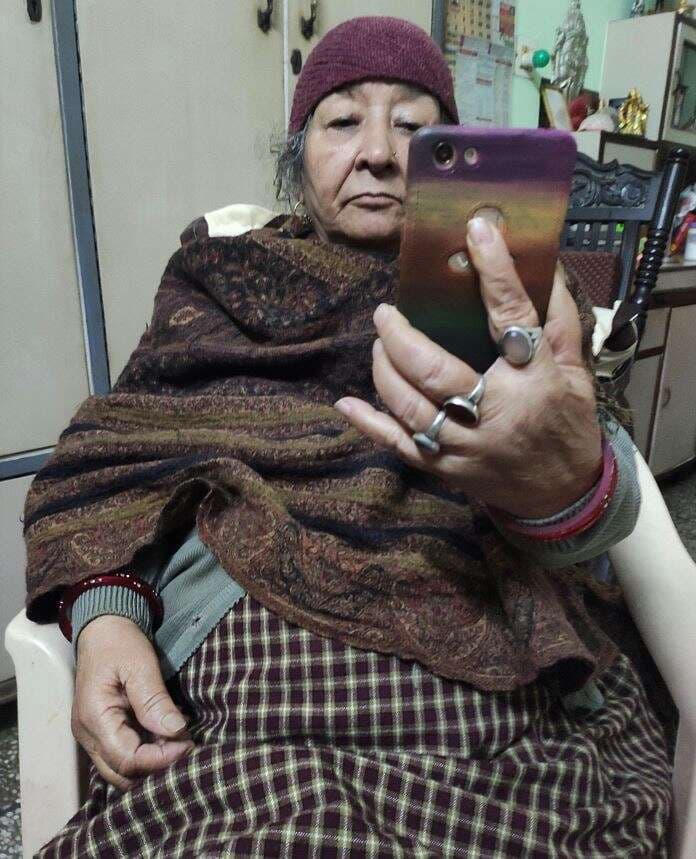
Technology a boon for the elderly in 'distancing' times
By OM DHAWAN SITAPUR: The world is growing rapidly and it is not easy for everyone to match its pace, especially for senior citizens . The use of technology has become a boon to them as it helps them to deal with the difficulties of modern life more easily. Ragini Dhawan, a Kolkata-based 75-year-old woman, considers technology a blessing. She recalled old times when people had to buy a cassette player and cassettes to play songs. “We had to rewind the reel to replay, and now all the songs are on my phone," she added. Mrs. Dhawan gets all the understanding of technology from her son and grandchildren. She is a diabetes patient and the portable sugar testing machine is a part of her life. “There was a time when I had to wait for days to get my sugar report . Now my grandson tests my sugar twice a week through machine, and when it’s under control I give myself a desert treat," she added. All of her five daughters are married and in different cities away from her. “On my birthday they gifted me this android phone and taught me how to video call,” she said. There are many people just like her who are living their lives not just easily but they are enjoying it because of technology. From medical assistance, to android apps technology has improved our day to day life. (The story first appeared in The Times of Bennett , the lab newspaper produced by the first semester students of The Times School of Media .) Join exciting programmes offered by Bennett University